Agricultural Marketplace: How It Works & Its Benefits
Most farm trade in Pakistan still runs through mandis and middlemen. Here's what an agricultural marketplace actually changes, and how to tell a real one from a listings site.
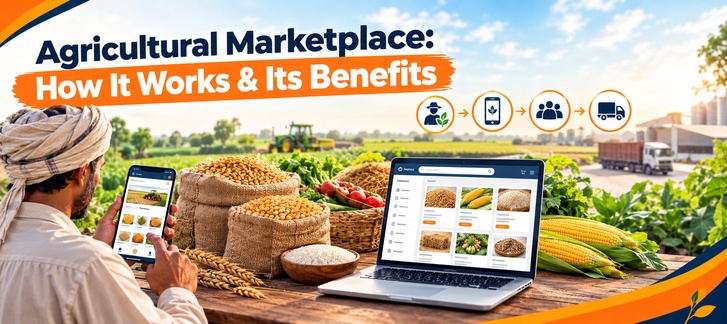
An agricultural marketplace, is a place where farmers, buyers, and sellers deal with each other directly, grain, seed, fertilizer, biomass, whatever the commodity is, mostly online these days, so nobody has to go through three or four local middlemen just to close a trade.
It handles price discovery, supplier verification, and often payment and logistics, in one place. In Pakistan, this model is still fairly new next to the traditional mandi system, but it's growing fast for exactly the reasons the old system struggles with: price opacity, slow settlement, and too many hands between the farm and the buyer.
If you've ever bought or sold agricultural commodities in bulk, you already know the drill. You call around, you compare a few quotes that may or may not reflect the real market that day, and you hope the guy on the other end of the phone is actually holding the quantity and quality he's claiming.
That's the system most of Pakistan's agri trade still runs on, and it's exactly what an agricultural marketplace is built to replace.
What Is an Agricultural Marketplace?
Strip it down, and it's a digital space where farm commodities get bought and sold, minus the usual guesswork. Instead of one buyer calling five different traders and getting five different stories, everyone sees roughly the same price data, the same supplier listings, and the same product specs at the same time.
That's really the whole shift. Prices stop living in someone's head, or in a WhatsApp group only certain people are added to, and start living somewhere everyone with access can actually check.
How an Agriculture Online Marketplace Works Day to Day
It's less complicated than it sounds. A few things need to be in place for it to function properly:
Verified suppliers. Someone's confirmed who's actually selling, not just who says they are.
Live or regularly updated pricing. So a buyer isn't negotiating off numbers from two weeks ago.
Standardized listings. Grade, quantity, unit, location, so a buyer in Multan can compare a seller in Faisalabad against one in Sahiwal without a phone call.
A way to actually move the goods. Sourcing and logistics don't automatically connect just because the listing exists online.
Inputs matter here as much as outputs. A buyer stocking up on seed ahead of a planting season needs the same verified pricing as someone selling finished grain after harvest; it's the same marketplace mechanics working in both directions.
Why Buyers Are Actually Moving Away From Mandis and Middlemen
The traditional setup isn't broken exactly; it's just slow, and slowness costs money in a business where prices move daily. A buyer sourcing wheat or sugar through the usual chain is often going through two or three intermediaries before the goods even reach him, and each one adds a margin and a delay. By the time price information reaches the actual buyer, it may already be stale.
And this isn't some small corner of the economy we're talking about. Agriculture made up 23.4% of Pakistan's GDP and employed close to a third of the workforce in 2025-26, per the government's own Economic Survey. At that kind of scale, even a tiny inefficiency, repeated across millions of transactions, ends up costing real money, just sitting in the wrong place.
An agribusiness marketplace collapses a lot of that distance. Not entirely; logistics and quality checks still matter, but a buyer sourcing fertilizer ahead of a sowing window, for instance, is negotiating off something closer to today's actual price, not whatever number was accurate when it started its trip down the chain.
What You're Actually Buying and Selling
This is where it stops being theoretical. Bulk buyers and sellers on a platform like Zarea move grains and pulses as the core of it: wheat, rice, maize, the staples that make up most day-to-day agri trade volume.
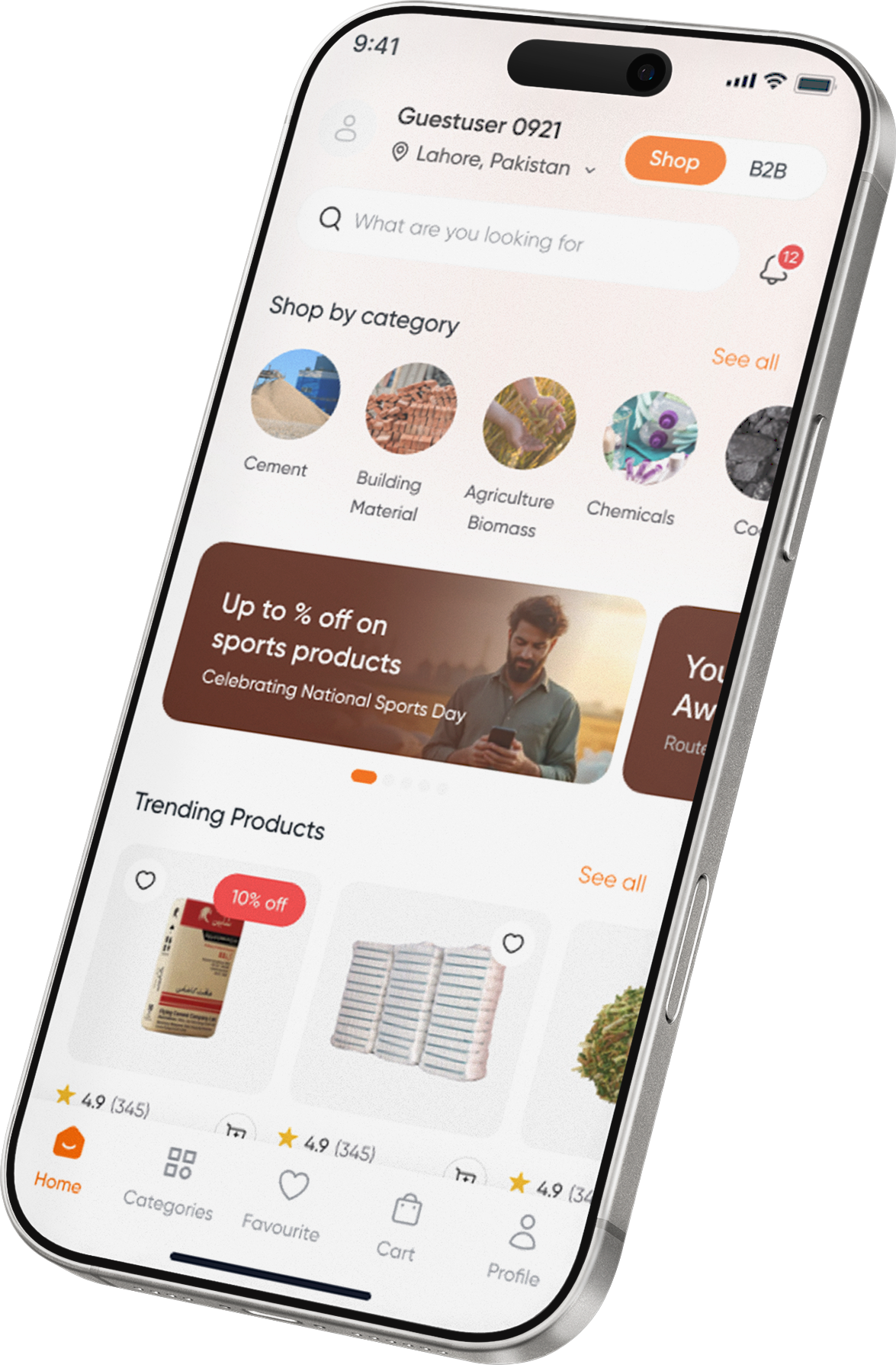
A real agriculture online marketplace isn't just a grain exchange with a different name, though. It needs to cover both ends of the chain, inputs going in and outputs coming out, since a lot of buyers on one side are sellers on the other, sometimes in the same week.
The output side isn't limited to the obvious staples either. Agricultural biomass like corn silage and rice husk moves in real volume too, mostly toward feed and industrial buyers who'd otherwise have no clean way to find a consistent, verified supply of it.
What Separates a Real Marketplace From a Listings Site
Plenty of sites call themselves marketplaces and are really just directories, a list of phone numbers with a nicer layout. A few things actually separate the two:
Supplier verification, not just a signup form.
Price transparency, ideally something closer to daily rates than "call for quote."
Standing supplier relationships, so a buyer isn't starting from zero every time they need a new commodity.
Some path to financing or credit terms, since bulk agri purchases rarely happen on cash-only terms in practice.
Category breadth is part of this too; a platform only covering one or two commodities can't really claim to be a general agribusiness marketplace. Cotton and yarn sitting alongside grain and fertilizer categories on the same platform is what actually makes it useful to a textile mill and a flour mill without either one needing a separate account somewhere else.
Zarea's own approach to this shows up in how Business with Zarea is structured around specific sectors- flour mills, cattle farms, textile mills, food industries, rather than treating every buyer the same way.
On the supply side, Become a Supplier is the actual onboarding path, not an open free-for-all listing form, which is part of what verification is supposed to mean in practice rather than just a badge on a profile page.
Where the Pricing Actually Comes From
One thing worth being upfront about: an agri marketplace is only as useful as its price data. If the numbers are stale or estimated, it's not really solving the core problem.
Zarea's Daily Price page is where that gets tested in practice, tracking day-to-day rates across the commodities the platform covers, which is what actually lets a buyer tell the difference between a fair quote and someone testing how much they can get away with.
Frequently Asked Questions
How is an agribusiness marketplace different from a regular online store?
A regular store, you're buying a finished product at a fixed price, simple as that. An agribusiness marketplace is a different animal. Prices shift daily, who you're buying from actually matters, and most buyers aren't just clicking checkout, they need financing or credit terms to make the purchase work at all.
Is an agriculture online marketplace only for large buyers?
Not really, no. Flour mills use it, cattle farms use it, so do textile mills and smaller food businesses, just at different volumes. Doesn't matter how big you are, honestly, everyone's after the same thing: prices they can trust and suppliers who are actually verified.
Why is this shift happening now in Pakistan specifically?
Well, agriculture is close to a quarter of the country's GDP, so it doesn't take much inefficiency before it's adding up to serious money. What's pulling people
toward digital marketplaces is pretty simple too, fewer hands between the farm and the buyer, and that alone changes both the price and how fast things move.
Wrap Up
An agricultural marketplace replaces guesswork with verified suppliers and shared pricing, rather than routing every trade through a chain of middlemen. The real test of one isn't the listings, it's whether the pricing is current and whether the suppliers behind it are actually verified.
In a market where agriculture drives close to a quarter of national GDP, that difference isn't cosmetic, it's the whole reason buyers are switching over.