Animal Feed: Types, Ingredients and Where to Buy in Pakistan
Learn what animal feed is in this complete guide. Explore the main feed types, key nutritional ingredients, and benefits for healthy livestock growth.
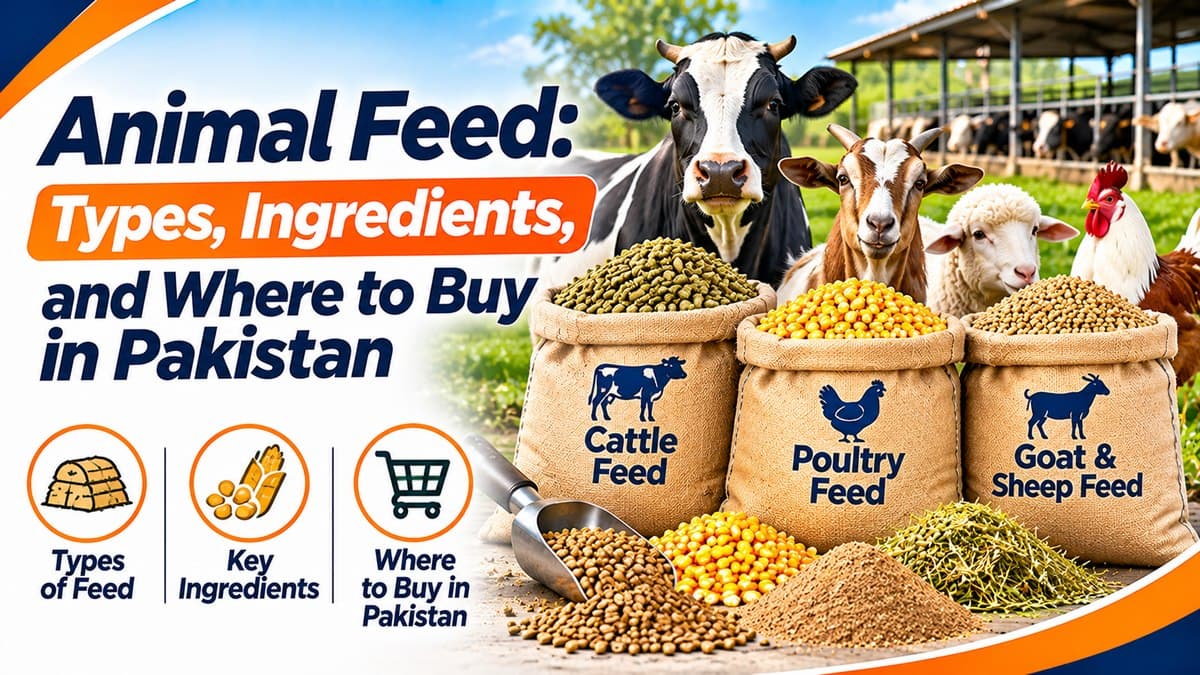
Introduction:
Would you ever realize that healthy animals cannot be healthy by chance? If you just walk into a thriving dairy or poultry farm in Punjab or Sindh. There is only one non-negotiable foundation which is called proper nutrition. Whether you talk about every liter of creamy milk and every tray of farm-fresh eggs. Or whether you can talk about every robust beef animal that lies in any Pakistani farm.
Whether you are a seasoned livestock farmer or just exploring modern agriculture. It doesn't matter! Because understanding animal feed is the first step toward building a profitable and sustainable farm. Let us break down what goes into an animal feed bag. Why compounded feed locally known as wanda is transforming Pakistani agriculture? How balanced nutrition (wanda) drives real results on your farm?
What Is Animal Feed?
Animal feed is any food that could be raw or or commercially formulated that is given to domesticated animals to meet their daily nutritional requirements. Domesticated animals includes cattle, buffalo, poultry, sheep, goats, and fish. Unlike wild animals which scavenge for whatever nature provides them with. Because farmed livestock animals rely entirely on humans for their energy, protein, vitamins, and minerals requirements.
Animal feed supports animals' body maintenance and rapid growth when formulated accurately. They also support their reproduction and the high-yield milk production, meat, and eggs.
What Is Wanda Animal Feed?
Wanda animal feed refers to commercially manufactured and scientifically balanced compound concentrate feed that is produced in Pakistan. This special feed is designed primarily for dairy cattle and buffaloes. This feed is also designed to fatten livestock on meat farms. Farmers feed wanda alongside green forage or wheat straw (toori) to their animals. Rather than farmers solely relying on traditional fodder (chara) only.
Quality Wanda is a ration blend of energy-rich grains and protein-dense oilseed meals. These healthy ingredients also have essential minerals and vitamins that are incorporated into a uniform pellet or mash. This compound feed bridges the nutritional gaps that grass and crop residues leave behind. That's why Wanda ensures high-yielding cows and buffaloes do not lose body weight during peak lactation.
Why Is Animal Feed Important in Pakistan?
Livestock is the true backbone of Pakistan’s rural economy, contributing over 60% to the agriculture sector and supporting millions of households. Yet, for decades, local farmers struggled with low milk yields and slow weight gain due to seasonal forage shortages and unbalanced feeding practices.
Modern animal feed solves three critical challenges in Pakistan:
1) Overcoming Fodder Scarcity: Extreme summer heat and winter frost create severe green fodder gaps. Commercial feed keeps nutrition steady year-round.
2) Boosting Milk and Meat Yields: Native breeds like Sahiwal cows and Nili-Ravi buffaloes possess strong genetic potential that only unlocks when fed balanced protein and energy.
3) Preventing Metabolic Diseases: Traditional feeding often causes mineral deficiencies, milk fever, and infertility. Fortified feed eliminates these hidden losses.
Types of Animal Feed:
Not all feeds serve the same nutritional role. On a well-managed farm, rations are divided into four primary categories:
1) Forage and Roughage: High-fiber plant materials like green forage (berseem, maize, sorghum), hay, silage, and dry wheat straw. These keep the ruminant digestive system healthy and functioning smoothly.
2) Concentrates: Nutrient-dense feeds low in fiber and high in energy or protein, such as maize grain, cottonseed cake (khal), and commercial wanda.
3) Compound Feed: Factory-blended complete rations engineered for a specific species and life stage—such as broiler starter, layer mash, or calf grower.
4) Premixes and Supplements: Micro-ingredients containing concentrated vitamins, trace minerals, amino acids, and toxin binders mixed in small doses to elevate overall feed efficiency.
Ingredients of Animal Feed:
Peek inside a modern feed mill, and you will find carefully sourced agricultural raw materials working together in harmony:
1) Energy Sources: Maize (corn), wheat, rice polish, sorghum, barley, and sugarcane molasses provide the calories animals need for daily activity and milk synthesis.
2) Protein Sources: Soybean meal, canola meal, sunflower meal, cottonseed meal, and corn gluten meal supply essential amino acids for muscle growth and milk protein.
3) Fats and Oils: Vegetable oils and bypass fats add concentrated energy for high-producing dairy animals during hot summer months.
4) Minerals and Additives: Limestone (calcium), dicalcium phosphate (phosphorus), common salt, probiotics, enzymes, and mycotoxin binders protect gut health and immunity.
Classification of Animal Feed:
Nutritionists and feed manufacturers organize feedstuffs in two practical ways: where they come from and how they are processed.
Classification by Origin
1) Plant-Based Feeds: The largest category, covering cereal grains, oilseed cakes, legumes, grasses, and agro-industrial by-products like wheat bran and beet pulp.
2) Animal-Based Feeds: High-protein ingredients used primarily in poultry and aquaculture rations, including fishmeal, blood meal, and meat and bone meal.
3) Mineral and Synthetic Additives: Non-organic nutrients like rock phosphate, trace mineral salts, and synthetic amino acids (such as lysine and methionine) that fine-tune dietary balance.
Classification by Processing Form
1) Mash: A finely ground, loose blend of ingredients commonly fed to laying hens and young chicks.
2) Pellets: Feed ingredients compressed using steam and pressure into uniform cylinders. Pelleted wanda prevents animals from picking out tasty grains and leaving minerals behind.
3) Crumbles: Pellets broken into smaller, bite-sized pieces, making them easy for young poultry and baby calves to eat.
4) Silage and Hay: Preserved green forage fermented in airtight pits or dried in the sun to lock in nutrients for off-season feeding.
The Use Purpose of Animal Feed:
Every bag of feed is formulated with a clear biological target in mind:
1) Maintenance Rations: Keep adult animals at a stable weight without producing milk or gaining extra muscle.
2) Growth and Fattening Rations: High-energy, protein-rich diets designed for beef calves, sheep, goats, and broiler chickens to build muscle rapidly.
3) Lactation Rations: Specialized wanda animal feed tailored to maximize daily milk volume and butterfat percentage in dairy cows and buffaloes.
4) Starter and Breeder Rations: Highly digestible, vitamin-fortified feeds that protect newborn calves, chicks, and pregnant animals during sensitive life stages.
Key Benefits of Animal Feed:
Switching from guesswork feeding to scientifically balanced rations transforms farm performance from the inside out:
1) Higher Productivity: Balanced diets directly translate into more liters of milk per cow, faster daily weight gain in meat animals, and higher egg production in poultry.
2) Better Feed Conversion Ratio (FCR): Animals extract more nutrition from every kilogram eaten, reducing overall feed waste and lowering cost per unit of output.
3) Stronger Immunity and Fertility: Proper zinc, selenium, vitamin A, and vitamin E levels reduce mastitis, improve conception rates, and lower veterinary bills.
4) Consistent Quality and Safety: Reputable feed mills test raw grains for deadly aflatoxins, keeping both livestock and human milk consumers safe.
Sourcing Quality Animal Feed Raw Materials Through Zarea:
For commercial feed mills, dairy farms, and livestock businesses in Pakistan, securing consistent, lab-tested raw ingredients is just as critical as getting the nutritional formula right. As Pakistan’s leading B2B agricultural commodities platform, Zarea simplifies bulk procurement by connecting buyers directly with verified suppliers across the country. Whether you are formulating high-energy rations using Maize (corn), wheat, rice polish, and barley. Or you are balancing protein and fiber levels animal diet with high-grade soybean meal, alfalfa, and Rhodes grass. It doesn't matter now! Becaue we are sourcing through a transparent digital supply chain ensures dependable quality and timely nationwide delivery.
The Future of Animal Feed in Pakistan:
Pakistan’s animal feed sector is undergoing rapid modernization. Corporate dairy farms, export-oriented meat feedlots, and commercial poultry integrators are driving fierce demand for precision nutrition.
Over the next decade, expect to see wider adoption of Total Mixed Rations (TMR), corn silage preservation, bypass protein technology, and mycotoxin-free pelleted wanda. Digital ration-balancing apps and local laboratory feed testing are also empowering small-scale farmers to formulate smarter diets without wasting money on unnecessary supplements.
The Bottom Line:
At its core, animal feed is far more than simple farm forage. Because it is the fuel that powers livestock health, farm profitability, and national food security. Whether you are feeding a small backyard herd or managing a commercial dairy operation, investing in clean, well-balanced wanda animal feed and quality forage pays back every single day in healthier animals and stronger yields.F
Frequently Asked Questions (FAQs)
1) What is the difference between fodder and animal feed?
Fodder refers specifically to raw plant materials like green grass, maize stalks, hay, and straw that provide dietary fiber, whereas animal feed is the broader umbrella term covering all livestock nutrition, including compound concentrates, grains, minerals, and commercial wanda. While fodder keeps a ruminant's stomach healthy, compound feed delivers the concentrated protein and energy required for high milk or meat production.
2) What is wanda animal feed used for in Pakistan?
Wanda animal feed is a commercially balanced concentrate mixture used in Pakistan primarily to boost milk production in dairy cows and buffaloes and speed up weight gain in fattening cattle and goats. Farmers feed it alongside traditional green fodder (chara) or wheat straw (toori) to bridge nutritional gaps that roughage alone cannot fill.
3) What are the main ingredients in commercial animal feed?
The main ingredients in commercial animal feed include energy-rich grains (maize, wheat, rice polish, and molasses), protein meals (soybean meal, canola meal, cottonseed cake, and corn gluten), and essential mineral premixes (calcium, phosphorus, salt, vitamins, and toxin binders). The exact ratio changes depending on whether the feed is made for dairy cattle, beef fattening, or poultry.
4) Which form of animal feed is better: pellets or mash?
Pelleted feed is generally better than mash for most dairy cattle, goats, and meat animals because steam processing improves digestibility, reduces dust, and prevents animals from sorting out tasty grains while leaving vital minerals behind. Mash feed remains popular mainly for laying hens and young chicks because it encourages slower, steady eating.
5) How much wanda should be fed to a dairy cow or buffalo per day?
A general rule of thumb for dairy farming in Pakistan is to feed 1 kilogram of quality wanda for every 2 to 2.5 liters of milk produced daily, plus an additional 1 to 1.5 kilograms for the animal’s basic body maintenance. Always divide the daily wanda allowance into two or three smaller meals alongside plenty of clean water and green fodder.
6) How can farmers check if animal feed is of good quality?
Farmers can check animal feed quality by inspecting the bag for a fresh, sweet grain smell (never musty or sour), checking for uniform pellet size with minimal broken dust, and verifying the nutritional tag for crude protein (CP) and metabolizable energy (ME) percentages. Reputable manufacturers also guarantee lab testing against aflatoxins and fungal contamination.