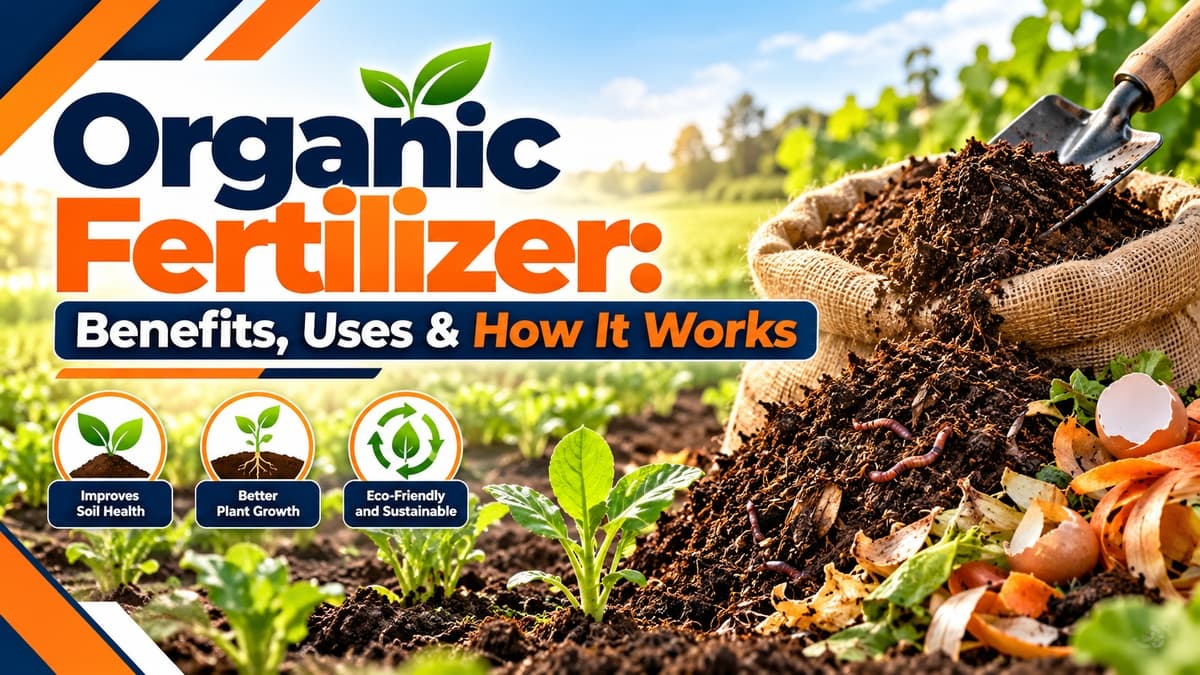
Organic Fertilizer: Benefits, Uses & How It Works
Choosing between organic fertilizer vs chemical? Discover the pros, cons, and environmental impacts of both to find the best choice for your garden.
Introduction:
Every gardener and farmer eventually faces a critical crossroads these days. This is the battle over fertilizer bags. On the one side, you have brightly coloured and highly concentrated chemical bags that promise lightning-fast growth. On the other side, you have unassuming earthy packages of organic plant food. Because organic one is promising you the long-term sustainability of your crops.
If you are trying to figure out which approach fits your green space, you're in the right place. Let's dig deep into the soil and look at the real facts about organic fertilizer vs chemical options.
What is Organic Fertilizer?
We must first answer the fundamental question to understand the debate. What is organic fertilizer?
In simple words, organic fertilizers refer to soil amendments that are derived entirely from natural plants or animals. Sometimes these amendments are derived from mineral sources as well. These fertilizers are born out of natural biological processes instead of being synthesized in a high-heat industrial factory. Common examples include well-rotted cow manure and nutrient-dense compost. Additionally bone meal, blood meal, fish emulsion, and kelp extract are also included in the making of this formula.
You aren’t actually feeding the plants directly when you apply organic fertilizer to them. Instead, you are feeding millions of microscopic organisms that live in the earth. These underground microbes slowly break down complex organic matter. Then they convert it into a steady and accessible buffet of nutrients for your plants' roots.
What is the Difference Between Inorganic vs Organic Fertilizers?
The fundamental difference between inorganic (chemical) and organic fertilizers is quite complex. Because this difference comes down to their speed, origin, and soil impact on the plant.
1) The Mechanism: Chemical fertilizers are manufactured synthetically in the fertilizer industry. While these fertilizers chemically process the minerals in the making process. They release immediate and isolated macronutrients which shoot directly into the root zone. These macronutrients include Nitrogen, Phosphorus, and Potassium NPK. Organic fertilizers release their nutrients slowly because they biodegrade them naturally in the soil.
2) The Target: Inorganic options feed only the plant and completely bypass soil biological needs. Organic options enrich the entire underground ecosystem. Because they are building up the physical and structural integrity of the soil over time.
The Cost Comparison: Short-Term vs. Long-Term Value:
At the retail counter, chemical fertilizers almost always look cheaper up-front. They are highly concentrated, meaning you need a smaller amount by weight to deliver a massive hit of NPK to your crops.
However, it is a financial trap when we look only at the initial price tag. Because synthetic fertilizers wash away easily through water leaching. Therefore, you must apply them repeatedly throughout the season. Additionally, chemical dependences destroy local soil biology over time. This means soil requires increasingly expensive quantities of fertilizer to achieve the exact same harvest yield.
Organic fertilizers may have a higher demand for an initial investment per bag. But these fertilizers continue to work for months. So basically these fertilizers drastically reduce your long-term watering costs in the fields. While they also completely eliminate the need for separate soil structure conditioners for you. In this way the overall life-cycle cost of organic gardening proves significantly cheaper for you.
An Interesting Fact You Might Not Know:
Did you know that healthy soil can hold up to 20 times its weight in water? This is because healthy soil contains rich organic matter in it. So, every 1% increase in organic matter allows an acre of soil to hold roughly 75,000 to 100,000 liters of extra water. You are essentially building a natural and drought-resistant sponge directly beneath your feet! If you choose organic fertiliser for your plants.
How to Use Organic Fertilizers Safely:
Using natural fertilizers requires a slightly different approach than shaking synthetic pellets across a lawn. Follow these simple steps for maximum success:
1) Test Your Soil First: Before adding anything, run a quick baseline test to see if your soil actually lacks nitrogen, phosphorus, or potassium.
2) Mix Early and Deep: Because organic matter needs microbial activity to unlock its power, mix granular options like bone meal or vermicompost into your topsoil a few weeks before planting.
3) Keep it moist: Microbes need moisture to survive and work. Always water your garden thoroughly after applying organic amendments to kickstart the biological breakdown.
4) Utilize Liquids for Quick Boosts: If your plants are showing immediate signs of nutrient deficiencies, apply fast-acting liquids like fish fertilizer or seaweed extract directly to the leaves as a foliar spray.
The Advantages of Organic Fertilizers:
Switching to organic options triggers a massive chain reaction of positive benefits for both your immediate workspace and the broader planet.
For Your Plants:
1) Zero Root Burn: Synthetic options carry high salt concentrations that can dry out and burn tender plant roots if over-applied. Organic alternatives feature a very low salt index, making chemical root burn nearly impossible.
2) Superior Flavor and Quality: Because natural fertilizers provide a diverse spectrum of trace micronutrients (like iron, zinc, and calcium) alongside standard NPK, vegetables and fruits grown organically exhibit vastly richer flavors and higher nutritional profiles.
For the Environment:
1) Protects Local Waterways: Synthetic nitrogen easily leaches past plant roots, running off into nearby streams and polluting essential groundwater networks. Organic matter binds tightly to soil particles, staying exactly where your plants need it.
2) Fights Climate Change: Organic farming preserves the soil’s capacity to store carbon. Healthy, living earth acts as a powerful carbon sink, safely locking away greenhouse gases that would otherwise escape into our atmosphere.
Pakistani Fertilizer Companies and the Future of Organic Farming:
In Pakistan, the agricultural sector has historically relied heavily on synthetic inputs distributed by major chemical players like Engro Fertilizers and Fauji Fertilizer Company. However, rising import costs and severe soil degradation across the agricultural belts of Punjab and Sindh have sparked a major domestic shift.
Innovative local pioneers are entirely redefining the future of Pakistani crop nutrition:
1) Hara Organic Pakistan: Operating as an industry pioneer, they manufacture top-tier local organic alternatives, including premium vermicompost, microbial bio-fertilizers, and targeted plant growth enhancers like Hara Grow.
2) Black Gold Fertilizer: Providing premium organic pellets, powders, and specialized liquid formulas specifically designed to reverse soil compaction and patch up local lawns.
3) Shah Chemicals: Actively bridging the gap by distributing specialized European blends, such as their popular Green Grow NPK-based organic fertilizer.
As these local brands expand their footprint, the future of farming in Pakistan is rapidly evolving from chemical dependence toward sustainable, self-reliant biological agricultural systems.
The Bottom Line:
If you are looking for an instantaneous, explosive burst of plant growth without any concern for long-term sustainability, chemical fertilizers will give you that quick fix.
However, if your goal is to grow truly vibrant, resilient plants while actively constructing rich, drought-resistant soil for future seasons, organic fertilizer is the definitive winner. By choosing natural options, you invest directly in the living health of your soil, protecting your local ecosystem one harvest at a time.
Frequently Asked Questions (FAQ)
What is organic fertilizer and how does it work?
Organic fertilizer is a natural soil amendment derived from plant, animal, or mineral sources that releases nutrients slowly as it decomposes. Unlike synthetic options, it does not feed the plant directly. Instead, it feeds beneficial soil microbes and earthworms. These microorganisms break down the complex organic matter over time, converting it into accessible, long-term nutrition for plant roots while simultaneously improving soil structure and water retention.
What is the main difference between organic and chemical fertilizer?
The main difference lies in their origin, nutrient release speed, and impact on soil health. Chemical fertilizers are synthetically manufactured to provide an immediate, highly concentrated burst of nutrients directly to the plant, bypassing the soil. Organic fertilizers are entirely natural, releasing nutrients gradually over weeks or months. While chemical options can degrade soil quality over time, organic fertilizers actively build and enrich the biological ecosystem of the soil.
Can organic fertilizer burn or kill my plants?
No, organic fertilizer rarely burns or damages plants because it has an incredibly low salt index. Synthetic fertilizers contain high concentrations of mineral salts, which can dehydrate and chemically burn tender roots if over-applied. Because organic options require soil microbes to break them down before nutrients become available, they release their elements at a safe, gentle pace that is highly compatible with root systems.
Is organic fertilizer more expensive than chemical fertilizer?
Organic fertilizer has a higher upfront cost per bag, but it is more cost-effective over time. Chemical options are cheaper initially because they are highly concentrated, but they easily leach away with water, requiring frequent reapplication. They also degrade soil structure, forcing farmers to buy extra soil conditioners. Organic options stay in the soil much longer, improve drought resistance, and reduce long-term watering and input costs.
How long does it take for organic fertilizer to start working?
Organic fertilizers typically take anywhere from 2 to 6 weeks to start showing visible results in plant growth. This timeline depends directly on soil temperature, moisture levels, and microbial activity, as microbes must first digest the organic matter to unlock the nutrients. For gardeners needing a faster response, liquid organic options like fish emulsion or seaweed extract can deliver nutrients to leaves within days via foliar feeding.