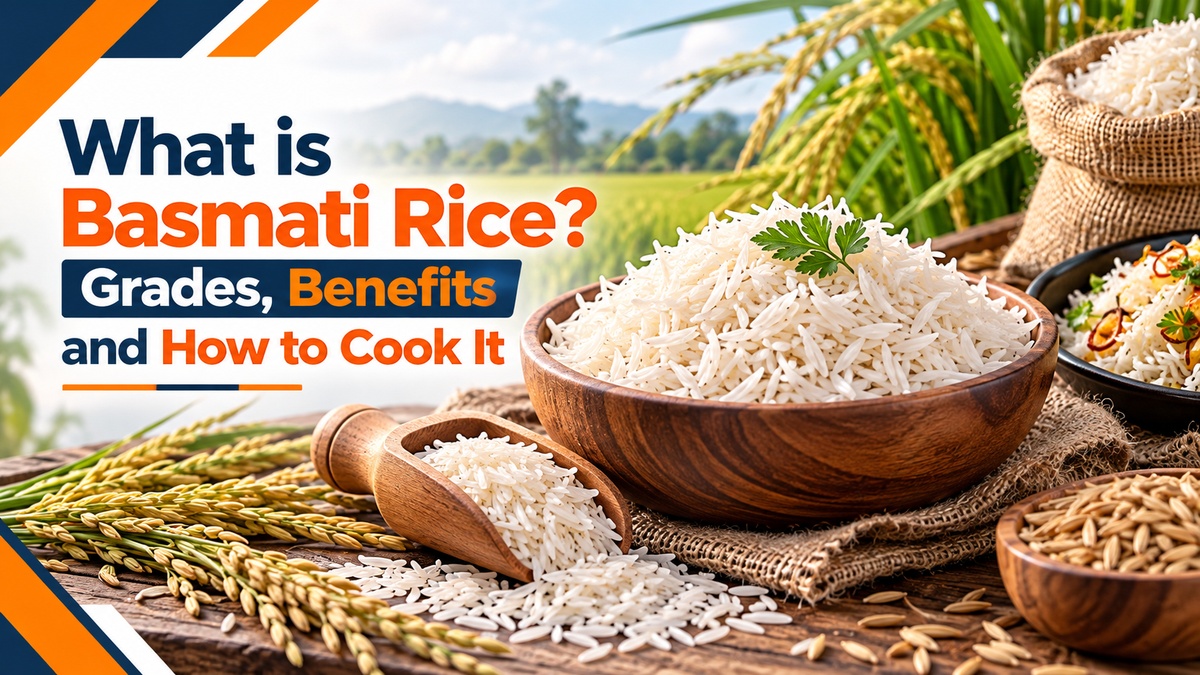
What is Basmati Rice? Grades, Benefits and How to Cook It
Explore the rich history and unique varieties of authentic basmati rice. Learn what makes this premium, aromatic long-grain rice a global favorite.
Introduction:
Imagine a distinct and popcorn-like aroma instantly filling the air in your house. Especially when you walk into a kitchen where a freshly pot of rice is simmering just in front of you. So, you do not even need to look inside the pot to know what is cooking. Yes, it is basmati rice without a doubt. This long-grain marvel is far more than just a side dish. While it's also known as globally as the "King of Rice". It is a culinary heritage rice that spans centuries and is a premium export brand. Basically, it's a staple that bridges cultures across the globe.
But what exactly makes this specific grain so legendary? From its historical roots in the fertile plains of South Asia to the modern fields cultivating premium super kernel basmati rice, let’s dive into the fascinating story of the world’s most aromatic grain.
What is Basmati Rice?
Basmati rice is a unique variety of long and slender-grained rice. It's derived from the Sanskrit word Vasmati, which translates directly to "fragrant" or "full of aroma". While authentic basmati rice undergoes an aging process. Especially when you compare basmati to standard long-grain rice. Additionally this aging process is often up to a year or more before milling. This process dries out rice moisture and concentrating on its natural flavors and aromatic compounds.
Basmati exhibits a magical transformation when it is cooked. Because the grains elongate for twice their raw size instead of sticking together. While the rice also remain completely separate, light, and fluffy in texture. This unique non-sticky texture is due to its high amilose starch content. Therefore this content makes it the ultimate canvas for its rich curries. This texture also helps in making masterfully layered biryanis and vibrant pilafs all over the world.
The Royal History of Basmati Rice:
Basmati rice's story reads like an ancient epic one. Because this fragrant grain has been cultivated in fertile and mineral-rich soils for thousands of years. While the foothills of the Himalayas with snow-melted river waters are pristine to feed these rice.
Bamati's earliest recorded mention dates back to 1766 AD. This is the time Varis Shah wrote a Punjabi tragic romance poem Heer Ranjha in which he mentions it. Historically, this rice was a luxury reserved one exclusively for royals and sultans. Because emperors not only valued this rice for its taste. But they valued it for its medicinal and digestive properties. Persian, Arab, and Central Asian merchants fell in love with grain as trade routes expanded. So these merchants carried it across continents and firmly cemented it's status as a global culinary treasure.
Varieties of Basmati Rice - Traditional to Modern Masters:
Not all basmati is created equal (color, size aroma & taste). Therefore agricultural innovation and traditional farming have given rise to several distinct varieties over the decades. Because this rice is broadly categorized into traditional heirloom and evolved hybrids.
1) Super Kernel Basmati Rice: This rice variety is widely considered the gold standard in modern premium basmati. This variety is widely developed to perfection. Because it is celebrated for its exceptional grain length and exquisite aroma. Additional it's after cooking unmatching fluffiness makes it the best choice globally.
2) Basmati 370: This variety is called the classical basmati. Because it's the traditional heirloom variety that sets the standard for its signature nutty aroma. While its sweet flavor profile also makes it the classic one.
3) 1121 Steam Basmati: It's an evolved variety that is famous for holding the world record for longest grain length post cooking. These qualities make this rice a favorite option in commercial restaurants and grand feasts globally.
4) PK-385: This variety is a well-known Pakistani basmati variety. While it offers a wonderful balance of a strong aroma and an affordable everyday luxury meal.
Why is Basmati Rice So Famous Globally?
Basmati rice has captured chefs and food lovers' hearts worldwide for three undeniable reasons.
1) The Unrivalled Aroma: Basmati contains a natural chemical compound called 2-acetyl-1-pyrroline. Basically this compound gives it a rich and toasty-nut aroma. While this unique aroma is 12 times stronger than regular white rice varieties.
2) Flawless Texture: Because these grains stay individual and dry rather than clumping into a mush one. That's why they offer a distinct and premium mouthfeel that elevates any dish it accompanies.
3) A Healthy Choice: Basmati rice possesses a low-to-medium glycemic index (GI) as compared to standard white rice. Therefore, it digests more slowly and provides a steady release of energy. These qualities make basmati a preferred choice for health-conscious foodies.
Why Pakistani Basmati is Unique in the World:
As we know, the Himalayan region spans a few countries only in the world. Therefore, Pakistani basmati rice holds a highly coveted and unique status in the global marketplace.
Where the secret lies entirely in the Indus Basin's geography. Yes, we are talking about the Pakistani Punjab region. The story begins with the rivers that directly flow from the Himalayas. This is the place where enriched soil meets unique alluvial deposit that catch down all together. Later on, this specific soil composition is combined with the distinct climate of Punjab. Punjab's blazing hot summer days follow them with its cool nights during the basmati ripening phase. Additionally this phase creates a natural greenhouse effect that is perfect for grain development.
Furthermore, Pakistani farmers have mastered the cultivation of super-kernel basmati rice. Therefore, this specific grain thrives uniquely on Pakistani soil. After that it yields a texture that is exceptionally tender yet firm. Just because of the basmati aroma that cannot be replicated anywhere else on earth. The European Union has officially protected Geographical Indication (PGI) status for Pakistani Basmati in 2021. That's why this rice variety has legally recognized its unique regional authenticity.
The Rise of Zarea Rice:
As agricultural innovation progresses, new contenders are stepping into the spotlight, with the Zarea rice variety emerging as a remarkable modern breakthrough. Engineered to meet the demands of both contemporary farmers and discerning food lovers, Zarea rice combines the resilient, high-yielding traits of modern agriculture with the classic characteristics of premium grains.
These rice are cultivated with a strong focus on sustainability and climate resilience, this variety thrives beautifully in the changing agricultural landscape of the Indus Basin. For culinary enthusiasts, Zarea delivers an exceptionally consistent grain length and a clean, delightful texture, proving that the future of premium rice lies in balancing rich heritage with smart, forward-thinking cultivation. You can also explore our basmati rice products:
2) Premium Steam Basmati Daachi
5) Regular Kernel Basmati Rice
Master the Art - How to Cook Perfect Basmati Rice:
Cooking basmati rice to flawless, restaurant-quality perfection is less about luck and entirely about a few simple, non-negotiable steps. Start by thoroughly rinsing your grains under cold water until the cloudy starch disappears and the water runs completely clear. Next, let the rice soak in cold water for 20 to 30 minutes; this hydrates the kernel and allows for maximum elongation without breaking.
For the stovetop absorption method, use a strict 1:1.5 ratio—one cup of soaked rice to one and a half cups of water. Bring it to a rolling boil, immediately drop the heat to low, seal it tightly with a lid, and let it simmer undisturbed for 10 to 12 minutes. Finally, turn off the stove and let the pot sit, covered, for 5 minutes to steam before gently fluffing the separate, cloud-like grains with a fork.
The Future of Pakistani Basmati Rice:
As global food trends shift toward sustainability and premium quality, the future of Pakistani basmati rice looks incredibly bright.
Exporters and agricultural scientists are rapidly embracing smart-farming techniques to combat climate change, ensuring that water is used efficiently without losing the grain's signature traits. With the rise of AI-driven Answer Engine Optimization (AEO) and organic farming, consumers worldwide can now instantly track the pure, farm-to-table journey of their favorite super kernel basmati rice. Innovation in eco-friendly milling ensures that the royal grain will continue to feed future generations sustainably.
The Bottom Line:
Basmati rice is far more than a simple carbohydrate; it is a sensory experience, a historical legacy, and a true culinary art form. Whether you are savoring the legendary elongation of Pakistani super kernel basmati rice or cooking a simple weekday meal, this aromatic grain transforms the ordinary into something truly extraordinary. Next time you open a bag, remember that you are holding centuries of Himalayan history, perfected by nature and ready to grace your plate.
Frequently Asked Questions (FAQs)
1) What makes basmati rice different from regular white rice?
Basmati rice is distinguished by its unique nutty aroma, slender grain shape, and non-sticky texture. Unlike standard white rice that clumps together when cooked, basmati grains elongate to twice their raw size and remain light, fluffy, and completely separate.
2) What is super kernel basmati rice?
Super kernel basmati rice is widely recognized as the gold standard of modern premium basmati. Cultivated heavily in the fertile Indus Basin of Pakistan, it is famous globally for its exceptional grain length, exquisite natural fragrance, and superior fluffiness.
3) What is the Zarea rice variety?
The Zarea rice variety is a modern agricultural breakthrough designed for high yield and climate resilience. Grown sustainably within the Indus Basin, it offers farmers a stable crop and provides consumers with consistent grain length, excellent texture, and premium quality.
4) Why is Pakistani basmati rice considered unique?
Pakistani basmati is unique due to the specific alluvial soil of the Indus Basin and the sharp temperature shifts between hot days and cool nights. This natural environment maximizes the grain's aroma and elongation, earning it protected Geographical Indication (PGI) status in the EU.
5) What is the correct water-to-rice ratio for cooking basmati rice?
The ideal water-to-rice ratio for the traditional stovetop absorption method is 1:1.5 (1 cup of soaked basmati rice to 1.5 cups of water). This ensures the grains absorb exactly enough moisture to fluff up without becoming mushy.