Climate Change Effects on Crops in Pakistan | A Complete Guide
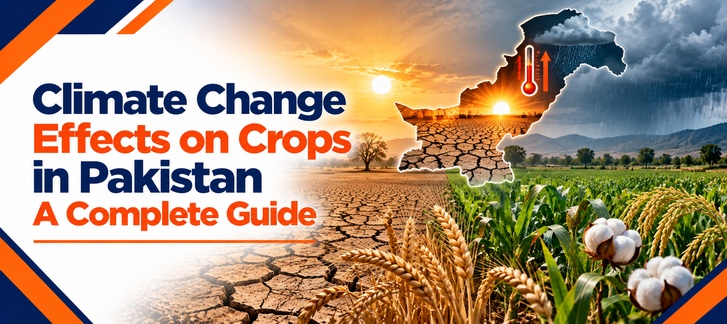
Temperatures rising and changing weather patterns are climate change effects on crops. It's because of droughts, heat waves, and flooding.
Introduction – Climate Change Effects on Crops:
Pakistan’s economy depends heavily on agriculture, which employs about 40% of the workforce and accounts for 19% of the country’s GDP. Unfortunately, the consequences of climate change on agriculture are posing a growing challenge to this vital sector. The nation’s agricultural production, quality, and cultivation methods are being significantly impacted by changes in climate patterns and decreased water availability. This manual offers a thorough analysis of how Pakistani agriculture is affected by climate change and looks at possible adaption measures.
The Impact of Climate Change on Crops Production:
Extreme Temperatures
Rising temperatures directly influence the growth cycle of plants. Every crop flourishes in particular temperature zones, and prolonged heat stress can impede photosynthesis, inhibit growth, and reduce yields. It’s because of climate change effects on crops. Certainly! Please provide the text you would like me to paraphrase.
Wheat undergoes quicker maturation and reduced grain filling.
Rice faces the threat of spikelet sterility when subjected to heat stress.
Cotton and maize show reduced productivity in extreme heat scenarios.
Unpredictable Rainfall Trends
The monsoon rains in Pakistan are becoming more unpredictable, which can cause excessive moisture that harms root systems or water shortages during crop development. Crops like maize and sugarcane are especially vulnerable to changes in rainfall and rely heavily on steady water availability.
Water Shortage
The melting ice caps and irregular precipitation are changing river currents and reducing groundwater supplies. During crucial stages of crop development, this impacts irrigation systems and lowers the amount of water available. In Punjab and Sindh’s water-scarce regions, vital crops like rice and wheat yield much less.
Infestations and Illnesses
The ideal conditions for the growth of pests and diseases are created by hotter and more humid weather. For example, fungal infections and locust infestations have increased recently, particularly affecting the harvests of vegetables and cotton.
Soil Deterioration
Soil quality is being harmed by excessive chemical fertiliser usage, frequent flooding, and salt brought on by poor water management. Over time, declining soil fertility lowers agricultural yields and resilience.
Impact on Major Crops in Pakistan:
Wheat: Grain size and yields are lowered during spring heatwaves.
Rice: Variable harvests are caused by its sensitivity to changes in temperature and water availability.
Fruits and Vegetables: Unpredictable weather patterns cause a reduction in the quantity and quality of fruits and vegetables.
Cotton: Growing temperatures and bug outbreaks cause yields to drop.
Sugarcane and maize: Face growth constraints brought on by heat and water scarcity.
Impacts on Socioeconomics:
Diminished Profits for Farmers: Small-scale farmers’ earnings are negatively impacted by decreased crop production.
Risks to Food Security: The country’s food supply is at risk due to lower yields in important crops.
Migration from Countryside to Cities: As a result of climate-related challenges, more people are leaving rural areas to live in cities, placing a strain on available resources.
Adaptation and Mitigation Approaches:
Varieties of Crops Resistant to Climate Change
Investing in crop varieties that withstand drought and tolerate heat is essential for preserving yields in a shifting climate.
Irrigation Techniques for Water Conservation
Techniques such as drip irrigation and laser land leveling are efficient in saving water and optimizing its utilization.
Agroforestry and Crop Alternation
These approaches improve soil vitality and increase crop durability in response to climate-related obstacles.
Alert Systems
Setting up weather prediction and early alert systems allows farmers to make quick choices, reducing crop losses.
Skill Development and Learning
Essential are training programs for farmers focused on sustainable farming methods and climate-smart practices.
The Importance of Technology and Platforms Such as Zarea:
Digital platforms like Zarea can assist farmers by providing current market data, prompt weather alerts, farming tips, and links to certified suppliers of seeds and fertilizers. Moreover, Zarea has an transparent pricing model that aids farmers in obtaining fair compensation for their purchases and promotes sustainable agricultural methods acoording to climate change effects on crops.
Final Thoughts:
Pakistan’s agriculture is clearly being impacted by climate change, and both local communities and policymakers need to take swift, calculated action. Despite the challenges posed by climate change, Pakistan may improve its agricultural sector and ensure food safety and economic stability by working together with farmers, the private sector, and the government.
Growing environmentally sustainable crops for a better future!
FAQ’s:
How does climate change affect the plants?
The land will get drier as the Earth warms because plants will require more time to grow and use water. Additionally, plants may grow larger leaves in response to warmer temperatures, which may increase evaporation and have an impact on soil moisture, rainfall, and water runoff.
What crops are most affected by climate change?
Even the more resilient crops we depend on, such as rice, maize, and wheat, will be impacted by climate change, while those that need certain circumstances will be more difficult to grow. Currently, these three crops—rice, maize, and wheat—provide more than half of the world’s calories.
How climate change affects agriculture in Pakistan?
Although farming is essential to our country, Pakistan is dealing with serious issues like water constraint and declining rainfall. Water shortages brought on by rising temperatures and changing rainfall patterns endanger food security by lowering crop yields.
How do climate factors affect plants?
Low temperatures (cold and frost stress) and high temperatures (heat stress) are the main climatic factors that cause plant stress. Temperatures that are too high or too low can seriously harm plants and affect their capacity to function properly.
How does climate change affect plant disease?
In addition to making plants more vulnerable to viral infections, high temperatures and heat stress can also affect how quickly viruses multiply and spread throughout a plant.