Food Commodities Explained: Markets & Top Crops
Discover how global food commodities work. Learn about the major agricultural markets, top crops like wheat and corn, and what drives global prices.
_2026-09-29_18-09-54.jpg)
Introduction:
Have you ever stopped and thought about the journey for your morning coffee? Or the journey for an afternoon sandwich? Or maybe you even thought about the fuel your car took before it reached you? But long before they become branded products on supermarket shelves. These products exist in their rawest and purest forms. Because these products are bought, sold, and traded across oceans in staggering quantities. Welcome to the world of food commodities. It's the unseen engine of the global economy and the literal lifeblood of human civilization as well.
What Are Food Commodities?
To put it simply, what are food commodities? They are the raw, standardized agricultural products, livestock, and aquatic resources that are grown or raised to feed the planet. Food commodities are uniform unlike packaged groceries you buy in a store. For example, a bushel of standard milled wheat from Kansas is essentially interchangeable with a bushel from Ukraine. So every brand in the world has global quality standards, supply, and demand that entirely dictate its value.
Food commodity trading occurs on major global exchanges in the financial world. For example, the Chicago Board of Trade (CBOT). Here, buyers and sellers lock in their goods' prices for future deliveries. This marketplace allows farmers to hedge against bad harvests for their crops. While it also gives food manufacturers the ability to predict their products' costs. Finally, it turns unpredictable weather and volatile yields into a structured and tradeable market.
The Titans of Agriculture and The Top Crops That Driving the Economy:
When we look at the global landscape what do we see? What are the world's most valuable crops that drive their economy? A handful of products from powerhouse crops. Those crops that form the basis of global nutrition, trade, and industrial manufacturing. Let's move forward with some common examples!
1) Corn (Maize): Corn is the undisputed heavyweight champion of the global agriculture industry. While we eat it directly. Because its massive economic footprint comes from its role as livestock feed. While its conversion also turns it into biofuels (ethanol) or industrial starches gradually.
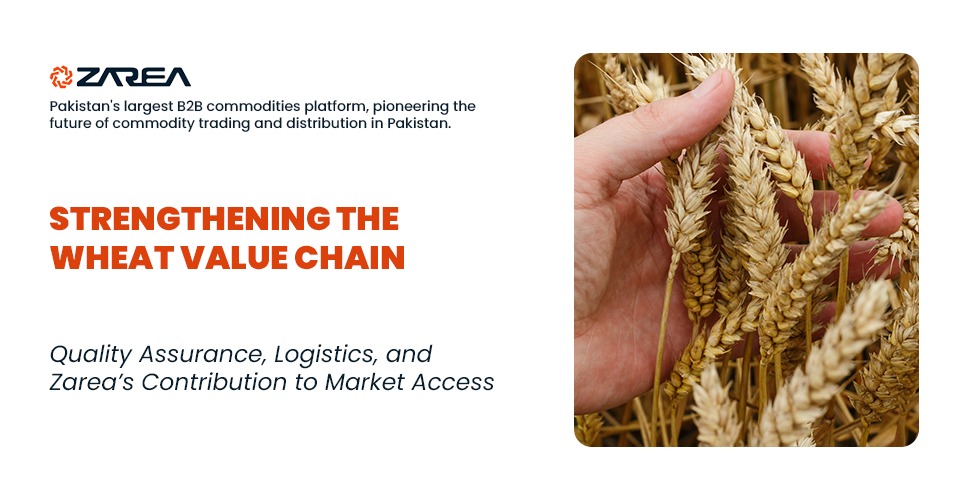
2) Wheat: Wheat has been the absolute baseline of human civilization for centuries. Because wheat covers more land area than any other commercial crop. While it also serves as the primary protein and carbohydrate source for billions of people. It has served us through bread, pasta, and flour.
3) Rice: Rice is the primary dietary staple for more than half of the world's population. So particularly as it is produced especially in Asia. Because it is a highly water-dependent and culturally vital crop. Therefore national policies heavily guard its trade globally.
4) Soybeans: Soybeans are the powerhouse of the oilseed category in the world. Because soybeans are prized for their high protein content and crushed to create animal feed. While it is processed into cooking oils and biodiesel in some regions.
How Food Commodities Shape the Supply Chain:
Food commodities do not just sit in silos. In fact, these goods actively dictate the global logistics infrastructure. Then the question is, how food commodities shape the supply chain which comes down to scale? How food commodities shape the supply chain which comes down to time and geography?
Because crops are grown in specific regions but the whole world consumes them. Because they require specialized transport and an intricate network. Grain elevators, massive bulk carrier ships and refrigerated shipping containers (refer). The same goes for dedicated rail networks as well. Because they are all built around agricultural cycles' unique demands.
The entire global shipping grid shifts to move millions of tons of soy and corn. When a harvest hits the Southern Hemisphere. Conversely, when a major shipping lane experiences a bottleneck. This included drought restrictions in the Panama Canal or geopolitical tension in the Black Sea. Therefore its shockwaves are felt instantly at every stage of the food supply chain around the globe.
The Economic Forces Shaping the Food Supply Chain:
The journey from a seed in the ground to a meal on your plate is governed by relentless market pressures. What are the economic forces that shaping the food supply chain? The system reacts to three primary levers:
1) The Energy Interdependency
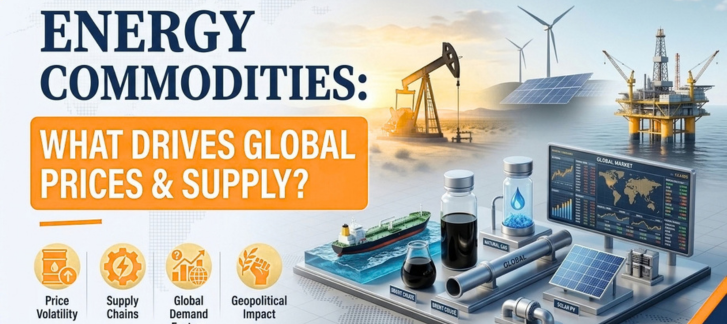
Agriculture is an incredibly energy-intensive field. Whether you talk about petroleum-based fertilizers that are used to nourish crops. Or you could talk about diesel fuel that is required to run tractors and cargo ships. Because oil prices directly dictate the cost of food. Therefore when energy prices spike, so do the food prices inevitably follow them.
2) Geopolitical Policies and Trade Barriers
Food is a national security matter. Therefore governments frequently intervene in commodity markets using export bans and subsidies to protect local farmers. Or they can also ban tariffs to secure domestic food supplies as well. Moreover these political decisions can instantly reroute global trade flows.
3) Currency Fluctuations
Because all major global food commodities are priced and traded in US Dollars (USD). Therefore, currency valuation plays a massive role in commodity trade. Additionally, a stronger dollar makes food more expensive for importing nations. While it's also shifting purchasing power of countries and altering global demand patterns as well.
Challenges Facing Food Commodities and the Supply Chain:
Operating a global supply chain for perishable goods is an ongoing battle against volatility. The agricultural sector currently faces several systemic bottlenecks:
Extreme Weather and Climate Shifts: Unpredictable weather is the ultimate disruptor for crops. Therefore, historical droughts and severe flooding can wipe out entire regions of production overnight. While unseasonal frosts also cause immediate price spikes on trading floors.
Perishable and Post-Harvest Waste: Unlike mineral commodities like gold or copper, it can affect food rot. While the lack of cold-chain infrastructure in developing nations results in massive amounts of food spoiling. Before the food ever reaches a consumer.
Labor Vulnerabilities: Agriculture relies heavily on seasonal labor from the stages of planting to the processing ones. Therefore shortages, changes in immigration policies, or health crises can halt food supply chains. Even when the harvests seasons are abundant.
The Future of Food Commodities and Supply Chains:
The food and commodities sector is undergoing massive digital and technological evolution. Because evolution is necessary to survive the pressures of a growing global population and a changing climate.
We are seeing the rise of precision agriculture and satellite imagery allows farmers to optimize fertilizer use. While AI and drones predict crop yields with pinpoint accuracy for farmers. Blockchain technology is being introduced to trace food from the exact farm plot to the grocery store aisle on the logistical side. Finally, transparency improves food safety and verifies that ethical sourcing follows different practices.
Additionally, the rise of agritech marketplaces is democratizing food commodities trading around the world. Because it allows smaller regional farmers to bypass traditional middlemen. While it also connects farmers directly with global buyers.
Wrap Up:
Food commodities are far more than mere tickers on a financial balance sheet. They represent the shared baseline of human survival and economic stability. By understanding how these vital raw materials are grown, traded, and transported, we gain a clearer picture of the complex, interconnected world we live in. The next time you walk down a grocery store aisle, you aren't just looking at food—you are looking at the culmination of a vast global market that keeps our world moving.
FAQ's:
What is a food commodity?
Food commodities are basic and standardized agricultural goods. This includes raw foodstuffs that traded in bulk on global markets without brand differentiation.
What are 5 examples of commodities?
Five common examples of commodities are crude oil, gold, wheat, natural gas, and copper.
What are the three most used food commodities?
The three most widely used and produced staple food commodities globally are rice, wheat, and maize (corn).
What is the difference between food and food commodities?
Food is any substance that nourishing and eaten for health and survival. While a food commodity is a raw or processed agricultural product that traded in bulk on a commercial market.