Inside CPEC Phase 2: Five New Economic Corridors
Discover how CPEC Phase 2 is moving beyond basic roads. Explore the five new economic corridors driving tech, green energy, and industry in Pakistan.
Introduction:
The China-Pakistan Economic Corridor has been a buzzword for nearly a decade. Because this initiative does not only dominate in regional geopolitics but in economic columns as well. Therefore, if you think CPEC is still just about asphalt highways or coal-fired power plants only. Or you can think it's a concrete barrier, so it’s time to update your radar.
The mega-project has quietly entered its next evolution. CPEC Phase 2 is no longer just an infrastructure playbook. But it is a digital and agricultural tomorrow. In simple words it is an industrial overhaul that is designed to reshape Pakistan's economic future.
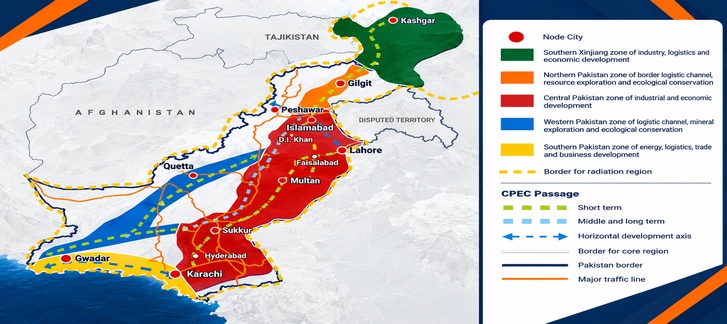
Let's unpack how CPEC Phase 2 projects are shifting gears. What does the updated CPEC Phase 2 exact map look like? Why do the five new corridors of cooperation matter to you?
What is CPEC?
CPEC stands for China-Pakistan Economic Corridor. While it is the flagship and crown jewel of Beijing’s ambitious Belt and Road Initiative (BRI). This initiative was launched over a decade ago. Basically it was envisioned as a multi-billion-dollar framework. Because it links China’s landlocked western region in Xinjiang directly to the deep-water Gwadar Port in Pakistan. CPEC wasn't just a bilateral agreement; it was designed as a global trade game-changer. Because it cuts thousands of miles off traditional maritime trade routes.
The Transformational Results of CPEC Phase 1:
We must acknowledge how far the corridor has come before looking forward. CPEC Phase 1 is often called the "early harvest" phase. Because it focuses heavily on fixing Pakistan's structural vulnerabilities. While this phase also focuses on crippling electricity shortages and a fragmented transport network nationwide.
The results were transformational. Phase 1 successfully injected thousands of megawatts of electricity into Pakistan’s national grid through coal, solar, and hydro projects. Simultaneously, it paved thousands of kilometers of advanced motorways. While these motorways connect major urban hubs to remote regions and lay the literal groundwork for a modern logistical ecosystem.
What is the Difference Between CPEC Phase 1 and CPEC Phase 2?
CPEC Phase 2 is about breathing organic life into Phase 1. Because Phase 1 builds the physical skeleton of this corridor. So the primary difference lies in the shift from state-led brick-and-mortar infrastructure to business-to-business (B2B) cooperation. Basically the 2nd phase will bring private sector investment and human capital development like programs to Pakistan.
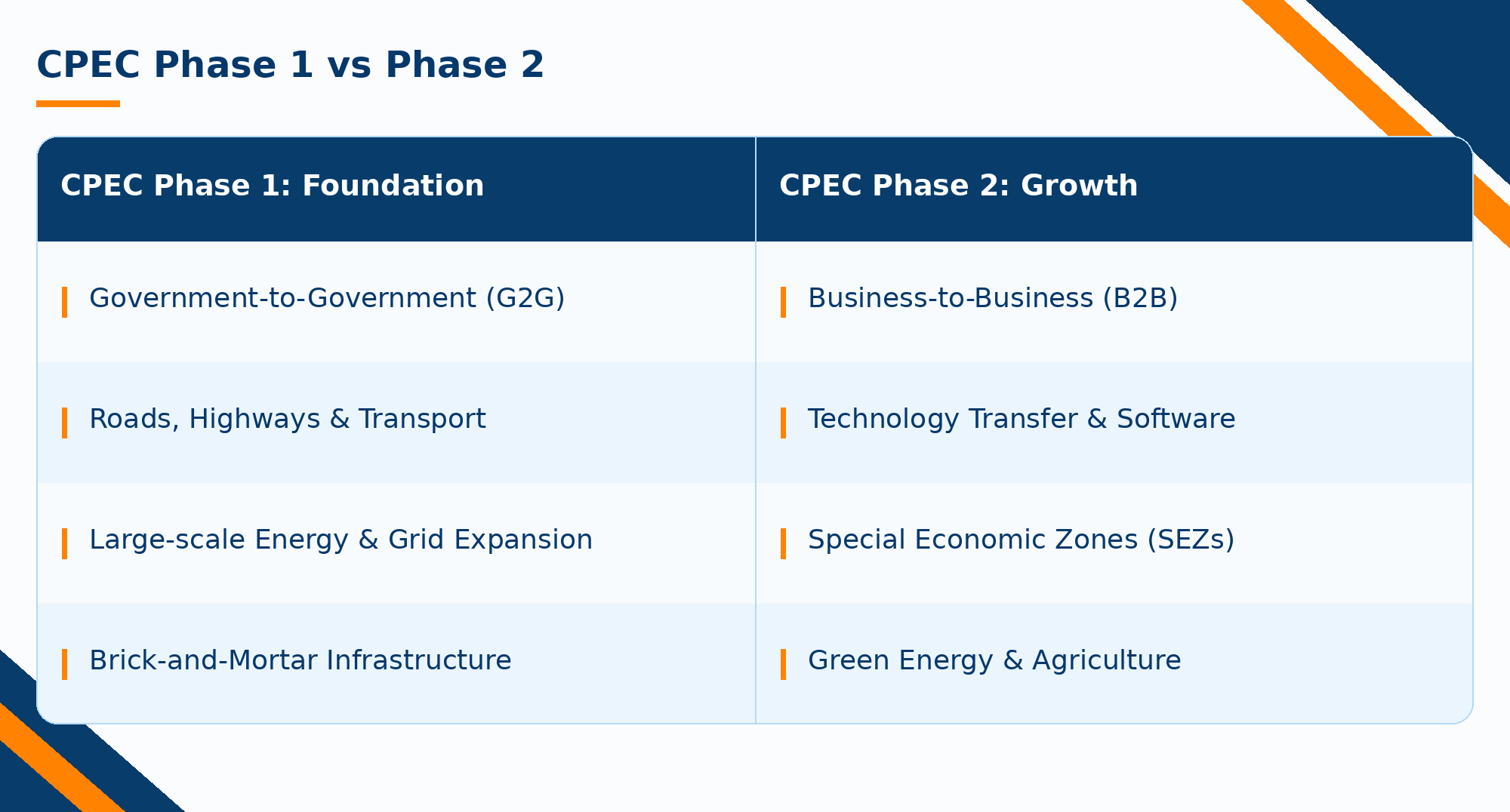
While Phase 1 relyed on major government-to-government (G2G) loans to build the hardware. Because Phase 2 focuses on software-like investments. This includes technology transfer and industrial productivity. While it also focuses on job creation and environmental sustainability in Pakistan.
The Roadmap for CPEC 2.0:
The modern roadmap for CPEC 2.0 aligns directly with Pakistan’s national economic properity and framework. Because it prioritizes long-term fiscal stability over rapid expansion. Basically the goal now is to turn transit routes into genuine economic zones.
The next target is to upgrade the CPEC Phase 2 map from a single logistical line to a web of industrial clusters. Because the roadmap focuses heavily on boosting Pakistan’s domestic export capacity. While it also stabilizes foreign exchange reserves, and eases the cost of doing business for global investors.
Five New Corridors of Cooperation:
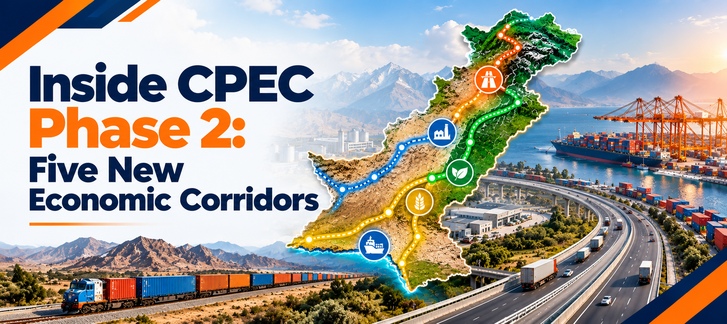
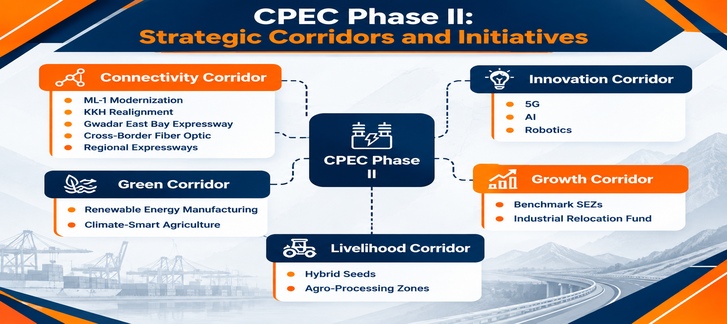
CPEC's Phase 2 core strategy revolves around five newly designated functional corridors. These pathways are specially designed to address modern challenges. This includes climate change, artificial intelligence and regional inflation as major challenges.
1) Growth Corridor: This corridor focuses on scaling up local manufacturing capabilities and streamlining supply chains. This corridor also focuses on turning raw logistical transit routes into high-yielding manufacturing clusters.
2) Innovation Corridor: Centered on the future, this pathway drives digital infrastructure, information technology parks, AI integration, and technical training programs for Pakistan’s massive youth population.
3) Green Corridor: The Green Corridor prioritizes sustainable agriculture and waste management in response to climate vulnerabilities. While it is also expanding to renewable energy sources like wind, solar, and run-off-the-river hydro as well.
4) Livelihood Corridor: This corridor is aimed at grassroots social development. Therefore, this framework targets poverty alleviation and clean water access. While it also focuses on Healthcare initiatives and localized job creation in underdeveloped regions.
5) Regional Connectivity Corridor: This pathway aims to extend the geometric reach of CPEC, transforming Pakistan into a premier trade hub that bridges Central Asian economies with international marine markets.
CPEC: More Than Projects:
It’s easy to get lost in the sea of policy jargon, but CPEC Phase 2 is ultimately a human story. It represents a shift toward socio-economic equity.
This initiative aims to fund vocational schools and primary healthcare centers for a brighter future. While it also concentrates on clean water filtration plants in remote districts in Balochistan and Khyber Pakhtunkhwa. Because the updated framework ensures that local communities reap the daily benefits of regional trade. Therefore. It's making it far more than just a corporate transit route.
Industrial Growth and Development - The Special Economic Zones:
The crown jewels of CPEC Phase 2 projects are its Special Economic Zones (SEZs). These zones offer massive tax holidays and duty-free machinery imports to encourage foreign factories to relocate to Pakistan. Three primary zones lead the charge:
1) Allama Iqbal Industrial City (FIEDMC), Punjab
This specialized zone is strategically located near Faisalabad. Because the city is the textile's beating heart of Pakistan. This massive industrial estate is built to accommodate the heavy manufacturing sector and chemical industries. This city is also accommodating the pharmaceutical and automobile industries as well. Because Faisalabad leverages a highly skilled local labor pool for decades.
2) Rashakai Economic Zone, Khyber Pakhtunkhwa
This economic zone is positioned near the M-1 motorway. Basically Rashakai serves as a primary gateway to Afghanistan and Central Asia. It is highly optimized for export-oriented industries and mechanical processing industries. It's also optimized for consumer goods manufacturing.
3) Gwadar Free Zone, Balochistan
This zone is the heart of CPEC. While this zone sits adjacent to Gawadar's deep-sea port. Technically the Gawadar Free Zone is the operational anchor of the entire CPEC framework. It is explicitly designed for manufacturing and transshipment operations. Additionally it is also designed for cold storage and warehousing services as well. Therefore, it allows businesses to bypass heavy domestic shipping lanes entirely.
Agricultural Revolution and CPEC Phase 2:
Although agriculture remains the backbone of Pakistan's economy. Yet it has long suffered from outdated practices. Phase 2 introduces a targeted agricultural revolution via Pak-China joint ventures.
By introducing smart farming methods, corporate farming frameworks, and drought-resistant seed technologies, the partnership aims to drastically increase crop yields for cotton, rice, and wheat. Furthermore, the establishment of modern food processing and cold-chain facilities means Pakistan can transition from exporting raw agricultural commodities to exporting high-value, packaged agro-products to Middle Eastern and Chinese markets.
The Bottom Line:
CPEC Phase 1 gave Pakistan the physical tools to stay connected; CPEC Phase 2 is giving the country the economic engine to grow. By diversifying into technology, agricultural modernization, and specialized industrial zones, CPEC 2.0 offers a concrete path toward sustainable, export-led growth. For businesses, investors, and citizens alike, the evolution of these five new economic corridors will undoubtedly shape the regional economic landscape for decades to come.