Maize Crop in Pakistan – A Comprehensive Overview
Let's take an overview of maize crop in Pakistan! Explore how Zarea is changing commodity trends and B2B markets across the country.
Introduction – Maize Cultivation:
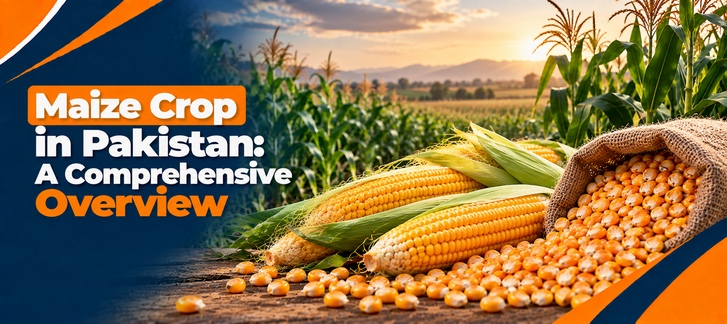
It is one of the most vital cereal crops on the global front, commonly known as corn in most parts of the world, and assumes immense significance in the economy of Pakistan. Maize stands third in importance after wheat and rice concerning area and production in the country. Maize cultivation has been going on all over Punjab, Sindh, more lately with increasing spread into Khyber Pakhtunkhwa, for various uses, which range from food products to fodder and other industrial usages.
At Zarea, we consider maize indispensable not only for being able to be prepared as staple food but also for it being one of the most critical agricultural products with respect to its effect on economies. The platform supplies everything from building materials to the extension with agricultural commodities that include the best quality maize for supporting local farmers and industries.
Types of Maize Grown in Pakistan:
In Pakistan, several types of maize are cultivated based on their intended use and climatic adaptability. The main varieties include:
Flint Maize: Known for its hard kernels, flint maize is primarily used for animal feed and industrial purposes.
Dent Maize: This variety possesses a more tender kernel that indents when fully grown. It is commonly utilized for human ingestion and as animal feed.
Sweet Corn: This type is picked while unripe and is eaten as a vegetable or made into canned goods.
Popcorn: A special type of flint maize that pops when heated; it is popular as a snack food.
Each type serves different market needs and contributes uniquely to the agricultural economy of Pakistan. If you want to learn more about maize or corn in Pakistan and its importance, read our previous blog.
Main Uses of Maize in Pakistan:
Maize has diverse applications that extend beyond basic consumption. The primary uses include:
Human Consumption: Although direct human consumption has declined over the years, maize flour (makai ka atta) remains a staple in certain regions.
Animal Feed: Approximately 70% of maize produced in Pakistan is utilized as poultry feed, making it an essential component of livestock diets.
Wet Milling Industry: Approximately 20% of maize undergoes processing in the wet milling sector to create starches, sweeteners, and various other by-products.
Industrial Uses: Maize acts as a base ingredient for creating numerous products like corn oil, corn syrup, and biofuels.
The adaptability of maize makes it an essential crop for ensuring food security and fostering economic development.
Impact of Weeds on Maize Crop Yields in Pakistan:
Weeds greatly affect maize crop in Pakistan, resulting in decreased yields and financial losses for farmers.
Weeds remain a significant challenge for Pakistan especially in the maize sector. Because maize competes with other crops for water and nutrients. While sunlight and growing space are also the challenges for the corn crop. Their impact can vary considerably depending on weed species and infestation density. Same as maize varieties, weather conditions, and farming management practices also have an impact. Recent research conducted in Pakistan has demonstrated an important thing. Uncontrolled weed competition can result in substantial maize yield losses especially in this type of crop.
A 2024 study examined the impact of Parthenium hysterophorus on maize crops. Because this is an invasive weed that is commonly known as congress grass. This grass was found in the fields. As a result, the maize yield declined as the weed density increased. Maize produced an average yield of approximately 4.26 tonnes per hectare in weed-free experimental plots. However, the presence of just one Parthenium plant per square metre reduced yields by around 14%. While it's heavy infestations that result in losses ranging from 22% to 46%. Maize yield loss reached approximately 45% compared to weed-free conditions. Especially when we talk about the high infestation level that is studied about it.
1) Punjab:
Maize Area
1.149 million ha
Production
8.776 million tonnes
Approx. Average Yield
7.64 tonnes/ha
2) Khyber Pakhtunkhwa
Maize Area
484,200 ha
Production
954,100 tonnes
Approx. Average Yield
1.97 tonnes/ha
3) Sindh
Maize Area
3,700 ha
Production
3,800 tonnes
Approx. Average Yield
1.03 tonnes/ha
4) Balochistan
Maize Area
4,803 ha
Production
5,253 tonnes
Approx. Average Yield
1.09 tonnes/ha
5) Pakistan
Maize Area
1.641 million ha
Production
9.739 million tonnes
Approx. Average Yield
5.93 tonnes/ha
Estimated Impact of Weed Infestation:
Maize farmers may experience significant production losses based on their 2024 Pakistan-specific research. This happens when invasive weeds are not effectively controlled. Therefore the study found the following relationship between Parthenium hysterophorus density and maize yield loss:
Weed Density | Estimated Maize Yield Reduction |
|---|---|
1 plant per m² | 14% |
2 plants per m² | 22% |
4 plants per m² | 29% |
8 plants per m² | 38% |
16 plants per m² | 46% |
The researchers concluded that reducing Parthenium density to below approximately two plants per square metre. So, this technique could help prevent severe yield losses in maize fields.
Challenges Faced by Maize Farmers:
Despite its significance, maize farmers in Pakistan encounter several challenges:
Seed Availability: Very little access to high-value seeds, with only about 34% availability of improved seeds.
Market Instability: Market uncertainty creates fluctuations in market price that make it difficult to assure a profit for farmers in particular.
Climate Change: Weather pattern changes affect the schedule of planting and yields.
Pest Infestations: Increased pressure by pests will lead to severe losses if not properly managed.
Addressing these challenges requires collaborative efforts between government agencies, research institutions, and farmers themselves.
Weeds of Maize Crop in Pakistan:
Weeds have now become one of the major issues of maize cultivation. Weed plants compete with maize for their nutrition, light, and water. Different species of broadleaf weeds and narrow leaf weeds attack maize crop in Pakistan. Control of weeds is necessary for acquiring maximum yield and keeping healthy crops of maize. Some major weeds in maize and millets crops grown in Pakistan are presented below, arranged in order of broadleaf and narrow leaf categories.
Broadleaf Weeds
Krund: A persistent weed that thrives in warm climates, often found in disturbed areas.
Bathu: Known for its rapid growth, it competes aggressively with maize for resources.
Tandla: This weed can grow rapidly and produce a significant number of seeds, making it a formidable competitor.
Jangli Palak: A wild form of spinach that can invade maize fields and reduce yield potential.
Jangli Hallo: This weed can spread quickly and is difficult to control once established.
Dhodak: Known for its fleshy leaves, it thrives in warm weather and can outcompete maize plants.
Kulfa: A perennial weed that can establish deep roots, making it challenging to eradicate.
Lehli: Also known as wild lettuce, it can grow tall and shade maize crops.
Itsit: This weed not only competes with maize but can also be toxic to livestock if ingested.
Narrowleaf Weeds
Khuble: Commonly known as wild oats, this weed competes vigorously with maize for nutrients and moisture.
Madhana: Also known as purple nutsedge, it is notorious for its resilience and ability to spread rapidly.
Swnki: This grass can thrive in various conditions and compete effectively with maize crops.
Baru: Known as barnyard grass, it is a major competitor in rice and maize fields alike.
Deela: A significant weed that affects wheat and maize; it has developed resistance to several herbicides.
Importance of Weed Management:
Efficient weed control is crucial for optimizing maize production. Weeds not only vie for resources but can also host pests and diseases that could adversely affect crop health. Integrated weed management strategies that combine cultural practices, mechanical control, and chemical methods are recommended to manage these weeds effectively.
The latest evidence shows that weed management is not simply a routine farming activity—it is directly connected to farm profitability and national agricultural productivity. The latest evidence shows that weed management is not simply a routine farming activity—it is directly connected to farm profitability and national agricultural productivity. Pakistan's maize sector has become increasingly important these days. So particularly this sector made milestones especially in Punjab and Khyber Pakhtunkhwa. Therefore this account is mean something for the overwhelming majority of the country's maize production. The 2024 Agricultural Census also shows that maize remains particularly important in Pakistan. Especially when you talk about the cropping patterns of the Punjab and KPK provinces.
Regular field monitoring can help farmers reduce competition and protect yields. Same as early weed identification, integrated weed management and timely herbicide application where appropriate in the crop rotation. As maize becomes increasingly important for food, feed and industrial uses that changed Pakistan. While improving weed management will remain essential these days. Because it protects both farm incomes and Pakistan's wider agricultural supply chain.
GMO Maize Threat To Maize Crop In Pakistan:
Pakistan’s growing maize industry could face new challenges if genetically modified (GMO) maize is commercially cultivated in the country. Stakeholders in the local seed sector have raised concerns that cross-pollination between GMO and non-GMO maize could contaminate locally developed varieties and potentially undermine years of investment in Pakistan’s hybrid seed research and development. Former Pakistan Tobacco Board Secretary Khan Faraz has argued that Pakistan has developed a strong domestic hybrid maize sector and that continuing to promote locally produced hybrid varieties remains important for farmers, consumers, and the wider agricultural economy.
Maize is currently Pakistan’s third-largest cereal crop after wheat and rice. Therefore it has become an increasingly important cash crop in Pakistan. Further maize has average yields of around four tons per hectare - among the highest in the region. While GMO technologies are being promoted globally for their potential to develop this type of crop. So this technique can be better withstand harsh weather and changing growing conditions also. Because concerns about this crop remain about its long-term impact on local seed systems. The Pakistan High-tech Hybrid Seed Association has warned about a danger. They stated that GMO maize pollen could spread through the wind and cross-pollinate with conventional varieties. While this hybrid crop is also creating contamination which may be difficult to reverse.
Supporters of Pakistan’s domestic seed industry believe that commercial approval of GMO maize could threaten locally developed seed varieties and weaken both public and private research efforts. They argue that Pakistan already possesses a growing hybrid maize industry capable of meeting domestic market requirements. Climate challenges continue to reshape the agriculture field in Pakistan. Therefore the debate over GMO maize highlights the need to balance technological advancements. While these advancements are preserving the protection of indigenous seed development and agricultural biodiversity. Because it serves the long-term interests of Pakistan’s farming sector.
At Zarea, it is our commitment to make sure that local farmers in this area get the best maize corn, meeting the market requirements, while at the same time ensuring that environmental sustainability among the farming communities is paramount. As we forge into the future, investing in this vital crop will be highly instrumental in ensuring prosperity to farmers and consumers while responding positively to the challenges of weeds.
Final Thoughts:
In conclusion, weeds pose a significant threat to the productivity of maize crops in Pakistan through competition for essential resources like nutrients and water. Understanding the major broadleaf weeds such as Krund, Bathu, Tandla among others—and narrow leaf weeds like Khuble—can help farmers implement effective management strategies.
FAQs:
In which seasons is maize grown in Pakistan?
Maize is grown during the autumn and spring seasons.
What are the best months to plant maize in Pakistan?
Spring maize: Late January to late February; March 15 to April 15 in hilly areas.
Autumn maize: July 15 to August 15.
Winter maize: April to May (planting in June may delay germination).
Which soil type is best for growing maize?
Sandy-loam to silty-loam soils that are well-drained, steering clear of waterlogged situations.
Who is the largest producer of maize?
The United States, producing 354.19 million tonnes and exporting 57.79 million tonnes.