Natural resources of Pakistan: Examples and Types
What are the primary natural resources of Pakistan? Understand the key types, commercial examples, and their impact on Pakistan's economy.
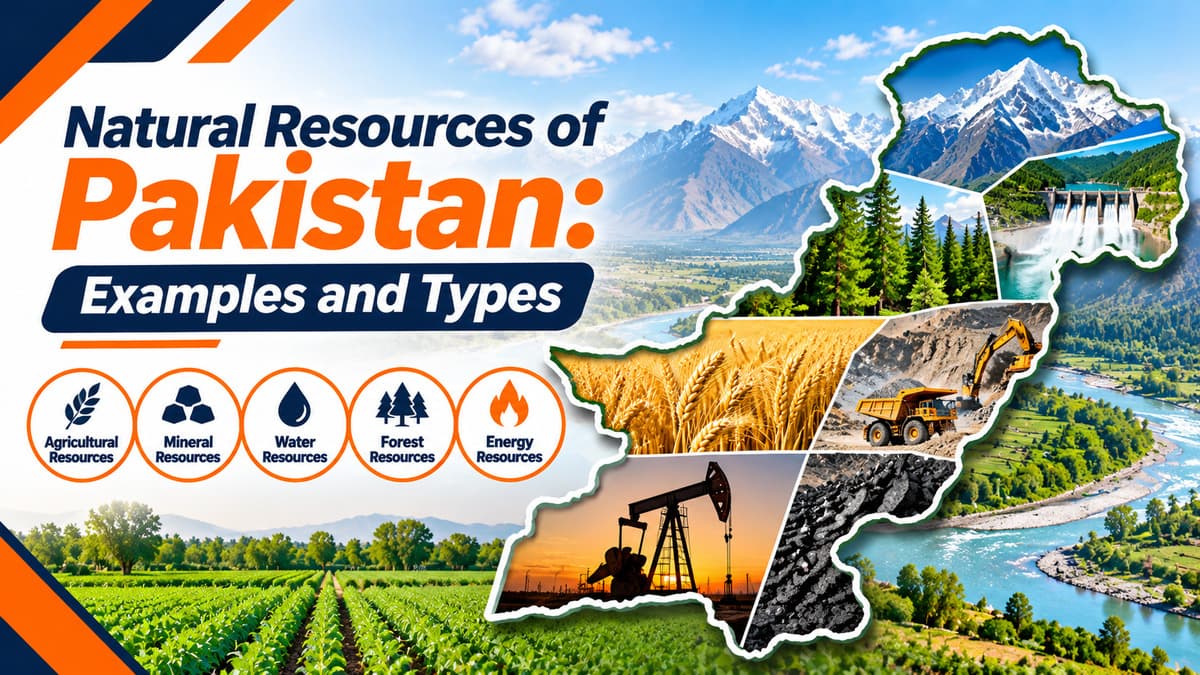
Introduction:
Pakistan is a land of profound ecological contrasts. Whether you talk about the snow-capped crowns of the Karakoram range or down. Or you could talk about the sun-drenched coastal lines of the Arabian Sea. No doubt, our country sits atop a massive and complex wealth network. Understanding Pakistan's natural resources isn’t just an academic exercise for business and industrial buyers. But it is the ultimate blueprint for commercial survival and economic growth according to policymakers.
Tapping into domestic resource networks with a focus on efficiency and transparency is the only way forward. Because global supply chains face unprecedented volatility. Let’s find out the types, examples, and the critical future of Pakistan's natural wealth.
What Are Natural Resources?
The earth that exists untouched provides natural resources that are the raw materials and elements for human creation. They are the silent engines of human civilization. Because everything from the air we breathe and the water we drink to the deepest minerals is powered sources. Additionally these power resources run our heavy factories because they fall into this category.
Natural resources serve as primary inputs into a modern B2B ecosystem. There is always a natural resource that must be extracted, processed, and traded. Before steel can be forged and before cement can be mixed. Moreover this also happens before transport fleets can move across the country.
Classification of Natural Resources in Pakistan:
Economists and environmental scientists broadly categorize Pakistan's natural resources into two fundamental types. Because they properly manage and utilize these assets.
1) Renewable Resources
Renewable resources are those resources that can replenish themselves naturally over time. Because they can be provided and aren't exploited faster than they can recover.
1) Examples: The examples of these types of resources include solar energy, wind power, agricultural biomass, and water systems.
2) The B2B Value: Renewable resources are rapidly turning into the preferred choice for commercial sustainability. Because traditional energy grids have become more expensive over time.
2) Non-Renewable Resources
Non-renewable Exist in finite quantities only. These resources are gone for good and will also take millions of years to form again. Once they are extracted and consumed with the passage of time.
1) Examples: Examples of these types of resources include coal, natural gas, crude oil, and metallic minerals.
2) The B2B Value: These resources form Pakistan's foundational base for heavy manufacturing, the energy sector, and industrial logistics.
Manufacturing and Natural Resources: The Vital Link:
Manufacturing and natural resources share a symbiotic relationship. A country’s industrial sector is only as strong as its access to stable raw materials. Heavy manufacturing units such as cement plants, textile mills, and steel foundries have strong dependencies. Because these units rely heavily on a steady stream of domestic commodities to keep their operations alive in Pakistan.
Manufacturing costs skyrocket when a supply chain is fragmented or broken. Especially inefficient broker markets cause this broken supply chain in the majority of cases. Platforms like Zarea step in multiple businesses to solve this exact bottleneck. Because we are basically bridging the gap between raw natural resource extraction and industrial procurement. Additionally we are the digital marketplace. Therefore we ensure that factories receive the materials they need without costly delays or opaque pricing.
Major Natural Resources of Pakistan: Core Examples:
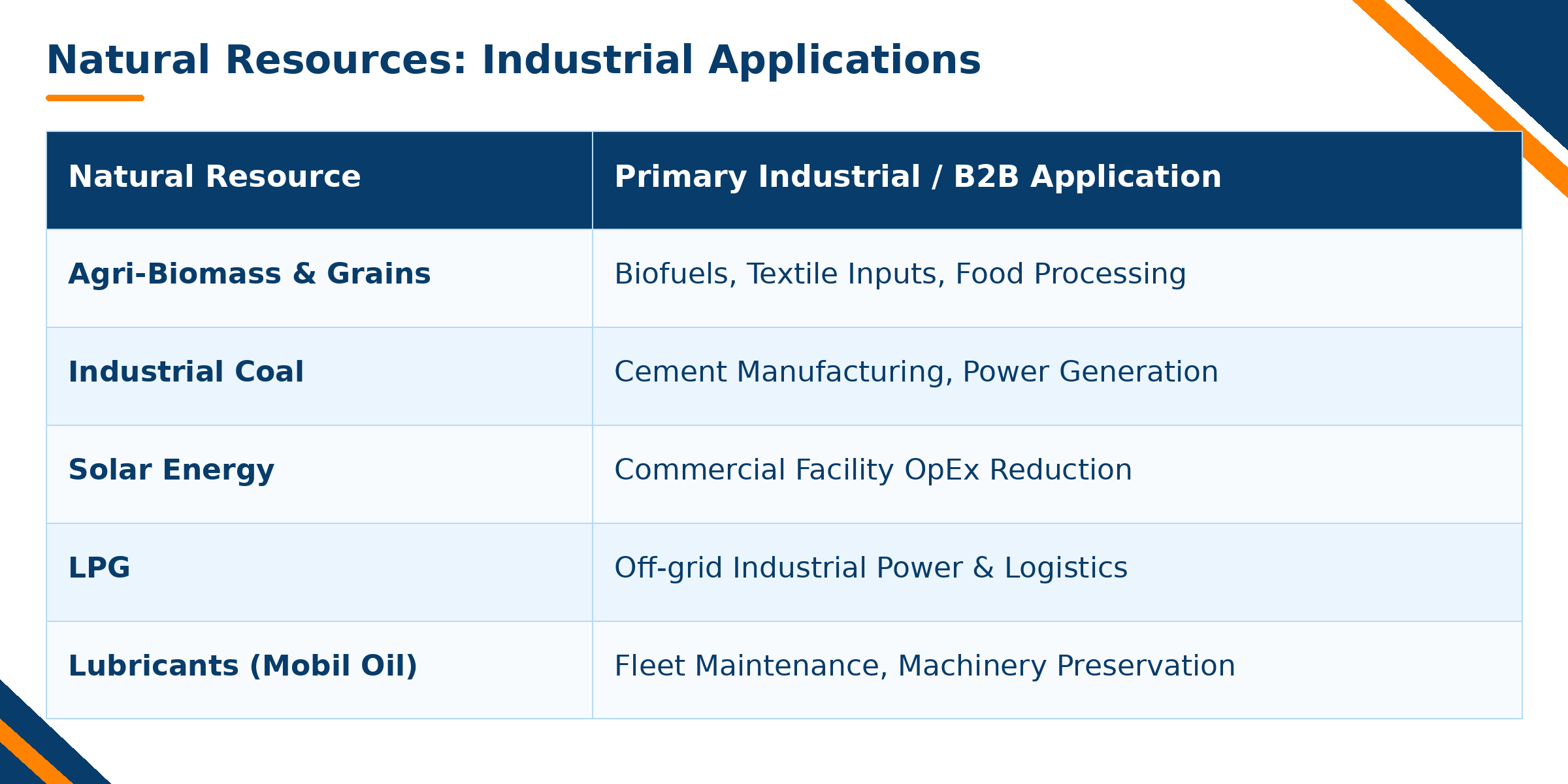
Pakistan boasts a diverse portfolio of natural commodities. When looking at the marketplace today, five critical resources dictate the pace of national industry:
1. Agriculture and Biomass
Agriculture is the undisputed backbone of Pakistan's economy. Beyond supplying food, agricultural natural resources yield incredible industrial value through biomass. Sub-products like wheat straw, rice husk, and corn silage are aggressively traded in bulk. These agriculture biomass products serve as cost-effective, alternative fuels for industrial boilers and vital inputs for the livestock sector.
2. Coal
Coal is a heavyweight champion in Pakistan's domestic energy mix. Regional variants like Quetta coal and Punjabi coalare heavily utilized to fire up the kilns of the nation's premier cement manufacturers. Sourcing verified, high-quality coal in bulk is essential for keeping industrial output consistent and cost-effective.
3. Solar Energy (The Solar System Shift)
While sunlight is a ubiquitous environmental asset, its commercialization via solar systems has revolutionized Pakistan's industrial landscape. Facing soaring grid electricity tariffs, warehouses, textile hubs, and commercial offices are investing heavily in bulk solar procurement to slash their operational expenses (OpEx).
4. LPG (Liquefied Petroleum Gas)
LPG acts as a flexible, transitional energy source across Pakistan. For industrial units, rural manufacturing plants, and commercial kitchens operating outside the primary gas pipeline infrastructure, LPG provides a cleaner-burning, highly efficient alternative to heavy fuel oils.
5. Mobil Oil and Lubricants
While Pakistan imports a significant portion of its crude oil, the processing and distribution of industrial lubricants and Mobil oil are critical to national logistics. High-grade lubricants protect multi-million rupee machinery, heavy tractors, and transport fleets from friction and mechanical failure, keeping the country’s supply chains moving smoothly across major commercial arteries.
Economic Importance of Natural Resources:
The economic impact of these resources cannot be overstated. They are the baseline variables that dictate Pakistan's Gross Domestic Product (GDP), employment rates, and trade balances.\
When local natural resources are extracted and distributed efficiently, it reduces Pakistan's reliance on expensive foreign imports. This keeps precious foreign exchange reserves within the country, stabilizes the rupee, and gives local manufacturers a competitive edge on the global stage.
Major Challenges in Resource Management:
Despite this inherent wealth, Pakistan faces significant hurdles in optimizing its natural assets. The most glaring challenges include:
1) Supply Chain Opacity: Traditional commodity trading is often plagued by multiple layers of middlemen, resulting in artificial inflation and unpredictable quality.
2) Inversion of Tech: Outdated extraction techniques in mining and agriculture lead to high waste margins and lower output quality.
3) Environmental Degradation: Unchecked industrial runoff, over-tilling of land, and reckless emissions threaten to permanently damage the country's ecological baseline.
Future of Pakistani Resources - Smart Procurement and Sustainability:
The future of Pakistan’s commodity wealth depends entirely on the conservation of natural resources through smarter logistics and modern technology. Moving forward, the integration of digital trade platforms will redefine the market.
By digitalizing the B2B supply chain, enterprises can minimize transportation waste, source verified eco-friendly alternatives like solar and biomass, and ensure that resources are allocated precisely where they are needed most. Conservation isn’t just about using less; it’s about using smarter.
The Bottom Line:
The natural resources of Pakistan hold the key to unlocking the nation’s ultimate industrial and economic potential. From the coal that powers our cement blocks to the agricultural fields that feed our textile mills, these commodities are the lifeblood of commerce.
However, maximizing this wealth requires a shift away from disorganized, legacy broker networks. Embracing transparent digital procurement platforms allows Pakistani enterprises to secure high-quality raw materials efficiently, stabilize their production costs, and actively contribute to a sustainable, self-reliant future.
Frequently Asked Questions:
What are the main natural resources of Pakistan?
The primary natural resources of Pakistan include fertile agricultural land, extensive natural gas reserves, industrial coal, iron ore, copper, gold, and massive potential for renewable energy sources like solar and wind power.
Why is the conservation of natural resources important for Pakistan?
The conservation of natural resources in Pakistan is vital to sustaining long-term industrial manufacturing, curbing costly foreign import reliance, protecting depleting water tables, and ensuring food security against climate-induced disruptions.
What are the 2 major types of natural resources found in Pakistan?
Pakistan’s natural resources are split into renewable resources (such as solar energy, agricultural biomass, and water) and non-renewable resources (such as Thar coal, natural gas, and mineral deposits).
How does agriculture act as a natural resource in Pakistan?
Agriculture acts as a critical natural resource by providing fertile soil for food production, raw cotton for the textile export sector, and agricultural biomass (like rice husk and wheat straw) utilized as alternative fuels for heavy industry.
What type of coal is found in Pakistan and how is it used?
Pakistan holds massive reserves of lignite and sub-bituminous coal, primarily in the Thar desert. It is heavily utilized for domestic power generation and by heavy manufacturing sectors, such as the cement industry, to fire production kilns.