What is Arable Farming? Key Crops & Types
What is arable farming? Get a clear definition of arable land, see how crops are grown, and explore the top crop types in this complete guide.
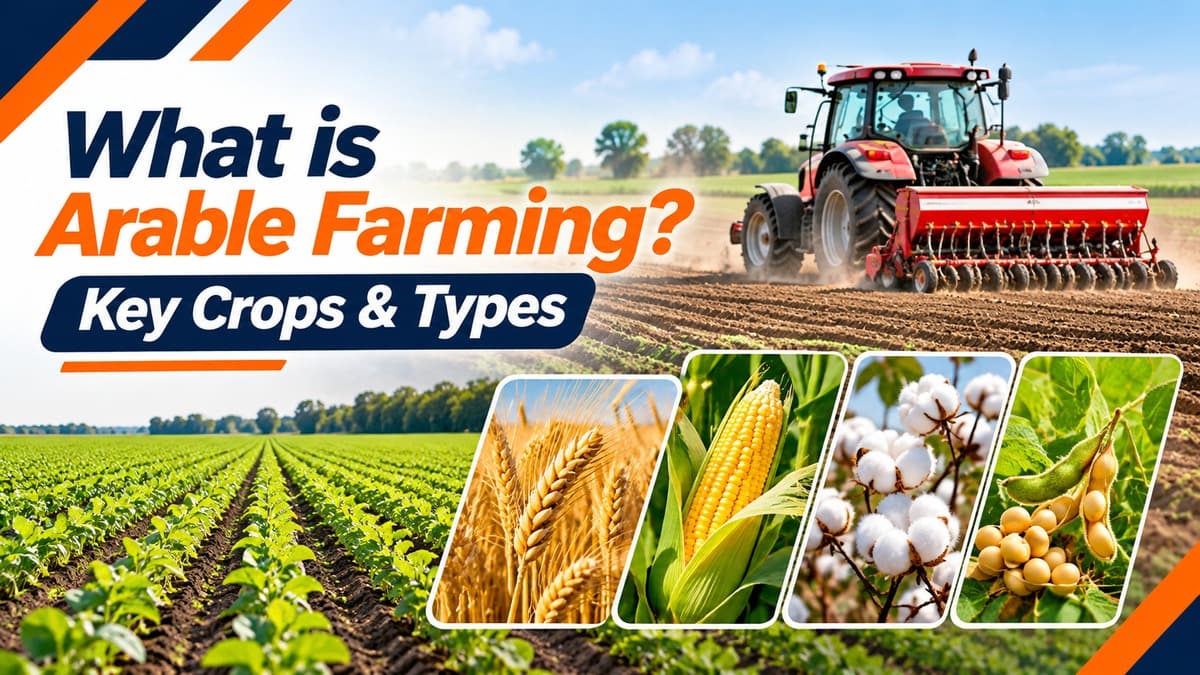
Introduction:
Just imagine that you are standing at the edge of a vast and golden wheat field. And then the morning breeze gently swayed you. Therefore, that breathing producing landscape is the heart of global food security. Because it represents arable farming. The systematic cultivation of annual crops on land that is regularly tilled, plowed, and managed is called arable farming.
Arable word is derived from the Latin word arabilis which means "fit for plowing." While arable agriculture is the bedrock of every civilization in the world. Additionally, this process transforms raw dirt into staple crops that feed billions of people worldwide. If you have ever wondered about it, how does your daily bread, rice, or morning cereal made it to your plate? The answer lies in the intricate world of arable land management.
What is Arable Farming?
At its core, arable farming is a specialized branch of agriculture focused exclusively on growing plant-based crops on cultivated soil. Unlike pastoral farming, which involves raising livestock like sheep or cattle, arable systems treat the ground as a highly productive canvas for seasonal plants.
To be classified as arable land, the soil must be physically workable. This means it is regularly plowed or tilled to create an optimal seedbed, seeded, nurtured, harvested, and then cleared to start the cycle all over again within a 12-month period. It is a highly active, intensive style of farming that requires rich topsoil, accessible water, and flat or gently rolling terrain to accommodate heavy machinery.
Here you can explore about intensive agricultural techniques!
Key Types of Arable Crops:
The variety of vegetation grown on arable land is massive, but they generally fall into five distinct categories:
1) Grains & Cereals: The true heavyweight staples, including wheat, rice, maize (corn), barley, oats, and rye.
2) Pulses & Legumes: Nutrient-dense and nitrogen-fixing plants like lentils, chickpeas, peas, and soybeans.
3) Oilseeds: Crops primarily grown for oil extraction, such as rapeseed (canola), sunflowers, and flax.
4) Tubers & Root Crops: High-carbohydrate plants grown underground, like potatoes, yams, and sugar beets.
5) Industrial & Cash Crops: Non-food crops cultivated for manufacturing, including cotton and flax for textiles.
Here you can find out the principles of organic farming!
Types of Arable Farming:
Arable farming is not a one-size-fits-all practice. Depending on the climate, economic scale, and available technology, it generally manifests in three primary styles:
1. Commercial Arable Farming
This is large-scale, high-tech agriculture. Primarily seen in regions like North America, Western Europe, and Australia, commercial farming utilizes massive plots of land, advanced machinery (like combine harvesters and autonomous tractors), and synthetic inputs to maximize crop yields for national supply and international export.
2. Subsistence Arable Farming
In many developing regions, families cultivate small plots of arable land using traditional methods and manual labor like subsistence farming. The primary goal here is not profit, but direct survival. The crops grown are consumed entirely by the farmer's household, with very little surplus remaining for local markets.
3. Mixed Farming
Many modern agriculturalists choose to balance their risks by combining arable crop cultivation with pastoral animal rearing on the same property. The crops feed the livestock, while the animal manure naturally fertilizes the arable fields, creating a highly efficient, cyclical ecosystem.
Importance of Arable Farming:
Without arable farming, modern society would quite literally collapse. Its importance stretches far beyond simply filling grocery store shelves:
1) Global Food Security: It yields the primary caloric intake for the human race. Crops like wheat, rice, and maize are foundational to the global diet.
2) Raw Materials for Industry: Beyond food, arable fields provide the raw ingredients for everyday items—from the cotton in your clothing to the bio-ethanol running in eco-friendly vehicles.
3) Economic Backbone: Millions of people worldwide depend on the arable supply chain for employment, encompassing field hands, agronomy scientists, tractor mechanics, and commodity traders.
Benefits of Arable Farming:
When managed correctly, arable agriculture offers immense advantages over other forms of land use:
1) High Yield Efficiency: Modern arable practices can produce incredibly high volumes of food per acre, making it an incredibly efficient use of land to fight global hunger.
2) Economic Scalability: Because many arable crops are easily mechanized, farmers can scale their operations up efficiently, dropping production costs and keeping food affordable.
3) Dietary Versatility: Arable land allows for a huge diversity of crops, ensuring that human populations have access to essential vitamins, complex carbohydrates, and plant-based proteins.
Challenges in Arable Farming:
Despite its immense benefits, working with the earth comes with major risks. Today’s arable farmers face unprecedented bottlenecks:
1) Soil Degradation: Decades of aggressive, deep plowing have stripped many fields of their organic matter. This leaves the topsoil vulnerable to wind and rain erosion.
2) Pest and Disease Resistance: Monoculture—growing the exact same crop over vast fields year after year—has caused pests and weeds to evolve. They are becoming increasingly resistant to conventional chemical sprays.
3) Climate Vulnerability: Arable farming relies entirely on predictable weather. Shifting monsoon patterns, intense heatwaves, flash droughts, and unseasonal frosts can instantly ruin an entire year’s financial investment.
Eco-friendly Practices in Arable Farming:
To protect the future of our food supply, agriculture is undergoing a massive green revolution. Sustainable and regenerative practices are moving from niche trends to mainstream necessities:
1) Conservation Tillage (No-Till Farming): By leaving the soil undisturbed and planting seeds directly into the residue of previous crops, farmers prevent erosion, conserve soil moisture, and trap carbon underground.
2) Smart Crop Rotation: Alternating deep-rooted crops with nitrogen-fixing legumes (like clover or peas) naturally restores soil nutrition without relying heavily on chemical fertilizers.
3) Cover Cropping: Planting temporary crops like rye or vetch during the off-season protects bare soil from heavy rains and suppresses weed growth naturally.
4) Precision Agriculture: Using drones, GPS-guided tractors, and soil sensors allows farmers to apply water and fertilizers only where absolutely needed, dramatically reducing chemical runoff.
Arable Farming in Pakistan:
In Pakistan, arable farming is not just an industry; it is the economic heartbeat of the nation. Blessed with the fertile Indus River basin, Pakistan possesses some of the most productive arable land in South Asia.
The agricultural calendar here is uniquely divided into two major seasons:
1) The Kharif Season: Summer crops sown during the monsoon season (April to June) and harvested in autumn. Major crops include rice, sugarcane, cotton, and maize.
2) The Rabi Season: Winter crops sown in autumn (October to December) and harvested in spring. The crown jewel of this season is wheat, alongside chickpea and mustard seeds.
Despite its rich soil, Pakistan faces serious challenges. Outdated irrigation methods lead to widespread water logging and salinity, while climate-induced floods and droughts threaten seasonal yields. Integrating modern, water-efficient technologies like drip irrigation is vital to safeguarding the country’s agricultural future.
Future of Arable Farming:
The future of cultivating the earth is deeply tied to digital technology and ecological science. We are moving toward an era of "smart farming", where artificial intelligence calculates precise planting days, and automated drones scout fields for early signs of crop disease.
Gene-editing technologies are also paving the way for climate-resilient crop varieties that can thrive in drought-prone or high-salinity soils. The ultimate goal for tomorrow's farmer is clear: produce more food while leaving a significantly smaller environmental footprint.
The Bottom Line:
Arable farming remains the ultimate bridge between human survival and nature. While the industry faces severe structural hurdles—from climate volatility to degraded soils—the shift toward eco-friendly, tech-driven practices offers a hopeful path forward. By nurturing our arable land today, we ensure a food-secure world for generations to come.
Frequently Asked Questions (FAQ)
What is the simple definition of arable farming?
Arable farming is the agricultural practice of growing annual crops on land that is regularly plowed, tilled, and cultivated. It focuses entirely on producing plant-based foodstuffs and industrial raw materials, such as grains, oilseeds, and vegetables, rather than raising livestock.
What is the difference between arable land and pastoral land?
The primary difference lies in how the land is utilized. Arable land is actively cultivated, tilled, and sown to grow seasonal crops like wheat, rice, and corn. In contrast, pastoral land is left as pasture or meadow for livestock grazing, such as cattle and sheep, to produce meat, dairy, and wool products.
What are the main types of crops grown in arable farming?
Arable crops are generally categorized into five major groups:
1) Cereals and Grains: Wheat, maize (corn), rice, barley, and oats.
2) Pulses: Lentils, chickpeas, and field peas.
3) Oilseeds: Soybeans, rapeseed (canola), and sunflowers.
4) Root Vegetables & Tubers: Potatoes, yams, and sugar beets.
5) Cash Crops: Cotton and jute for industrial textiles.
Why is crop rotation crucial for arable land?
Crop rotation preserves soil fertility and breaks the lifecycles of destructive pests and diseases. By alternating different crop families (such as planting nitrogen-fixing legumes like peas after nutrient-heavy cereals like wheat), farmers naturally restore soil health, drop their reliance on chemical fertilizers, and prevent topsoil erosion.