What Factors Affect Crop Yield in Pakistan
Weather patterns, drought, water and irrigation problems are factors that affect crop yield seriously in Pakistan.
Introduction – What Factors Affect Crop Yield?
Since it supplies necessities like food, clothes, and shelter, agriculture is one of humanity’s most important endeavours. Researchers have shown that the number of absolute poor families worldwide decreases by 0.6% to 1.2% for every 1% rise in agricultural productivity. Meanwhile, experts estimate that the planet will have 9.7 billion people by 2050, necessitating a roughly 70% increase in food production to keep up with demand. Analysts expect that a third or more of the increase in global food production over the next few decades will come from rainfed agriculture.
Unfortunately, more intense weather events are necessary for agricultural output. Therefore, temperature, air pollution, and water availability all have a significant effect on agriculture. Pakistan’s economy depends heavily on agriculture, which employs almost 38% of the workforce and contributes roughly 19% of GDP. However, irregular and frequently low crop production is one of the sector’s most urgent problems. Enhancing food security, farmer livelihoods, and sustainable agricultural development in Pakistan requires an understanding of the elements that influence crop output.
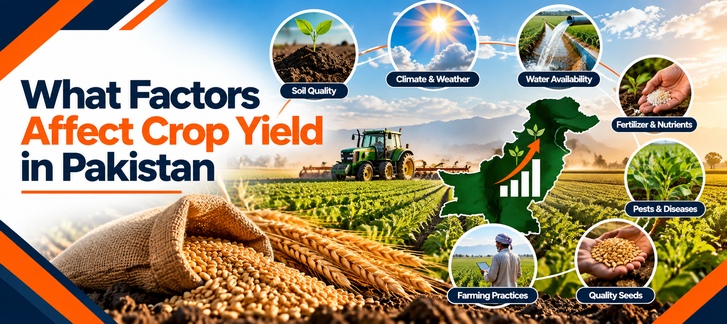
Key Factors Affecting Crop Yield in Pakistan:
When not properly monitored and managed, a number of variables present a serious risk to farms and reduce productivity. These elements fall into three categories: biological, environmental, and technological. Many nations have increased their agricultural land area and intensified cropland management through practices like irrigation and the use of large amounts of inputs like synthetic chemicals for weed and pest control and inorganic fertilisers. This is a result of pressure to increase crop production.
Due to these activities, food quality has decreased, soil erosion has accelerated, groundwater has become contaminated, and soil and water quality have deteriorated. This has spurred initiatives for sustainable intensification in an effort to boost yields on current farms while reducing the negative environmental effects of agriculture.
Weather Patterns
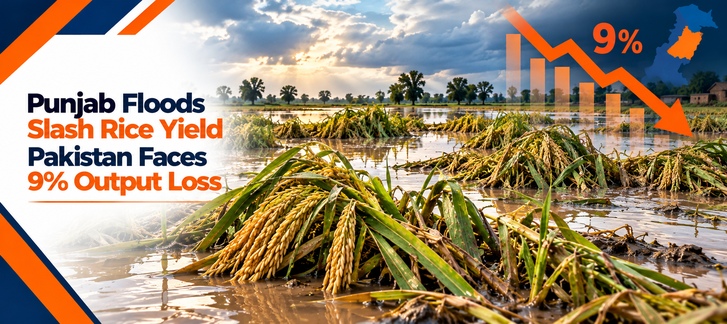
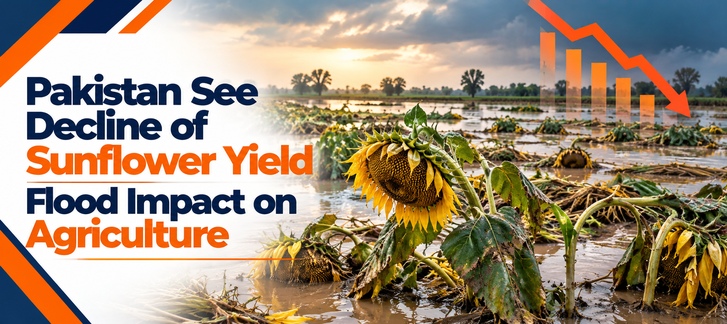
Predictions indicate that changes in rainfall and temperature will have a major detrimental effect on a variety of agricultural operations during the coming decades. Extreme weather events are becoming more problematic in agriculture as a result of climate change, resulting in significant agricultural output losses. Pakistan’s agriculture is heavily reliant on the weather, especially during the monsoon season. Extreme temperatures, unpredictable rainfall, protracted droughts, and flooding upset crop cycles and impact output.
Effects of Drought on Soil
A drought occurs when there is not enough water available from irrigation and/or rainfall to fulfil the crop’s evapotranspiration requirements. Changes in water availability (volumes and seasonal distribution) and water demand for agriculture and other competing industries are the main causes of climate change. The upcoming challenges of climate change are known to alter abiotic stressors such as fluctuating temperature regimes and their related effects on water availability. This can result in drought, a rise in the prevalence of diseases and pests, and extreme weather events at the local to regional level.
Availability of Water and Irrigation
Lack of water is still a significant obstacle. The timely irrigation of crops is impacted by the over-reliance on canal infrastructure and declining groundwater levels. During crucial stages of growth, areas such as southern Punjab and Sindh have severe water shortages.
Fertility and Management of Soils
Soil degradation caused by salinity, erosion, and excessive use of chemical fertilizers significantly decreases agricultural productivity. Deteriorating soil health is also a result of improper crop rotation and soil testing.
Seed quality
Using uncertified or subpar seeds results in poor germination and reduced disease and insect resistance. While improved and climate-resilient seed types can greatly increase yields, many small farmers do not have easy access to them.
Disease and Infestation of Pests
Harvests can be significantly decreased by crop diseases like bacterial blight in rice or rust in wheat, as well as pest attacks like locust invasions. By changing the ecosystem’s equilibrium, climate change has made these problems much worse.
Farming Methods
Lack of mechanisation, inappropriate fertiliser usage, and outdated agricultural practices all lower farming’s efficiency. Not many people use contemporary technologies like laser land levelling, precision farming, and effective planting procedures.
Agricultural Input Access
Productivity is hampered by the scarcity and high expense of machinery, fertilisers, pesticides, and high-quality seeds. It is sometimes difficult for small-scale farmers to get these necessary ingredients.
Farmer education and extension services
Agricultural extension services and training programs are inaccessible to many farmers. They are unable to implement new practices, resource management plans, and pest control measures because of this knowledge gap.
Support and Policies of the Government
Inconsistent agricultural policy, postponed subsidies, and a dearth of crop insurance programs adversely affect crop output and deter investment in farming. To help smallholder farmers, we need more robust institutional assistance.
Infrastructure and Market Access
Market chains dominated by intermediaries, inadequate storage facilities, and poor transportation restrict farmer profitability and may deter the use of high-yield techniques.
Techniques to combat the decline in agricultural yields:
Nowadays, most people agree that the best way to deal with the consequences of climate change in agriculture is through climate smart agriculture, or CSA. Agriculture characterises itself as improving the attainment of national food security and development objectives while reducing or eliminating greenhouse gas emissions, increasing resilience (adaptation), and increasing production in a sustainable manner.
In order to boost food production, improve food security, and guarantee that food is inexpensive (low input-cost) while maintaining sustainable natural resource management and climate change resilience, CSA encourages the transformation of agricultural systems and calls for the transformation of agricultural policies.
Role of Technology and Digital Platforms like Zarea
In order to address the issues that impact agricultural productivity, platforms like as Zarea are essential since they offer:
Access to market prices and high-quality inputs in real time
Agrochemical, seed, and fertiliser vendors that have been verified
Updates and educational materials about climate-smart agriculture
Clear transactions and prompt agriculture product delivery
These inventions enable farmers to increase output by bridging the gap between traditional and modern agricultural methods.
Final Thoughts:
Stakeholders along the agriculture value chain may make better decisions if they are aware of the factors influencing crop productivity in Pakistan. Even if infrastructure and environmental issues persist, aggressive governance, sophisticated technology, and focused initiatives can change Pakistan’s agricultural landscape. To achieve long-term food security and agricultural sustainability, cooperation between the public and commercial sectors as well as digital platforms is crucial.
Improved understanding is the first step towards higher yields.