Gold Declines as Inflation is Sparked by US-Iran Tensions
As new US-Iranian tensions increased oil prices and raised concerns about inflation, gold prices declined on Monday.
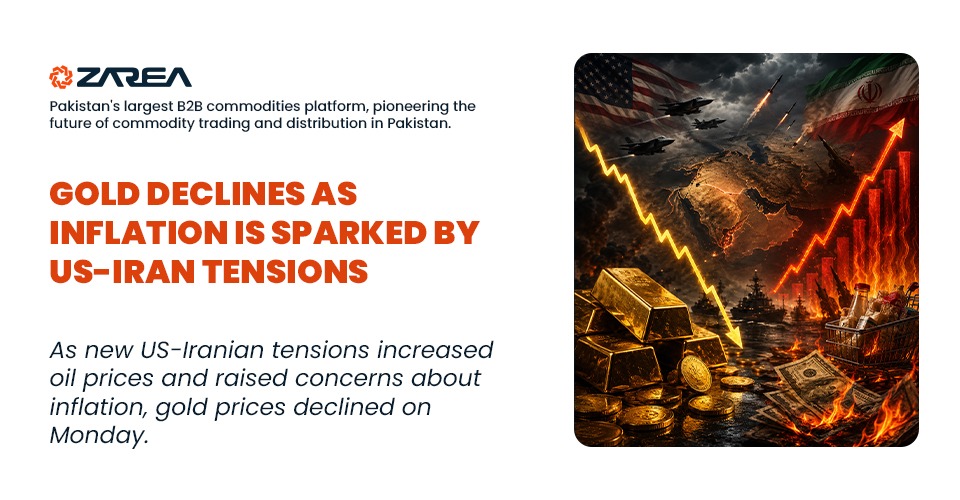
Gold Prices Decreased:
On Monday, June 29, 2026, the price of gold fell precipitously. Contrary to expectations, rising geopolitical tensions between the United States and Iran led to a sell-off in the conventional safe-haven asset. However, investors typically gravitate for bullion due to global geopolitical tension. Thus, this tendency was reversed by the special economic danger of a Middle East energy shock. Surging petroleum costs fueled serious inflation worries. However, persuading the market that central banks throughout the world will rapidly raise interest rates. The allure of non-yielding physical gold was quickly diminished by this macroeconomic change.
As new US-Iranian tensions increased oil prices and raised concerns about inflation, gold prices declined on Monday. Expectations of increased interest rates are also being supported by gold.
By 8:51 a.m. ET (12:51 GMT), spot gold had dropped 1.03 percent to USD 4,045.95 per ounce. US gold futures for delivery in August decreased. Last week, prices fell to a level not seen in almost seven months.
"With some increase in tensions over the weekend, the market is sensitive to news from the Middle East. According to Peter Grant, vice president and senior metals strategist at Zaner Metals, "it's still adjusting to a more hawkish Fed tilt."
Iran fired drones and missiles against US military installations in Bahrain and Kuwait on Sunday. However, not long after, US President Donald Trump made threats to destroy the Iranian leadership. if they disregarded the conditions of the eventual peace accord.
The Core Market Dynamics:
1) Geopolitical Trigger: Iran struck American military installations in Bahrain and Kuwait with drones and missiles.
2) Energy Cost Spike: After the assaults, Brent crude prices saw a sharp increase. Global supply chains are therefore also at risk from these attacks.
3) The Inflation Inversion: Concerns about long-term and sticky inflation were immediately raised by rising oil prices.
4) Hawkish Fed Pivot: The markets promptly factored in a 56% chance that the Federal Reserve will raise interest rates before the end of the year.
5) Yield Pressure: Gold became more costly for overseas buyers due to rising benchmark 10-year U.S. Treasury rates and a strong U.S. dollar.
6) Alternative Metals Fall: The strain was felt by the larger commodities market. Along with declines in platinum and palladium, silver also fell 1.6%.
The Future of Brent Crude:
After the assaults, Brent crude futures increased.
However, gold is typically seen as a safe haven. Thus, worries about inflation and rising interest rates have been sparked by the war's increased energy costs. The non-yielding metal would be burdened.
This month, the US Federal Reserve kept interest rates unchanged. However, as worries about inflation exceeding the US central bank's 2 percent target mount, officials anticipate a raise later this year.
US Dollar Monthly Gain:
In the meantime, the US dollar was on track for its largest monthly increase in over a year. However, foreign purchasers now pay more for gold due to the rising dollar.
Market players are now anticipating Wednesday's ADP employment report. For more hints on the Fed's monetary policy position, see the US nonfarm payrolls report on Thursday.
"Gold may reach new lows." The Fed's higher-for-longer policy is supported if the employment data continues to show promise. Grant continued.
The Interest Rates:
By September, traders are factoring in a roughly 60% probability of an increase in interest rates.
Spot silver fell 1.21 percent to USD58.4467 per ounce, among other commodities. However, palladium slid 0.07 percent to USD1,208.28 and platinum fell 1.88 percent to USD1,584.00.
The Bottom Line:
Concerns about increasing interest rates are seen in the recent drop in gold prices. Its historic function as a safe-haven asset has been superseded by inflation. even in the face of continuous geopolitical strife. As a result, investors preferred high-yielding assets and liquidity over non-yielding gold. However, the sell-off is also being driven by rising Treasury rates and a strong dollar.