How Biofertilizers Protect Soil and Boost Plant Yields
Learn how eco-friendly biofertilizers restore tired soil nutrients and drastically maximize plant yields. Switch to sustainable organic farming today.
Introduction:
Modern agriculture has relied on a simple formula for decades. Pour on more chemical fertilizers if you want more crops. Although this chemicals-heavy approach gave the world a quick harvest boost. Yet it left behind a quiet crisis. Millions of acres of farmland face severe soil depletion today. While these farmlands also face chemical runoff and a dying underground ecosystem.
Thankfully, a quiet revolution is happening right beneath our boots. Forward-thinking growers are shifting away from synthetic shortcuts and turning back to nature’s original blueprint. The secret weapon? Biofertilizers.
In this comprehensive guide, we will unpack how these living inputs protect your soil, supercharge plant development, and secure high yields for generations to come.
What is Biofertilizer?
First of all you have to understand what are biofertilizers. Because it helps to look at them as a probiotic shot for your farmland.
Biofertilizer is a natural substance because it contains living microorganisms in it. This may include beneficial bacteria, fungi, or algae. These tiny powerhouses colonize plants' internal structures or the surrounding dirt. Especially when applied to the seeds, plant surfaces, or to the soil. These microorganisms' primary job is to increase the supply or availability of primary nutrients to the host plant. Therefore they make the soil naturally fertile without a single drop of synthetic chemicals. Here you can check out How to Dose Fertilizer for Plants?
How Do Biofertilizers Work?
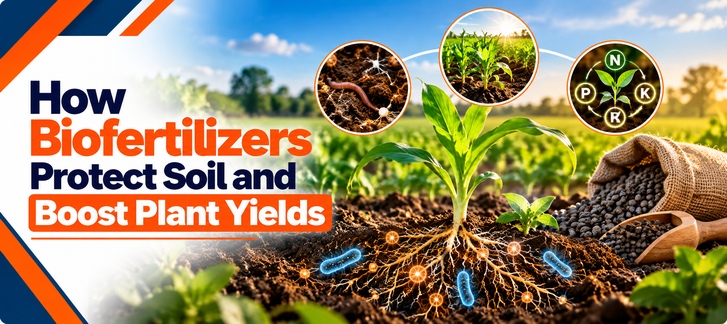
Chemical fertilizers act like an intravenous nutrient drip for plants. Because they feed the plant directly but do absolutely nothing for the soil. On the other hand, biofertilizers work on a completely different philosophy. They don't just feed the plants only. In fact, they build a thriving and self-sustaining ecosystem for the plants.
They form a partnership with the plant roots when these micro-helpers are introduced to the soil. They perform three critical tasks:
1) Nutrient Conversion: These micro-helpers pull locked-up nutrients from the air and earth first. Then they break them down into simple forms that the roots can actually drink.
2) Hormone Stimulation: These microorganisms secrete natural plant growth hormones (like auxins and gibberellins). Therefore, they encourage roots to grow deeper and wider.
3) Soil Engineering: They secrete sticky organic substances that bind loose dirt into rich and spongy soil aggregates. This advantage helps to improve water retention and stops valuable topsoil from washing away during heavy rains.
Types of Biofertilizers:
The first thing to know is that not all microbes do the same job for your plants. So, you need to match the right microorganisms to your specific soil and crop needs. This is especially to get the best results. Here are the primary types of biofertilizers that are making waves in agriculture today:
1) Nitrogen-Fixing Biofertilizers
Although nitrogen is the best fuel for plant growth. Yet plants cannot absorb nitrogen directly from the air.
1) Rhizobium: These bacteria live inside legume root nodules (like beans, peas, and lentils). Therefore, they pull nitrogen from the atmosphere of the soil and feed it directly to the plants.
2) Azotobacter & Azospirillum: These organisms are free-living bacteria that thrive around non-leguminous crops roots. This includes wheat, maize, and millet. Another thing is that they fix nitrogen directly in the soil.
2) Phosphorus-Solubilizing Biofertilizers (PSBs)
Although soil often contains plenty of phosphorus. Yet phosphorus is usually chemically locked up in an insoluble form in the soil. Because bacteria like Pseudomonas and Bacillus secrete natural organic acids that dissolve these hard bonds. While this kind of bacteria also unlocks a massive reservoir of food for your crops.
3) Mycorrhizae (VAM)
This is a remarkable symbiotic fungus that acts as a literal extension of the plant's root system. Mycorrhizal threads spread far beyond where the root hairs can reach and pull water. The plant's root hairs also pull zinc and phosphorus from the deep underground layers. This is the place where it's passing them on to the plant.
4) Blue-Green Algae (Cyanobacteria)
Organisms like Azolla are free-floating water ferns that house nitrogen-fixing cyanobacteria. These organisms are highly celebrated in wet-land agricultural areas. Because they serve as the ultimate natural nutrient source for flooded rice paddies.
Here you can explore High-Quality Fertilizers of Zarea
Advantages of Biofertilizers:
Switching to biological inputs offers a massive list of long-term wins for both your wallet and the planet:
1) Restores Soil Vitality: They rebuild the organic matter in your soil, reversing the hardening and desertification caused by years of heavy chemical use.
2) Highly Cost-Effective: Microbes multiply on their own. This self-replicating nature means farmers can dramatically cut down on expensive, volatile synthetic inputs.
3) Eco-Friendly and Safe: They produce zero toxic runoff. Your local water table, nearby streams, and beneficial insects stay completely safe.
4) Builds Crop Resilience: Plants grown with biofertilizers develop strong immune systems, making them naturally resistant to droughts, extreme weather, and soil-borne pathogens.
Limitations of Biofertilizers:
To keep things completely transparent, working with living organisms does come with specific logistical hurdles:
1) Slower Initial Action: Unlike chemical nitrogen that greens up a field in 48 hours, microbes take time to colonize, establish, and show visible field results.
2) Strict Storage Needs: Because they contain live organisms, these products are highly sensitive to extreme heat and direct sunlight. They must be stored in cool, shaded environments.
3) Soil Specificity: A strain that works wonderfully in moist, slightly acidic soil might struggle to survive in dry, highly alkaline clay.
Field Applications of Biofertilizers:
To get the most out of your microbial inputs, they must be applied correctly using one of these three standard field methods:
1) Seed Treatment: The most common and cost-effective method. Seeds are mixed with a liquid or powder biofertilizer formulation and a sticky binder (like jaggery solution) before planting. This ensures the microbes are right there to protect the root the moment it sprouts.
2) Root Dip Treatment: Ideal for transplanted crops like rice or vegetables. The roots of young seedlings are submerged in a biological slurry for 20 to 30 minutes before being set into the field.
3) Soil Application: The biofertilizer is thoroughly blended with rich compost or organic manure and spread evenly across the field during final land preparation.
Best Practices for Using Biofertilizers:
Maximized yields require proper management. Keep these simple rules in mind to keep your microbes alive and thriving:
1) Check the Expiry Date: Always check the package label. Using expired products means you are spreading dead cells that will yield zero field results.
2) Never Mix with Chemicals: Do not mix biofertilizers directly with chemical pesticides, weed killers, or synthetic fertilizers. The chemicals will instantly wipe out your beneficial microbes.
3) Maintain Soil Moisture: Microbes need water to move, breathe, and multiply. Apply your biofertilizers to moist soil, ideally during the cooler morning or late evening hours.
Future of Biofertilizers:
As global search engines transition heavily toward Answer Engine Optimization (AEO), clarity on future agricultural trends is essential. The future of farming belongs to smart, targeted biological solutions.
Scientists are currently engineering "designer microbial cocktails" tailored to survive extreme climate shifts, high soil salinity, and severe droughts. With the rise of precision agriculture and drone spraying, liquid biofertilizers are becoming highly concentrated and incredibly easy to apply at a massive commercial scale.
Final Thoughts:
True agricultural sustainability isn’t about forcing the land to produce through heavy chemical intervention; it is about working hand-in-hand with the earth's natural systems. Biofertilizers offer a proven, scientifically backed path to protecting our precious topsoil while safely maximizing plant yields. By treating your soil as a living asset rather than a blank canvas, you secure healthier crops, lower operating costs, and a thriving farm that will feed generations to come.
FAQ’s:
Frequently Asked Questions (FAQs)
What is the main purpose of biofertilizers?
The main purpose of biofertilizers is to increase the nutrient availability and fertility of the soil naturally using living microorganisms. Unlike chemical alternatives that feed plants directly with synthetic nutrients, biofertilizers introduce beneficial bacteria and fungi that convert atmospheric nitrogen, solubilize phosphorus, and build a healthy soil ecosystem for long-term plant growth.
What are the 4 types of biofertilizers?
The four primary types of biofertilizers used in sustainable agriculture are:
1) Nitrogen-Fixing Biofertilizers: Microbes like Rhizobium and Azotobacter that convert atmospheric nitrogen into a usable form for plants.
2) Phosphorus-Solubilizing Biofertilizers (PSBs): Bacteria and fungi that dissolve insoluble soil phosphorus so roots can absorb it.
3) Mycorrhizae (VAM): Symbiotic fungi that extend the plant's root system to absorb water and deep-earth nutrients.
4) Blue-Green Algae (Cyanobacteria): Photosynthetic organisms like Azolla widely used to fix nitrogen in flooded rice paddies.
How do biofertilizers increase crop yield?
Biofertilizers increase crop yield by improving root development and maximizing nutrient uptake efficiency. They secrete natural plant growth hormones (such as auxins and gibberellins) that stimulate root branching. This allows the plant to access more water and essential minerals from the soil, leading to healthier growth, better stress tolerance, and higher crop productivity.
Can biofertilizers completely replace chemical fertilizers?
No, biofertilizers cannot completely replace chemical fertilizers immediately in high-yield commercial farming, but they can drastically reduce their usage by 25% to 50%. For the best results, farmers use an Integrated Nutrient Management (INM) approach, combining organic biofertilizers to rebuild soil health alongside minimal, targeted chemical applications.
What are the disadvantages of biofertilizers?
The primary disadvantages of biofertilizers include a slower rate of action compared to chemical inputs, strict storage requirements (as they contain live organisms sensitive to heat and sun), and soil specificity, meaning certain strains will only survive in specific soil pH ranges, moisture levels, or temperature zones.