Agri Waste into Energy: How Agri Biomass is Powering the Future
Let’s explore how renewable agri biomass serves as a significant alternative energy source that also supports a sustainable future.
Introduction – Agri Biomass:
“Agri biomass consists of various organic materials, including crop residues (like straw, stalks, and husks), animal by-products, and energy crops specifically grown for this purpose.”
As global demand for renewable energy continues to rise, agricultural biomass is emerging as a viable and sustainable energy option. Agricultural waste, including crop leftovers, livestock manure, and byproducts from agricultural industries, is being transformed into bioenergy, reducing reliance on fossil fuels.
Countries worldwide are directing funds towards agricultural biomass to create cleaner and more sustainable energy solutions. This article explores the method of transforming agricultural waste into energy and its effects on the future of sustainable energy production.
The utilization of agricultural biomass is crucial in promoting a more sustainable and circular economy by reducing waste, supporting renewable energy options, and potentially enhancing soil health.
Understanding Agri Biomass:
Agri biomass denotes the organic refuse generated from farming activities. Common sources consist of:
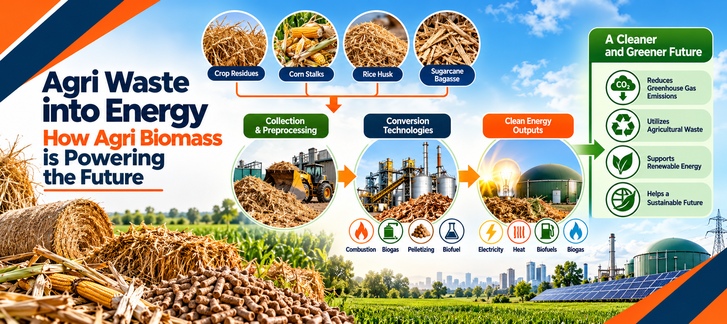
Crop Residues: Straw from wheat, husks from rice, stalks from corn, and bagasse derived from sugarcane.
Animal Waste: Animal excrement and manure, which can be transformed into biogas.
Agro-Industrial Byproducts: Byproducts from food manufacturing, such as fruit peels and molasses.
Forestry Waste: Byproducts like sawdust, wood shavings, and different residues produced by the timber industry.
Examples of Agri Biomass:
Bagasse, a residual product from sugarcane processing
Stems and ears from corn
Rice straw and rice husks
Stems from cotton
Different remnants and byproducts from alternative crops. Such as soybean meal and rhodes grass.
Conversion of Agri Waste into Energy
Different technologies are available to transform agricultural waste into usable energy.
1. Biogas Production
The anaerobic digestion of animal waste and agricultural residues produces biogas that contains a high concentration of methane. This biogas is utilized for several applications, such as cooking, heating, and producing electricity. Moreover, large biogas plants are crucial for supplying electricity to rural regions and fulfilling the energy needs of industries.
2. Biomass Power Plants
Biomass power facilities generate electricity by burning agricultural waste. The process of co-firing biomass with coal in thermal power plants aids in reducing carbon emissions. Moreover, gasification technology converts solid biomass into synthetic gas (syngas), making it appropriate for electricity production.
3. Biofuels and Bioethanol
Sugarcane bagasse and molasses are converted into bioethanol, acting as an environmentally friendly alternative to gasoline. Moreover, biodiesel made from vegetable oils is employed in transportation and farming machinery.
4. Pellets and Briquettes for Heating
Crop residues and sawdust are compressed into pellets or briquettes, functioning as environmentally friendly fuel for heating in both residential and industrial settings.
Uses of Agri Biomass:
Bioenergy: Agricultural biomass can be used to produce biofuels such as biodiesel and bioethanol, in addition to biogas and electricity.
Other Applications: Agricultural biomass can be utilized to create fertilizers, animal feed, and a range of other agricultural products.
Materials: It is appropriate for creating bioplastics, building materials, and a range of other products.
Benefits of Agri Biomass Energy:
1. Renewable and Sustainable
Agricultural biomass is a renewable resource that is renewed each year through crop cycles. Utilizing waste allows us to obtain a reliable source of sustainable energy.
2. Reduction in Carbon Emissions
Biomass generates significantly reduced CO₂ emissions in comparison to fossil fuels. It additionally aids in removing the practice of burning agricultural waste in open fields, thus improving air quality.
3. Economic Growth and Job Creation
Farmers earn additional income by selling agricultural byproducts. Biomass energy projects create employment options in rural areas.
4. Energy Security and Independence
Reduces reliance on foreign fossil fuel imports. Provides decentralized energy solutions, particularly in rural areas.
Challenges and Solutions
1. Seasonal Availability of Biomass
Solution: Improve storage options and streamline supply chain operations.
2. High Initial Investment Costs
Solution: Public financing and private sector investments can promote the development of infrastructure.
3. Lack of Awareness and Technology
Solution: Training programs and technological advancements will improve the rates of adoption.
Future of Agri Biomass Energy
Worldwide, governments and industries are directing funds into agricultural biomass to expand their energy options. With the ongoing advancements in biomass conversion technologies and the increasing focus on environmental concerns, the role of agricultural waste in energy production is set to increase. Countries like Pakistan, India, and China are focusing on large-scale biomass projects to meet their energy needs while reducing carbon emissions.
Conclusion
The transformation of agricultural waste into energy is reshaping the renewable energy sector. Agricultural biomass offers a sustainable, cost-effective, and eco-friendly method for tackling global energy challenges. By investing in biomass technology and the required infrastructure, countries can open the door for a cleaner and more sustainable future powered by agricultural waste.
FAQ’s:
What is agri biomass?
Biomass comes from organic materials, such as trees, plants, and waste from both agriculture and urban areas. Within the European Union, the majority of biomass produced by the agricultural sector mainly exists as biogas, alongside feedstocks utilized for biodiesel and bioethanol production.
What are the 4 types of biomass?
Currently, we utilize four categories of biomass: wood and agricultural materials, solid waste, landfill gas and biogas, as well as alcohol fuels such as ethanol and biodiesel. The majority of biomass energy in use today is sourced locally. Wood, including logs, chips, bark, and sawdust, represents approximately 44 percent of the total biomass energy.
What is called biomass?
Biomass denotes sustainable organic material sourced from both animals and plants. It can be used directly for heating or converted into liquid and gas fuels by various processes. Up until the mid-1800s, biomass was the primary source of overall annual energy usage in the United States.
What is food biomass?
Biomass signifies organic matter obtained from living entities. It acts as a raw material for different chemical and industrial uses and presents fewer environmental challenges than traditional feedstocks like fossil fuels.
What are the disadvantages of biomass?
A common criticism of biomass-fueled power plants is their significant use of electricity and thermal energy. The manufacturing process is not only time-consuming but also requires expensive technology and machinery, resulting in significant costs and environmental effects.