Biomass in Pakistan is Booming | The Numbers Prove It
Biomass in Pakistan is booming as agriculture, industry, & rural communities turn to sustainable energy. Explore the growth driving biomass.
Introduction – Biomass in Pakistan:
Renewable energy sources development is now essential rather than optional. This is because Pakistan continues to negotiate a difficult energy environment these days. As we know biomass plays a vital role in Pakistan among all of them. That’s why it’s providing a locally accessible, sustainable, and financially feasible route to energy resilience. Recent statistics and events on the ground support the predictions of numerous experts: Pakistan’s biomass industry is expanding.
There is more to this surge than meets the eye. The figures show that biomass is quickly emerging as a key component of Pakistan’s green energy transition, as does the countrywide activity.
What is Biomass?
Any converted organic material is called biomass that is obtained from plants or animals and can easily be transformed into energy. Any organic component of municipal solid trash as well as wood debris, animal manure, and agricultural residues is included in it. Some of the processes like anaerobic digestion, gasification, and combustion successfully turn these materials into heat, electricity, and biofuels.
to view product listings, make bulk purchases, and find the best offers. Go to Zarea now! It is the largest business-to-business (B2B) commodities marketplace in Pakistan and is setting the standard for future commodity distribution and trade in the nation.
Alongside biomass, solar power is becoming an increasingly important part of Pakistan's renewable energy landscape. Learn more in our guide to Solar Energy in Pakistan
The Reasons Behind Pakistan’s Growing Biomass:
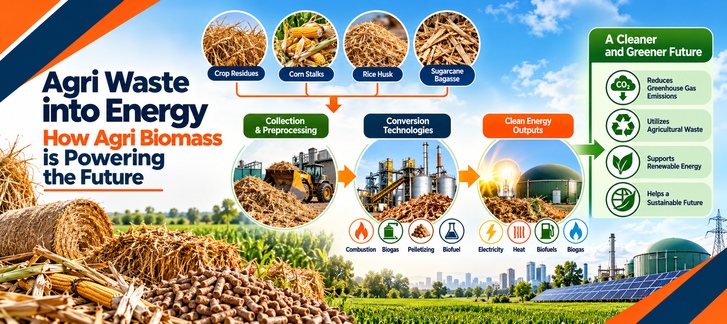
Pakistan has a significant edge in biomass energy generation these days. This is because of its distinct geographical and agricultural characteristics. Meanwhile Pakistan produces an enormous amount of crop leftovers due to its over 60% population working in agriculture so far. According to records, rice husks, cotton stalks, wheat straw, and sugarcane bagasse are major contributors to biomass. Moreover, soybean meal and rhodes grass also the major contributor to biomass. These agricultural biomass products are significantly used as important fuel sources all over Pakistan. That’s why these biomass products are not wasted or turned into pollution through open burning.
Key Drivers Behind the Biomass Boom:
1) Abundance in Agriculture: Each year, millions of tonnes of biomass residues are produced.
2) Energy Deficit: Biomass offers a dependable substitute in the face of ongoing power outages.
3) Environmental Objectives: Cutting air pollution and carbon emissions has become a top national objective.
4) Government Support: Renewable energy is starting to be favoured by incentives and policy frameworks.
5) Interest from the Private Sector: Funding for biogas and biomass power plant projects is increasing.
The Current Status of Biomass in Action:
Pakistan has already produced electricity from biomass and achieved this significant golden milestone so far. The following figures demonstrate quick growth:
1) Biomass-based power plants produce more than 50 megawatts (MW) of electricity nationwide these days.
2) More than 5,000 biogas units have been erected only for domestic energy use. Most of them operate in rural regions.
3) Sugar mills make a substantial contribution to the local economy. Especially in Punjab and Sindh, bagasse as a by-product is used in the processing of sugar cane and generates electricity.
4) Biomass is evolving into a commonplace component of the energy mix according to the figures. That’s why it’s no longer a niche solution.
5) The Pakistan Council for Renewable Energy Technologies’ (PCRET) research indicates an assumption. They define Pakistan has more than 50,000 GWh of biomass energy potential per year.
These numbers highlight why biomass is no longer a niche solution so far. In result it has become a part of the mainstream of the energy mix.
Biomass Applications in Pakistan:
Power plants using biomass
In specially constructed plants, waste from forestry and agriculture is burned to generate power. Cogeneration technologies have been implemented by certain sugar mills to effectively supply heat and power.
Production of Biogas
Biodigesters convert manure and organic waste into methane-rich biogas, which is used for heating, cooking, and power generation.
Combined Heat and Power (CHP)
For greater energy efficiency, combined heat and power (CHP) systems that use biomass are installed in industrial areas.
Heating with Biomass
Biomass boilers, pellet heaters, and wood stoves are used in small businesses and rural locations to heat spaces and water.
Benefits to the Economy and Environment:
1) Job Creation: Biomass projects create jobs in rural areas whether it be from feedstock collection or plant operation.
2) Carbon Reduction: According to studies, biomass energy generates a lot less CO₂ as compared to fossil fuel sources.
3) Waste Management: Biomass aids in sustainable industrial management of municipal, and agricultural waste.
4) Rural Development: Decentralised biomass energy helps with clean, reasonably priced electricity that’s provided to off-grid populations.
Obstacles to Surmount:
Even with its quick expansion, there are still a number of obstacles to further scaling biomass energy:
1) Lack of efficient feedstock supply chains
2) Need for technological upgrades in conversion equipment
3) Preventing land degradation through sustainable harvesting
4) Rural communities lack technical training and awareness.
5) High upfront expenses associated with biomass infrastructure
These obstacles can be overcome with focused legislation, public-private collaborations, and educational initiatives.
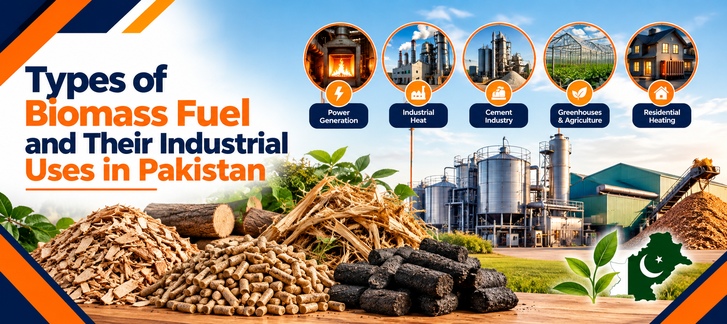
Read More: Types of Biomass Fuel
The Road Ahead – Biomass and Pakistan’s Energy Future:
Pakistan’s Alternative and Renewable Energy Policy 2019 sets the goal to achieve 30% renewable energy on the national grid by 2030. Biomass is well-positioned to contribute significantly to achieving this goal due to its local availability and dependability.
In all industrial zones the momentum is undeniable. These milestones were achieved through biomass plants, bagasse-based power in sugar mills, and biogas in rural homes. In Pakistan, biomass is not only a promise but a tested and expanding reality thanks to sustained investments and policy support.
Pakistan's biomass power sector:
Pakistan's biomass power sector consists of grid-connected Independent Power Producers (IPPs) linked to the sugar and agricultural industries. As well as an increasing number of captive industrial biomass plants implemented by the textile and packaging industries. Meanwhile, food companies also want to achieve cleaner production through this technique.
1) Chiniot Power Limited (CPL): Chiniot power plant is a 62.4 MW renewable energy facility which is the largest biomass independent power producer (IPP) in Pakistan. This power plant is located in Bhawana Tehsil, Chiniot. While it was commissioned in 2015 by the Sharif Group. It supplies reliable energy to the national grid. Because it uses an Electrostatic Precipitator for 100% ash capturing to maintain European air pollution standards. Chiniot Power Limited (CPL) is the largest grid-connected biomass independent power producer (IPP) in Pakistan. While it serves as a flagship renewable energy project. This is because it utilizes advanced high-pressure sugarcane bagasse cogeneration technology.
2) Hamza Sugar Biomass Power Station: It's a 60 MW multi-phase biopower project located in Punjab. This plant operates alongside Hamza Sugar Mills. Therefore this facility functions as a steam cogeneration plant using bagasse (sugarcane residue) to generate electricity.
3) Sadiqabad JDW Biomass Power Plant: This plant is an active 26.6 MW single-phase biopower installation located in Sadiqabad, Punjab. The JDW Group developed this plant. It was commissioned in June 2014 to process agricultural waste and sugarcane bagasse into power.
Sector Potential & Emerging Projects:
1) Untapped Potential: Pakistan has the estimated potential to generate up to 38,000 GWh of electricity annually. Because it utilizes just 25% of crop residues and 50% of animal waste.
2) Industrial Captive Shift: Companies like Nishat Chunian Limited (25 TPH biomass boiler) and Nagina Group have transitioned their textile operations toward organic waste. As they use corn stalks, rice husks, and wood chips to avoid volatile fossil fuel prices.
3) Commercial Scale Ag-Waste: New commercial-scale agricultural waste plants are emerging to pay local farmers directly via mobile wallets for crop residues. These plants are also aiming to substitute imported coal with bio-coal pellets for heavy industry.
Environmental Compliance of Biomass Power Plants:
CPL is the first biomass plant in Pakistan to achieve 100% particulate matter ash capture. Because it operates an advanced Electrostatic Precipitator (ESP) system. As this system removes over 99% of particulate pollutants from the exhaust chimney. While this technology also keeps power plant air emissions aligned with strict European Standards.
Final Thoughts:
Pakistan is showing that creativity and regional solutions can lead the way as the world shifts to more environmentally friendly energy sources. Biomass has the potential to revolutionise how the country powers its homes, businesses, and future if it is supported and used sustainably.
Statistics show that Pakistan’s biomass industry is, in fact, flourishing.
Refrences:
Sharif Group: Chiniot Power Plant