How Construction Chemicals Extends Building Life
Discover how advanced construction chemicals protect structures from moisture, wear, and structural degradation.
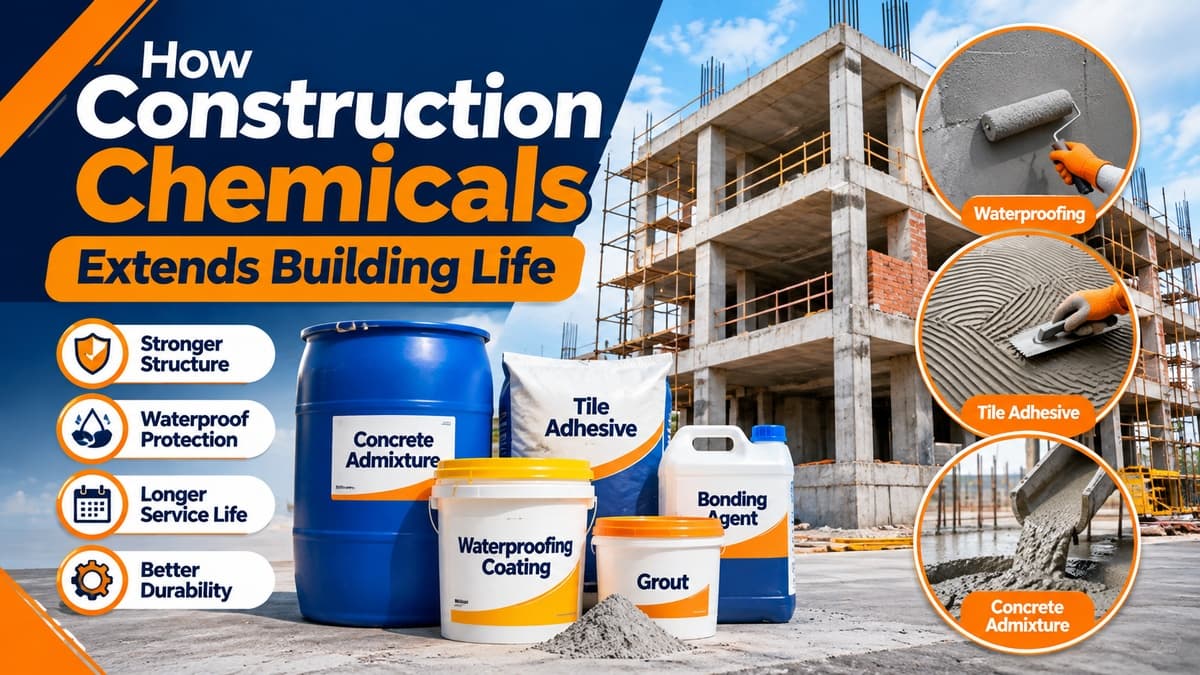
Introduction:
When we look at towering skyscrapers or at robust bridges. Or even when we look at our own homes, we see a sustainable structure. Therefore, we tend to credit steel, cement, and bricks for their sustainable strength. However, there is a silent and invisible force that is working behind the scenes. Because this force keeps these structures standing tall against the test of time. This hidden force is called construction chemicals.
Our modern concrete jungles would succumb to moisture and cracks. These concrete structures will also succumb to environmental wears much sooner than you think. Especially without these special formulations. If you are looking to understand how these chemical innovations act as the ultimate shield for modern architecture, you are in the right place. Let’s dive into how construction chemicals extend your building's life and why they are non-negotiable in modern engineering.
What Are Construction Chemicals?
Construction chemicals are specialized chemical formulations. While these formulations are added to building materials like concrete and bricks during or after construction work. Sometimes it is also added to mortar making. Think of these formulations as vitamins or protective armor for building construction.
These chemicals modify and enhance the physical and chemical properties of existing building materials. Rather than acting as standalone chemical structural components. These formulations can speed up or slow down concrete drying times. Or they can create impenetrable barriers to water and bond different materials together with immense strength. Additionally these chemicals can repair structures that have suffered from years of wear and tear. Essentially, these formulations turn ordinary building materials into extraordinary and resilient assets.
Key Types of Construction Chemicals:
The construction chemicals world is very vast. But they generally fall into a few primary functional categories:
1) Concrete Admixtures: These are ingredients that are added to a concrete mix right before or during its mixing. They also have altered properties like workability and curing time. Additionally these ingredients also safeguard your building's overall compressive strength.
2) Waterproofing Chemicals: These chemicals are applied as liquid membranes or as crystalline coatings. Or they are added sometimes as sheets to a surface. Basically these chemicals block water molecules from penetrating the porous surface of any concrete structure.
3) Adhesives and Sealants: These formulations bond actual finishing materials (like tiles or panels). Because these formulations are substrates and seal joints on a surface to accommodate thermal expansion without cracking.
4) Repair and Rehabilitation Mortars: These kinds of chemical compounds are modified with polymers or epoxys. Because these compounds are specifically formulated to patch up spalled concrete and restore its structural integrity.
5) Flooring Compounds: These types of compounds are often epoxy or polyurethane (PU) based. While these compound coatings can protect your industrial floors from heavy impact. Additionally they can also protect industrial floors from abrasion and aggressive chemical spills.
You can also explore our previous post about basic chemicals and their roles!
The Crucial Benefits of Construction Chemicals:
Integrating these chemical solutions into a project yield can create immediate and long-term dividends for you.
1) Drastic Reduction in Maintenance Costs: Basically, these formulations can save property owners from expensive structural overhauls down the line. Because they prevent your structures' initial damage.
2) Enhanced Workability: So, admixtures can make concrete easier to pour and shape in your structure. In this way you can reduce labor time and minimize voids or honeycombs in your structure.
3) Environmental Resistance: These chemicals can shield vulnerable elements from UV rays and acid rain. While also protecting your structure from carbonation and freeze-thaw cycles under some conditions.
4) Sustainability: These formulations also extend existing building lifespan. Because they reduce the carbon footprint that is associated with demolishing and rebuilding of your structure.
How Construction Chemicals Extend Your Building Life:
So, how exactly do these formulations translate into decades of extra structural life? It all comes down to fighting the natural enemies of concrete: water, air, and chemical attack.
1) Warding Off Moisture (The Number One Enemy)
Water is the greatest threat to concrete. Because water rusts the internal steel rebar when moisture seeps into concrete's pores. Additionally, water can cause concrete to crack and break apart (a process known as spalling). Because, when water expands steel rusts. Therefore, waterproofing and construction chemicals create an unbroken barrier that keeps water out entirely. Because these steps stop this destructive cycle before it can even beginning.
2) Enhancing Concrete's Density and Strength
Ordinary concrete naturally contains microscopic air pockets and capillary networks. Because it introduces superplasticizers (a type of admixture) into them. Therefore, engineers can drastically reduce the amount of water that is needed in the concrete mix without losing its fluid workability. Less water means fewer voids when the concrete dries. While it's resulting in a much denser, tighter, and exponentially stronger structural foundation.
3) Combatting Chemical Aggression and Carbonation
Carbon dioxide and ambient chemicals can penetrate concrete and alter its internal pH in urban and industrial areas. Additionally these components can also destroy concrete's natural protective alkalinity. While specialized surface coatings and penetrative silane-siloxane sealers act as a chemical shield. Because these chemicals neutralize atmospheric hazards and keep concrete's internal environment stable.
Here you can find out post on inorganic chemicals!
Comprehensive List of Chemicals Used in Construction:
If you look at a modern job site, you will find an array of chemical compounds designed for specific tasks. Here is a list of the most widely used chemical variants:
1) Polycarboxylate Ethers (PCE): High-performance superplasticizers used to create self-compacting, ultra-high-strength concrete.
2) Polyurethane (PU): Exceptionally flexible compounds used for high-tier waterproofing membranes and joint sealants that undergo constant movement.
3) Epoxy Resins: Two-part chemical systems used for heavy-duty industrial flooring, structural crack injections, and high-strength anchoring.
4) Styrene-Butadiene Rubber (SBR) Latex: A polymer bonding agent added to cement mortars to boost flexibility, adhesion, and waterproofing capabilities.
5) Sodium / Lithium Silicates: Liquid floor hardeners that chemically react with free lime in concrete to create a dust-proof, ultra-dense surface layer.
6) Silane-Siloxane Blends: Clear, breathable water repellents applied to exterior brick or concrete facades to shed rainwater while letting vapor escape.
How to Choose the Right Chemical for Your Construction Need:
With so many formulations available on the market, picking the wrong product can lead to compatibility failures or wasted capital. Use this simple checklist to guide your selection process:
1) Identify the Core Substrate: Is your underlying material green (fresh) concrete, aged brickwork, wood, or structural steel? Match the chemical properties to your exact material.
2) Analyze Environmental Exposure: Consider the environmental loads. Does the surface need to withstand harsh UV rays, constant pooling water, heavy vehicle traffic, or chemical exposure?
3) Check the Application Window: Review the technical data sheet for constraints like "pot life" (how long the mixed chemical remains usable) and temperature limits. Applying an epoxy in freezing conditions, for example, will stall the curing process completely.
4) Prioritize Certified Standards: Always opt for chemicals that carry verified certifications (like ASTM or ISO standards) to ensure they will perform exactly as advertised under stress.
The Bottom Line:
Construction chemicals are the true foundation of structural longevity. They transform raw concrete and masonry from rigid, vulnerable elements into highly resilient, adaptive systems capable of enduring centuries of environmental pressure. Investing in the right waterproofing, admixtures, and protective coatings during the construction phase ensures your building remains safe, beautiful, and structurally sound for generations to come.
By treating these advanced formulations as essential investments rather than optional add-ons, you protect your capital, minimize future repair headaches, and actively build a more resilient future.
Frequently Asked Questions (FAQ):
What are construction chemicals?
Construction chemicals are specialized chemical compounds added to concrete, mortar, or masonry to modify and improve their structural properties. They are used during or after construction to enhance workability, speed up or slow down curing times, prevent water ingress, and increase the overall durability of a building.
How do construction chemicals extend the life of a building?
Construction chemicals extend a building's life by creating a barrier against water, sealing structural pores, and preventing steel corrosion. By eliminating moisture penetration and environmental carbonation, these chemicals stop the internal degradation of concrete, preventing cracks and costly structural failures over time.
Why is waterproofing essential in construction?
Waterproofing is essential because water is the leading cause of concrete decay and structural collapse. Without waterproofing chemicals, water seeps into concrete, rusts the internal steel reinforcements, and causes the concrete to crack, peel, and lose its structural integrity.
Can construction chemicals be used on old buildings?
Yes, specialized construction chemicals are explicitly designed for repair, rehabilitation, and retrofitting of old structures. Polymer-modified mortars, epoxy crack injections, and crystalline waterproofing systems can seal existing cracks, stop active leaks, and restore structural strength to aging concrete.