How Crop Diseases Impact Yields and How to Stop Them
Don't let crop diseases ruin your harvest. Explore the real impact of plant pathogens on crop yields and get actionable tips to stop them today.
Introduction:
Farmers step into their fields with a simple goal: to grow healthy crops. Because these crops feed communities and sustain their livelihoods every year. Yet, beneath the soil and across the leaves, a silent battle is constantly raging. Crop diseases act as one of the single greatest threats to global agriculture, destroying up to 40% of food crops globally each year.
Whether you're talking about a farmer's bank account. Or you could talk about grocery store shelves. The ripples are felt everywhere - especially when fields fall into disease. Understanding how to identify, categorize, and stop these invisible invaders is no longer just an academic exercise. While it is an absolute necessity for us to protect our food supply's future.
What Are Crop Diseases?
First, you must know exactly what crop diseases are. Because it will help you to effectively fight this crop enemy.
Plant disease is any prolonged disruption to a crop's normal physical form in the simplest terms. In some cases biological function causes a crop disruption. Think of it as a breakdown in the plant's internal factory. The plant cannot longer smoothly absorb water when a disease takes hold. Because the disease prevents photosynthesis of sunlight or transporting vital nutrients to the plant.
True crop diseases generally fall into two distinct categories. This includes:
1) Biotic (Infectious): In this disease, living pathogens invade plant tissue. Then these pathogens multiply and finally spread from one organism to another.
2) Abiotic (Non-infectious): Basically non-living environmental factors trigger this disease in plants. There are many factors that affect crop yield and cause diseases in plants. This includes severe droughts and nutrient deficiencies in the soil. While some extreme temperature swings and other chemical toxicities also cause this non-infectious disease.
Agronomists rely on a concept known as the Disease Triangle to help visualize how infectious diseases thrive. A disease cannot take over a field unless three specific conditions align simultaneously. This includes a vulnerable host plant, an aggressive pathogen, and a perfectly favorable environment. A favorable environment means high humidity or damp soil conditions. If you break just one side of this triangle then the disease simply cannot survive.
Types of Crop Diseases & Their Causal Agents:
Infectious crop diseases do not all behave in the same way. This is because widely different microscopic organisms drive these diseases. There are different primary causal agents that stand behind agricultural destruction. This includes bacteria, fungi, and viruses. Each group of disease agents requires a completely different environmental trigger to wake them up. Because they use a uniquely method to breach the plant's natural defenses and demand a highly specific strategy to control them.
Here you can explore our previous post on major crops of Pakistan! Let's break down the three major biological threats facing modern fields.
1) Crop Diseases Caused By Bacteria
Bacteria are microscopic and single-cell organisms. While they are naturally opportunistic as compared to fungi. Because fungi rarely have the strength to bore directly through a plant's tough outer skin. Instead, they patiently wait for plants' opening to penetrate crops through natural leaf pores (stomata). Or they cause physical wounds (hail) and feed on insects. Additionally, Fungi multiply at staggering speeds once they enter the plant. They mostly attack plants especially in warm and wet conditions.
Fire Blight (Erwinia amylovora)
1) Primary Targets: This disease targets apples, pears, and other members of the Rosaceae family.
2) The Damage: This devastating bacterial infection causes the blossoms, leaves, and twigs to turn deeply blackened and shriveled. While this disease looks exactly like an open flame if it was scorched. It can tear through an entire orchard in a single season.
Bacterial wilt (Ralstonia solanacearum)
1) Primary Targets: This disease specifically targets potatoes, tomatoes, eggplants, and bananas.
2) The Damage: These bacteria rapidly multiply inside the plant’s xylem and the internal plumbing system that is responsible for moving water. Therefore it physically clogs these tubes and the pathogen starves the plant of moisture. Eventually it's causing the plant to drop rapidly and die while still being completely green.
2. Crop Diseases Caused By Fungi
Fungi are the absolute heavyweight champions of the plant disease world, accounting for roughly 85% of all infectious crop diseases. They are incredibly resilient, spreading through millions of microscopic spores carried by the wind, splashing rain, or contaminated tools. Fungi are uniquely dangerous because they can actively secrete specialized enzymes that dissolve a plant's outer cell walls, forcing their way inside.
Late Blight (Phytophthora infestans)
1) Primary Targets: Potatoes and tomatoes.
2) The Damage: Historically famous for triggering the Irish Potato Famine, this mold-like fungal pathogen thrives in cool, damp weather. It causes dark, water-soaked spots on leaves and turns tubers into a rotting, foul-smelling mush before harvest.
Powdery Mildew
1) Primary Targets: Cereal grains, grapes, pumpkins, and a wide array of vegetables.
2) The Damage: Easily recognized by a distinctive, dusty white-to-gray coating that carpets the upper surface of leaves. This fungal blanket blocks out sunlight, severely stunting photosynthesis and causing leaves to dry up and drop prematurely.
3. Crop Diseases Caused By Virus
Plant viruses are incredibly small, simple packages of genetic code that cannot move or replicate on their own. They are the ultimate hijackers. To enter a plant, they rely almost entirely on "vectors"—sap-sucking insects like aphids, thrips, and whiteflies that carry the virus from a sick plant to a healthy one on their mouthparts. Once inside, the virus forces the plant's own cells to stop growing and start cloning the virus instead.
Tobacco Mosaic Virus (TMV)
1) Primary Targets: Tobacco, tomatoes, peppers, and over 150 other plant families.
2) The Damage: TMV is incredibly tough and can survive for decades in dry soil or debris. It causes a distinctive, mosaic-like mottling of light and dark green patches on leaves, severely blistering the tissue and ruining fruit quality.
Tomato Spotted Wilt Virus (TSWV)
1) Primary Targets: Tomatoes, peanuts, and various ornamental plants.
2) The Damage: Spread exclusively by tiny insects called thrips, this virus causes dark, concentric rings to form on leaves and fruit. Infected crops become severely stunted, producing deformed, unmarketable yields.
Here you can find out: What is cultivation?
Methods of Crop Protection and Disease Control:
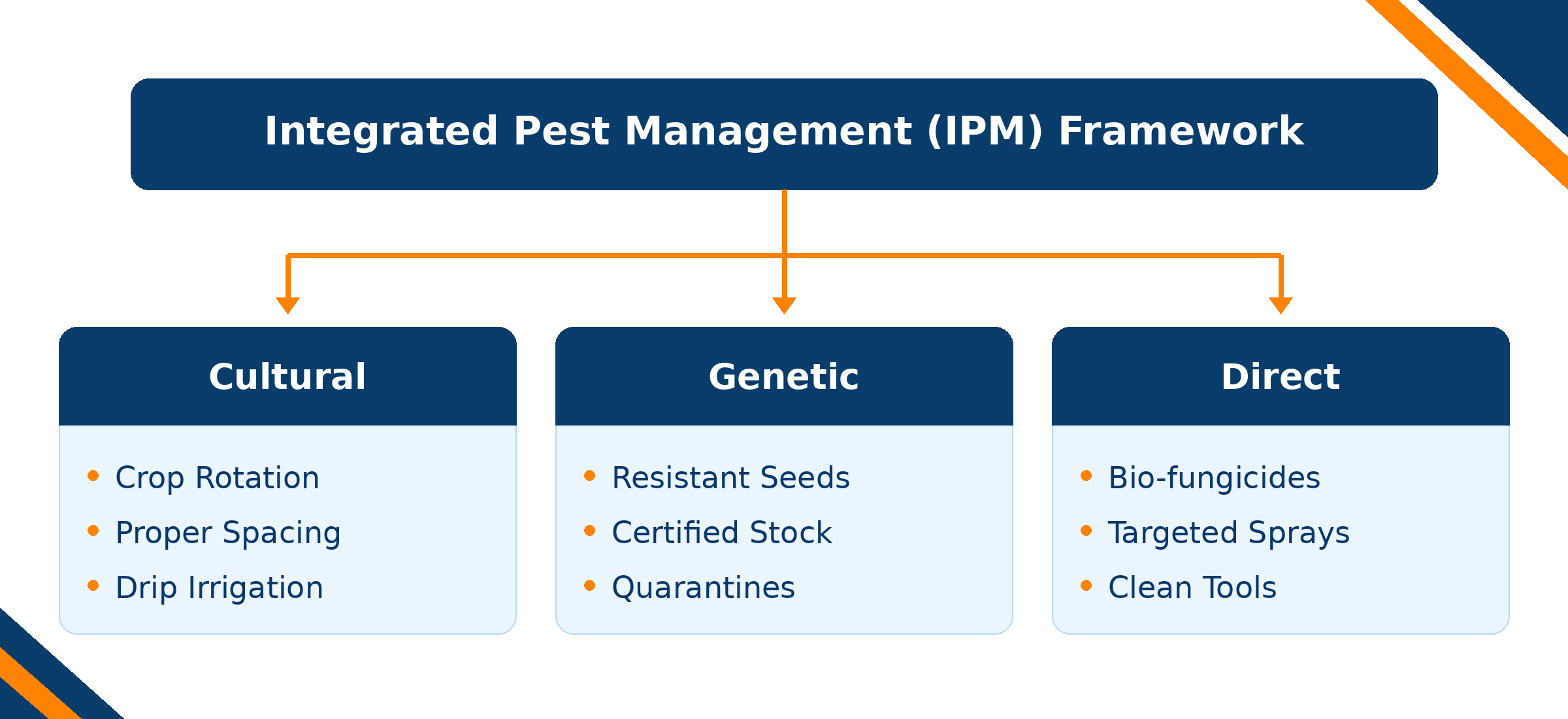
Defending a field against a diverse array of plant disease threats requires moving away from reactive chemical spraying and moving toward a proactive strategy called Integrated Pest Management (IPM). By combining multiple layers of defense, farmers can keep pathogens at bay without harming the local environment.
Proactive Cultural Practices
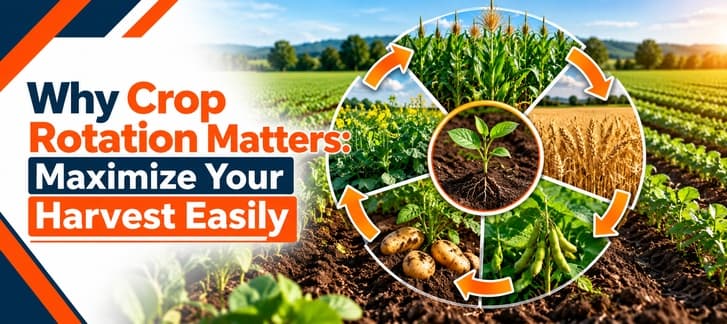
1) Strategic Crop Rotation: Avoid planting crops from the same botanical family in the same soil year after year. Switching families breaks the pathogen's life cycle by removing its favorite food source.
2) Smart Water Management: Shift away from overhead sprinklers and use drip irrigation instead. Keeping the foliage dry denies fungal spores the moisture they desperately need to germinate.
3) Field Sanitation: Consistently clear away, plow under, or safely burn old crop residues at the end of the season to eliminate the cozy hiding spots where pathogens overwinter.
Genetic and Regulatory Defenses
1) Planting Resistant Cultivars: The easiest way to stop a disease is to grow crops that are naturally immune to it. Always seek out certified, disease-resistant seed varieties bred to withstand local pressures.
2) Strict Farm Biosecurity: Clean and disinfect boots, tractor tires, and pruning shears before moving between different sections of the farm to prevent accidental cross-contamination.
Precision Chemical and Biological Controls
1) Biological Control Agents: Introduce beneficial, predatory microbes (like specific strains of Bacillus bacteria) that actively fight off or eat harmful fungi in the soil before they can reach the roots.
2) Targeted Chemical Applications: When an outbreak breaches acceptable economic thresholds, use highly specific fungicides or bactericides. Applying treatments early and precisely minimizes chemical runoff while saving the harvest.
The Bottom Line:
Crop diseases are an unavoidable reality of working with nature, but they do not have to mean financial ruin or food insecurity. By understanding the core mechanics of what drives a plant disease, identifying the distinct visual signs of bacterial, fungal, and viral infections early, and deploying a robust mix of cultural and modern protection methods, we can successfully shield our fields. Safeguarding our crops doesn't just protect a farmer's bottom line—it secures the global food supply for generations to come.
Frequently Asked Questions:
What are crop diseases?
Crop diseases are prolonged disruptions to a plant's normal physical structure, growth, or biological functions. They are caused by either living biotic pathogens (such as fungi, bacteria, viruses, and nematodes) or non-living abiotic factors (such as nutrient deficiencies, extreme weather, and drought).
What are the main causes of plant diseases?
The main causes of plant diseases are divided into biotic pathogens and abiotic stressors. Biotic causes include microscopic organisms like fungi, bacteria, and viruses that infect plant tissue. Abiotic causes include environmental issues like poor soil nutrition, improper watering, and temperature extremes.
Which pathogen causes the most crop diseases?
Fungi are the leading cause of plant diseases, accounting for roughly 85% of all infectious crop illnesses. Fungal pathogens spread easily through airborne spores, splashing water, and contaminated tools, and they can actively bore through a plant’s outer protective layers.
How do viruses infect crops?
Unlike fungi or bacteria, plant viruses cannot enter or infect crops on their own. They rely almost entirely on insect vectors, such as aphids, thrips, and whiteflies, which feed on infected plants and inject the virus into healthy crops through their mouthparts.
What is the most effective way to prevent crop diseases?
The most effective way to prevent crop diseases is through Integrated Pest Management (IPM). Rather than relying on a single solution, IPM combines proactive cultural practices like crop rotation and drip irrigation, planting disease-resistant crop varieties, and using targeted chemical or biological treatments when necessary.