Ready Mix Concrete: How It Works & Why It Matters
Learn what ready mix concrete is, how delivery works, which PSI grade to choose, and how much you need for your pour.
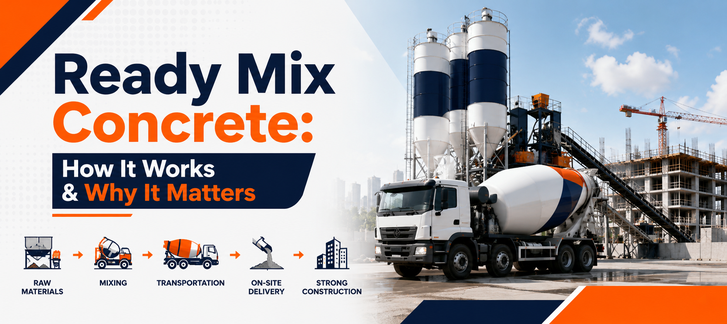
Ready-mix concrete is batched at a plant to an exact recipe and delivered to your site already mixed, ready to pour straight from the truck. No guessing at proportions on site, no manual mixing, no wondering whether today's batch is as strong as yesterday's.
For many builders, that consistency is the whole point. Site-mixed concrete depends entirely on whoever's holding the shovel that day, how carefully they're measuring, and how consistent the water content actually is from one batch to the next.
Ready-mix cuts that variability out almost entirely, since the mix design, quality checks, and batching are done before the truck even pulls out of the plant.
So that's what this guide gets into: what ready-mix concrete really is, how it gets delivered, which PSI grade you actually need for the job, how much to order for a given pour, and what's worth checking before you pick a supplier.
This guide covers what ready mixture concrete actually is, how it's delivered, which PSI grade fits which job, how much you'll actually need for a given pour, and what to check before choosing building construction material suppliers.
What Is Ready Mixture Concrete?
Ready mixture concrete, most people just call it ready mix or RMC, is concrete that gets made at a batching plant to a specific recipe, then loaded into one of those rotating drum trucks and driven over to your site while it's still workable.
The plant is doing the precise part: getting the cement, sand, aggregate, water, and any admixtures in exactly the right ratio, which is really the whole advantage over mixing it yourself by hand or with a small portable mixer.
The alternative is site-mixed concrete, where you're putting it together right there on the spot, combining bagged cement, sand, and aggregate in roughly the right amounts and adding water more or less by eye.
That works fine for something small, a footing here, a garden path there. But once the pour gets bigger, holding the mix consistent gets a lot harder, and any slip-up along the way tends to catch up with you down the line: cracking, patchy strength, a surface that never quite cures the way it should.
How Does Ready Mix Concrete Work?
It all starts at the batching plant, where cement, sand, coarse aggregate, water, and whatever admixtures are needed get measured out and mixed according to whatever the buyer ordered, say ready mix 3000 PSI or ready mix 4000 PSI.
From there, it goes straight into a transit mixer- those rotating drum trucks you see driving around- and that drum keeps turning the entire way to the site so the concrete doesn't start setting before it even gets there; a workability window here that actually matters.
Depending on the mix design, whatever admixtures are in it, and what the weather's doing that day, ready-mix concrete usually stays workable for somewhere around 90 minutes to a couple of hours after it's batched.
That's part of why site access and timing matter so much on pour day. If the truck is stuck at the gate for half an hour because the access road wasn't cleared, that time comes straight out of the window you have to actually place and finish the concrete properly.
Once the truck shows up, the concrete gets poured straight out of the chute, or pumped over if it needs to reach an upper floor or some spot the truck just can't back up to.
After that, it's pretty standard: pour it, work out the air pockets, smooth the surface, then let it cure properly over the next several days so it actually hits the strength it was designed for.
Choosing the Right PSI Grade for the Job
PSI is really just a way of measuring how much weight a slab can hold before it gives out, and that number comes from testing a sample roughly four weeks after the pour.
Go higher on PSI, and you get a stronger, longer-lasting slab, but you're also paying more for it, so the actual skill is matching the grade to what the slab needs to hold up, not just defaulting to whatever's strongest.
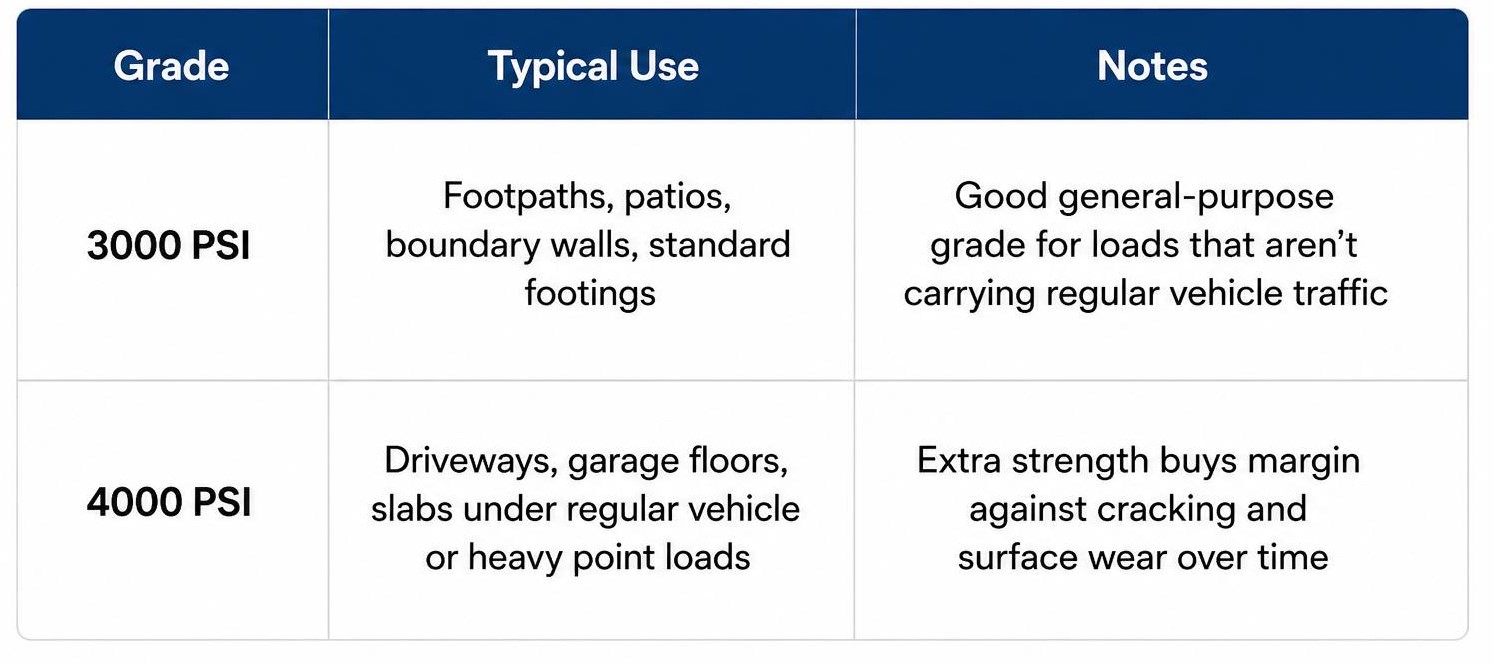
Zarea lists these separately: 3000 PSI ready mix and 4000 PSI ready mix, so it's worth checking the specs and pricing on each before you commit, rather than just grabbing one and hoping for the best.
How Much Ready Mix Cement Do You Need?
Once the slab thickness is sorted, the math's simple enough: area times thickness, then convert to whatever unit your supplier quotes in. Here's roughly what that works out to for a 1000 sq ft slab across a few common thicknesses:
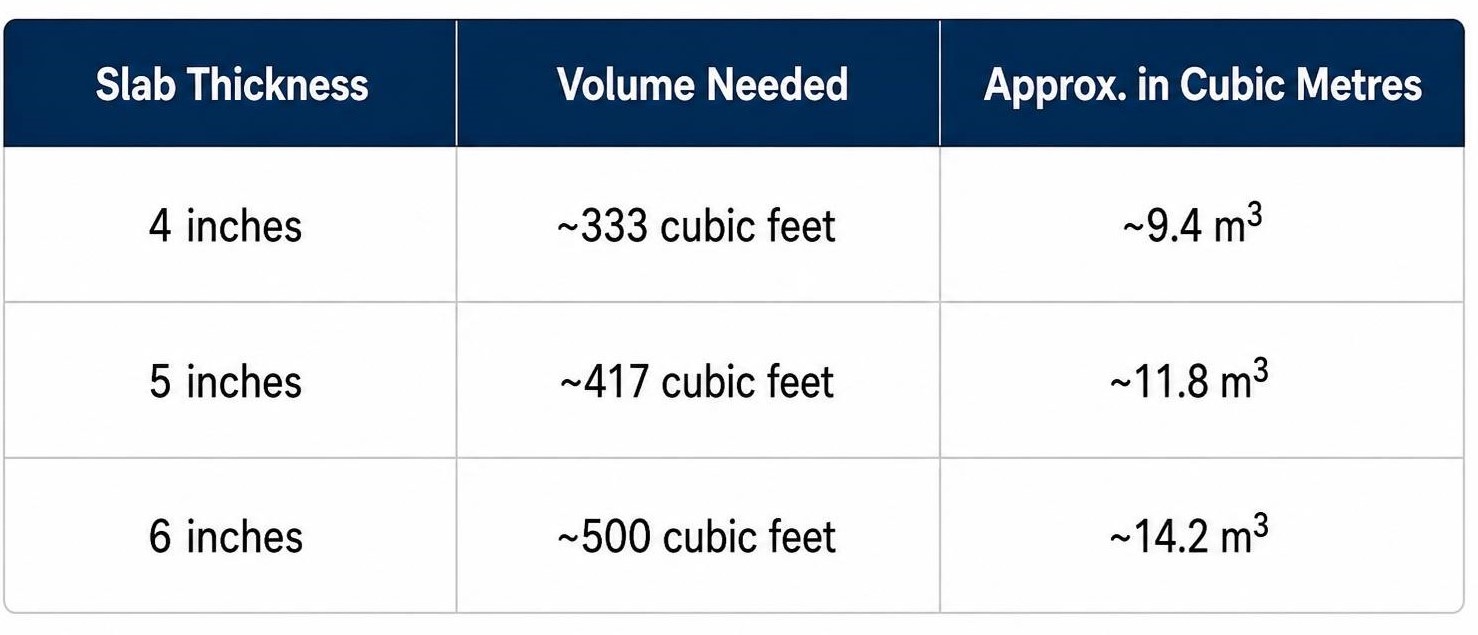
Most residential slabs fall somewhere in the 4 to 6 inch range depending on what they're carrying: footpaths and patios toward the thinner end, driveways and garage floors toward the thicker end.
Whatever the calculation comes out to, it's standard practice to order roughly 5 to 10 percent more than the exact number, since spillage, uneven subgrade, and minor formwork variation almost always eat into the margin.
Ready Mix Concrete Suppliers: What to Check Before Ordering
Not every ready-mix concrete supplier out there deserves the same level of trust, and honestly, the difference usually only becomes obvious after the pour, not before. A few things worth checking ahead of time:
Batch consistency. Ask whether the supplier tests cube samples regularly and can show recent results, not just a spec sheet.
Delivery fleet. Enough transit mixers to keep concrete arriving continuously on a large pour matters more than people expect, since a gap between loads can create a visible cold joint.
Current pricing transparency. Cement is by far the biggest cost driver in any mix, so it's worth checking today's cement rate before you lock in an order, just to make sure the quote actually reflects the current market and not some number that's already gone stale.
Product range. A supplier list like Zarea's building and finishing materials category is usually easier to coordinate with if the project needs more than just concrete.
None of this replaces asking for references or checking a recent job, but it narrows the field before anyone's standing on site arguing about a slab that didn't cure right.
Ready Mix Concrete Delivery: What Happens on Pour Day
Pour day is really where all that planning either pays off or falls apart. The truck needs a clear, stable path all the way to the pour location, because if the driver can't get close enough, you're either delaying the pour or asking the crew to pump concrete a lot further than anyone planned for.
The crew should already be set up and waiting when the truck pulls in, not still fumbling with formwork or hunting down the vibrator once the clock on workability has already started ticking.
Once you start pouring, it pretty much has to stay continuous for that section. Stop halfway through and pick it back up later, and you end up with a weak seam right where the two pours meet.
That's why, for anything bigger than a small slab, crews usually line up several truckloads timed close enough together that there's never more than a few minutes' gap between one delivery and the next.
Site Mixed vs Ready Mix: Which Is Actually Cheaper?
For a really small pour, mixing it yourself on site with bagged cement can actually come out cheaper, mostly because ready mix suppliers usually have a minimum order volume, and paying for a whole truck to deliver less than a cubic metre just doesn't make much sense.
Understanding how cement is made can also help you better understand the material you’re using and why ready mix and site-mixed concrete can differ in cost and performance.
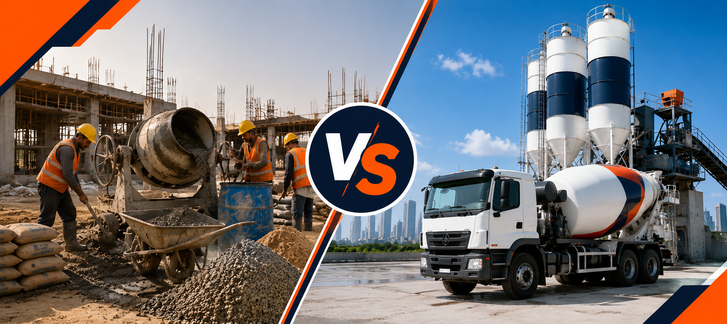
Past that point, though, the math tends to flip. Site mixing eats up labour and time, and you're stuck either renting a portable mixer or doing it by hand, and any inconsistency in the mix doesn't show up right away; it shows up later as a quality problem that costs way more to fix than it would've cost to just avoid in the first place.
Ready mix might come across as the more expensive choice if you're only looking at the per-unit price, but once labour, wastage, and the chance of a bad batch get added to the picture, it tends to work out cheaper overall, particularly once the job's bigger than a small residential pour.
Frequently Asked Questions
How much RMC is required for 1000 sq ft?
Honestly, it all hinges on slab thickness. For a typical 4-inch slab, expect somewhere close to 12.3 cubic metres. Make it thinner or thicker, and that figure moves right along with it, so it's best to lock down the exact thickness before placing the order.
Is it cheaper to mix your own concrete or buy ready mix?
For a tiny pour, mixing it yourself with bagged cement can work out cheaper. Once you're past that, ready mix usually wins overall, once you factor in labour, wastage, and the risk of a bad batch.
What's the difference between ready mix and cement?
Cement's just one piece of the puzzle, the binder that holds everything together. Ready mix is the whole finished product, cement already mixed in with sand, aggregate, water, and whatever additives are needed, batched to spec and shown up ready to pour.
How does ready mix concrete work?
It's batched at a plant to a specific mix design, loaded into a rotating drum truck that keeps it moving so it doesn't set during transit, then delivered to site and poured or pumped into place within its workable window, usually within about 90 minutes to two hours of batching.
Wrap Up
Ready mix concrete solves a real problem: getting a consistent, properly graded mix onto site without depending on manual mixing to get it right every single time.
The part that actually needs planning is matching the PSI grade to what the slab will carry, getting the volume calculation right before the truck shows up, and picking a supplier that can actually deliver on time and consistently.
Get those three right, and the pour itself is usually the easy part.