Building Construction Material Suppliers: Smart Sourcing
Your Guide to Building Construction Material Suppliers, Smart Sourcing, Quality Materials, and Better Prices
A site I used to visit regularly sat idle for four days once because the cement dealer ran out mid-order and didn't mention it until the truck simply never showed up. That's the part of construction nobody warns you about.
Everyone plans around design and labour, and then loses a week over something as basic as a phone call that didn't happen. If you're sourcing building construction material suppliers for a project right now, this is the stuff I wish someone had told me early on, not a generic checklist, but what actually separates a supplier worth keeping from one that quietly costs you weeks.
What follows covers the different kinds of suppliers you'll run into, the materials they typically stock, how to tell a good one from a risky one, where prices stand in Pakistan right now, and a few questions people keep searching for answers to.
The Different Kinds of Suppliers You'll Deal With
"Supplier" is a loose word. Depending on your project, you might end up buying from a manufacturer directly, or through several layers of dealers before the material reaches your site.
Manufacturers, cement plants, steel mills, brick kilns, are usually your cheapest option per unit, but they often want large minimum orders, which rules them out for smaller jobs.
Authorized distributors sit a step down: regional dealers who carry one brand's line and typically have local delivery already worked out, so you're not negotiating transport separately.
Wholesale traders buy in bulk from manufacturers and resell to contractors, and they can be a good middle ground if you don't need factory-scale quantities.
Then there are importers, who bring in what isn't made locally at the standard you need, certain glass, imported tiles, specialty fittings, and retail hardware shops, which are fine for a quick top-up but rarely worth it for anything bulky.
The newer option is online B2B marketplaces, where you can compare pricing and specs from several suppliers without driving to five different shops.. None of these is objectively the right choice.
It comes down to order size, how much lead time you actually have, and frankly, how much patience you have for chasing quotations by phone.
What You'll Typically Be Buying
As a project progresses, the materials you require change, although most building material providers deal with some mix of these:
Cement for masonry, plastering, mortar, and concrete
For structural strength, use steel and reinforcing bars.
Bricks for walls and partitions
Concrete blocks as an alternative wall material
Sand for concrete mix, mortar, and plaster
Aggregate or crush (bajri) for concrete and foundations
Timber and wood for doors, frames, and roofing
Glass for dividers, windows, and facades
Ceramics and tiles for walls, floors, and damp spaces
Paints and coatings for completing both indoors and outside
Plumbing materials — pipes, fittings, valves
Electrical materials — cables, conduits, switches, distribution boards
For steel and reinforcing bars, buyers can explore established names such as Aziz Steel, Al Moiz Steel, FF Steel, Mughal Steel, Kamran Steel, and Hunza Steel. Comparing different steel suppliers can help contractors and construction businesses evaluate available options based on grade, specifications, pricing, availability, and project requirements.
Almost nobody does all twelve well. Once a project is bigger than a small repair, you're usually better off splitting sourcing across two or three specialists instead of expecting one dealer to be equally good at everything.
If you'd rather browse than call around, Zarea's building and finishing category lists current products across most of these in one place.
How I'd Actually Check a Supplier Before Ordering
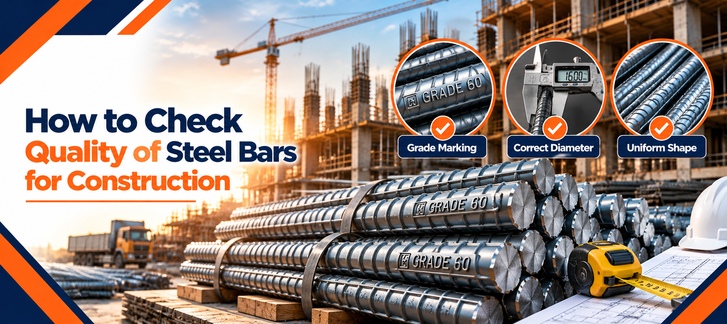
Most people compare price first. I'd argue that should be closer to last. Before anything else, ask whether the quality actually matches what's written down, test reports, batch numbers, manufacturer certificates, especially for cement and steel, where the grade quoted on the phone doesn't always match what's on the truck.
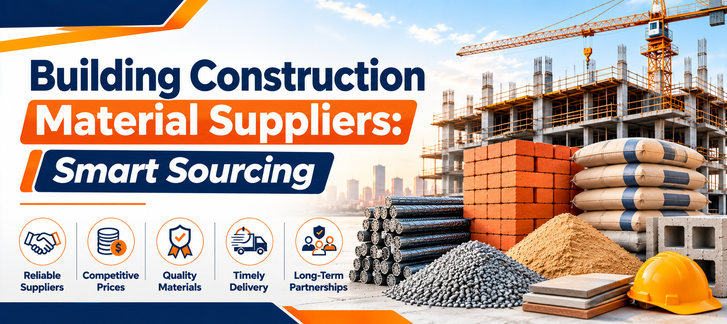
Then look past the unit price to what the order really costs once delivery, taxes, and minimum quantities are added in; a quote that sounds cheap on the call can end up pricier than a competitor's "expensive" one once everything's included.
Stock is another thing worth pressing on. Ask directly what is already accessible versus what needs to be ordered in from somewhere else because a supplier can offer you a price for stuff they don't actually have sitting in the yard.
Get an actual timetable, not "soon," and find out what happens if the vehicle is late. Delivery dependability is equally important. And before you sign anything, get payment terms in writing: advance amounts, credit terms, and what the process looks like if a shipment arrives damaged or doesn't match spec.
None of this is complicated, but skipping it is exactly how projects end up stuck waiting on a truck that was never coming.
Wholesale or Retail: Which One Fits Your Job
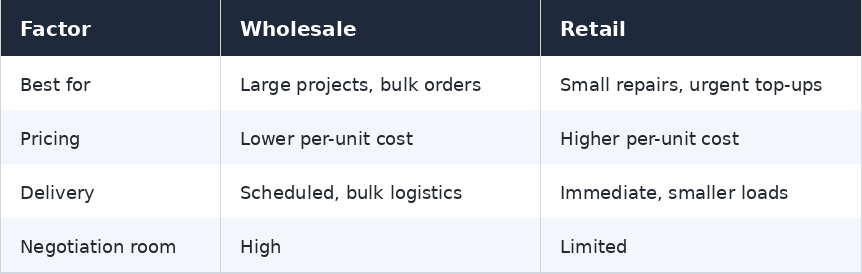
Bulk isn't automatically cheaper in any way that matters if you can't use what you buy. Cement stored badly loses strength within weeks. Steel left out in the open starts rusting faster than people expect.
Before committing to a large wholesale order, weigh it against your actual requirement, your storage space, and your cash flow, a great unit price is meaningless if part of the order goes to waste before it's used.
What you're really chasing is the lowest total cost, not the lowest number on the invoice.
There's a deeper breakdown of when bulk buying actually pays off in this guide on wholesale suppliers, if you want to weigh it against your own project size.
Current Building Material Prices in Pakistan (2026)
This year has seen significant price fluctuations due to fuel costs and currency fluctuations, so use the figures below as a starting point rather than a quote and always check current rates before completing a genuine purchase.
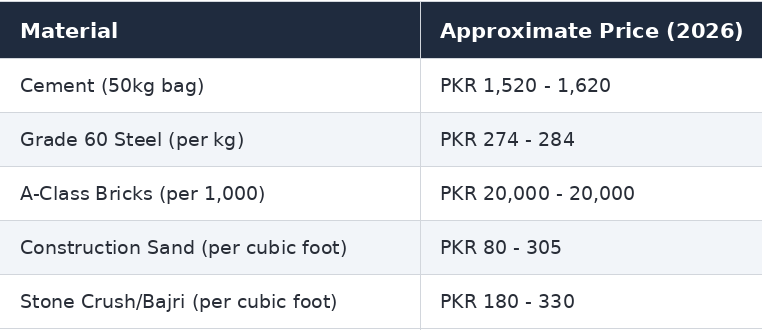
A typical grey-structure budget typically consists of about half of steel and cement, thus a tiny percentage change in either affects the total more than most people anticipate.
Both track fuel prices and the exchange rate fairly closely, which is really just to say: a quote from three months back isn't worth much today.
You can current commodity prices daily to sanity-check a supplier's number before committing.
What to Ask Before You Sign Off
A short conversation upfront saves a lot of arguing later. Worth asking directly: what exact grade or specification is being supplied, not just the product name on the invoice.
Whether the quoted price is genuinely final or delivery and tax get added afterward. What a realistic delivery date looks like, rather than a vague "it's available."
Whether they can show test reports or certification for that specific batch. What happens if the material doesn't match spec once it arrives.
The Mistakes That Quietly Cost the Most
On projects that exceed their budget, a few recurring trends emerge. Choosing purely on price is the big one, the savings tend to disappear the moment delays or rework enter the picture.
Skipping the specification check is another; two products can look nearly identical and still carry very different strength ratings. Ordering far more than you need early on ties up cash and creates a storage headache for material that degrades.
One delayed shipment causes everything downstream to halt because it assumes delivery will just happen without verifying dates. This can be especially problematic when materials such as ready mix concrete need to arrive according to a specific construction schedule. Additionally, using verbal agreements rather than writing down amounts, pricing, and dates is the kind of shortcut that seems harmless until it's not.
Where Digital Sourcing Fits In
Buying construction materials in Pakistan is slowly shifting away from phone calls and market visits toward online sourcing, and honestly, that shift is overdue.
B2B platforms let you compare specs and pricing from several construction material distributors at once instead of visiting each one separately. Zarea works this way, it connects buyers with verified suppliers so pricing stays visible and orders can actually be tracked.
That doesn't remove the need for your own checks, but it does cut down the legwork considerably.
This guide to choosing a one-stop construction material supplier covers the trade-offs between using one consolidated source versus juggling several dealers, if you want to think it through further.
A Short Checklist Before You Commit
Specification matches your technical requirement
Supplier can commit to your full quantity, not just part of it
Pricing checked against current market rates, not an old quote
Delivery charges and timeline are realistic and confirmed
Payme`nt terms are documented somewhere, not just spoken
There's an agreed process for damaged or wrong-spec deliveries
It's useful to go over this again periodically when working on a lengthier project. It's not a given that the person who was most affordable in January will remain so by June.
Why This Matters More Once the Project Gets Bigger
A delayed delivery on a minor repair is inconvenient, so you move on. The same delay affects labor scheduling, idle equipment, subcontractor timetables, and finance costs on a major commercial build. A quality problem later on may result in rework or a compliance issue that no one wants to deal with in the middle of the project.
For larger builds, procurement teams consider quality, supply continuity, and overall cost in addition to the first estimate, rather than focusing solely on finding the lowest price on a sheet of paper.
There's more context on how this plays out at an industry level in this overview of Pakistan's construction sector, for anyone curious about the bigger picture beyond a single project.
Wrap Up
The finest suppliers of building construction materials are those who deliver the proper specifications, in the right quantity, on schedule, and at a reasonable total cost—not those who have the lowest quote on the first day. Examine them in the same manner as you would a contractor.
Examine their past performance, confirm their claims, and record the terms. If you do that early, there is a lot greater likelihood that the remainder of the project will proceed as planned.
The prices listed are market estimates for 2026 and may differ depending on the brand, city, and order volume. Before making a purchase, always check the current rates directly with your provider.
Frequently Asked Questions
Who is the biggest supplier of building materials?
There isn't a single answer that works for everyone. Pakistan's supply chain is made up of manufacturers, distributors, importers, and regional wholesalers; different businesses control different markets.
In terms of revenue, massive, diverse companies like CRH, Saint-Gobain, and Holcim are among the largest in the world, but for someone who is really making an order, size is less significant than the supplier's capacity to reliably meet your requirements, quantity, and delivery date.
At the absolute least, digital B2B marketplaces speed up the process of comparing numerous approved vendors in one spot.
What are the current prices of building materials in Pakistan?
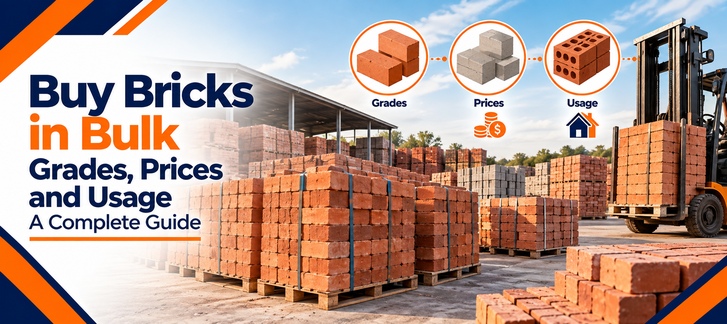
As of 2026, building material prices differ depending on the product, quality, supplier, region, and state of the market. Grade 60 steel costs PKR 260–320 per kg, sand costs PKR 45–235 per cubic foot, cement costs PKR 1,350–1,600 per 50 kg bag, A-Class bricks cost PKR 14,000–25,000 per 1,000 bricks, and crush or bajri costs PKR 95–330 per cubic foot. Customers should verify the most recent local rates before making a significant purchase because costs may fluctuate regularly.
What are the 12 types of construction materials?
Sand, aggregate or crush, concrete blocks, bricks, steel and reinforcement bars, wood, glass, ceramics and tiles, paints and coatings, plumbing and electrical supplies.
Which of these you truly need and how much depends on the design, the construction stage, and the degree of finishing work.