Wholesale Suppliers in Pakistan: Smarter Sourcing Starts Here
Find trusted suppliers and compare wholesale prices
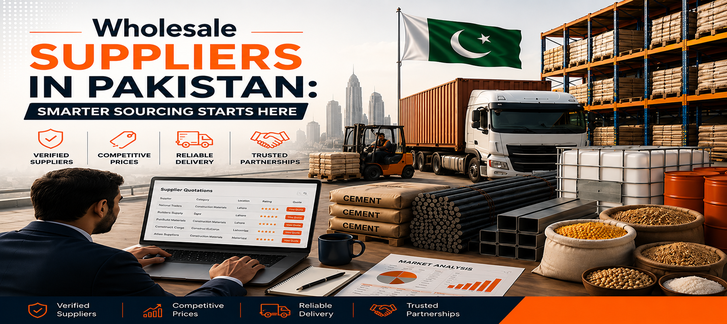
Ask any procurement manager in Lahore how they found their current cement supplier and you'll usually get the same answer: someone knew someone. That's not a knock on the system. It's just how wholesale sourcing has worked here for decades.
But it's also why costs stay unpredictable, and why one bad batch can throw off an entire project timeline. If you buy in bulk, for construction, for a factory floor, for a farm, the supplier you pick has an outsized effect on your margins. Not just the price you get quoted.
The price you actually pay once you've factored in delays, quality that doesn't match the sample, and the three follow-up calls it takes to get a straight answer.
None of this is a knock on Pakistan's wholesale market itself. There's plenty of supply. Steel mills, cement plants, chemical importers, agri traders, they're all here.
What's missing, more often than not, is a way to tell the reliable ones apart from everyone else claiming to be one, before you've already placed the order.
That gap is what digital B2B marketplaces are starting to close, not by replacing relationships, but by giving buyers a way to check credentials, compare prices, and place orders without needing to already know somebody.
This guide walks through what wholesale suppliers actually are, why the cheapest quote usually isn't the best deal, where sourcing tends to break down in Pakistan specifically, and how platforms like Zarea fit into fixing that.
What Counts as a Wholesale Supplier in Pakistan
Technically, it's simple: anyone selling in bulk to other businesses instead of individual customers. In practice, the category covers a fair amount of ground.
Manufacturers sell straight to buyers, no middleman involved.
Distributors carry a specific brand's line and represent it regionally. Importers bring in materials or finished goods from outside the country, usually at a premium tied to shipping and duties. Commodity traders deal in raw industrial and agricultural products, buying and reselling as market conditions shift.
And then there are large wholesalers who just move volume across a wide catalog, everything from construction materials to farm inputs.
Cement and steel probably come to mind first if you're in construction. But the same dynamic plays out with industrial chemicals, coal, and agricultural commodities too, covering types of commodities that businesses rely on for consistent quantities at prices that don't swing wildly month to month.
For businesses sourcing steel in bulk, the wholesale market includes established names such as Aziz Steel, Al Moiz Steel, FF Steel, Mughal Steel, Kamran Steel, and Hunza Steel.
Comparing available steel suppliers can help contractors, manufacturers, and other businesses evaluate options based on product quality, pricing, availability, and delivery requirements.
It's Not Really About Finding the Perfect Price
Everyone wants the lowest quote, fair enough. But the lowest quote and the lowest total cost aren't the same thing, and that gap is where a lot of procurement budgets quietly leak.
A supplier who's five percent more expensive but delivers on time, every time, is usually the better deal in the end. A few reasons that tends to hold up:
• Pricing gets better with time, not worse: Buying direct, without three layers of middlemen taking a cut, means the markup shrinks the longer the relationship runs.
• Quality doesn't wobble: The tenth order looks like the first order. No arguing over a batch that doesn't match spec.
• Deliveries land when they're supposed to: which sounds obvious until a project has stalled because a truck showed up eight days late.
• Cash doesn't get stuck: Suppliers offering real payment terms, not just pay-in-full-upfront, free up working capital for everything else the business needs.
And maybe the most underrated part: you stop having to re-vet a vendor every single time you need to order. That alone saves more hours than people give it credit for.
Where Sourcing Actually Breaks Down in Pakistan
None of this is unique to Pakistan, but a few problems show up here more often than they should.
Quote five suppliers on the same order and you'll likely get five different numbers, sometimes wildly different, with no clean way to know which one reflects reality and which one is just an opening bid in a negotiation.
Verification is mostly informal. A phone call, a reference from someone you trust, maybe a site visit if you're lucky. Which means the first sign something's wrong is usually the delivery itself, not before it.
Then there are the middlemen. Every additional layer between the factory and your loading dock adds cost and quietly removes visibility into what you're actually paying for.
Advance payments are common on bulk orders, and that only works in your favor if the supplier actually has a track record worth trusting.
And logistics, more than people expect, is where good deals go bad. A great price on paper means very little if the shipment is three weeks behind schedule and nobody can tell you where it actually is.
What a Digital Marketplace Actually Changes
The shift toward B2B marketplaces isn't really about technology for its own sake. It's about closing the exact gaps above.
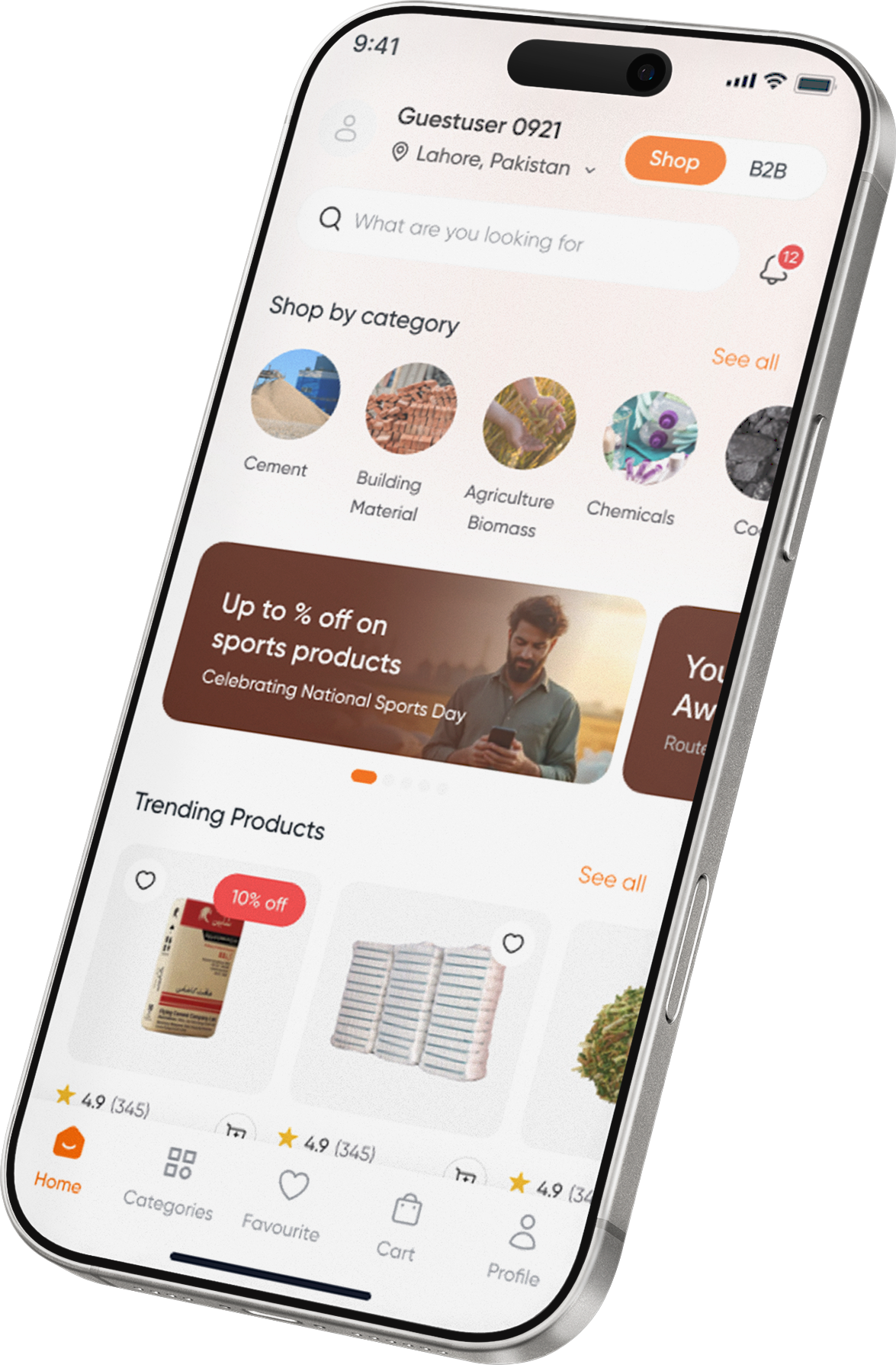
On a platform built for this, buyers can look through suppliers who've already been vetted instead of vetting each one from scratch. Pricing sits side by side, so comparison doesn't require five separate phone calls. Quotations come back fast. Orders go out without needing an existing relationship with the seller.
Deliveries are track able in real time instead of a guess based on when a truck "should" arrive. And credit terms are visible upfront instead of negotiated case by case, on a structured marketplace.
That matters most for smaller businesses. Larger, established buyers have always had the leverage that comes from years of built-up supplier relationships. A structured marketplace hands a version of that same access to anyone with a login.
Before You Commit to a Supplier, Check These
Five things, roughly in order of how often people skip them:
Verify who you're actually dealing with: Registration, references, some kind of transaction history if it's available.
Get more than one quote: Even from a supplier you already trust. Markets move.
Nail down payment terms: Before the order goes in, not after.
Ask about delivery timelines: With the same seriousness you ask about price. A cheap order that arrives late isn't actually cheap.
Start small with anyone new: Test the relationship on a modest order before betting a big one on it.
The Future of Wholesale Sourcing in Pakistan
This came out of a real gap, not a theoretical one. Pakistan has never had a supply problem, what it's lacked is the infrastructure that makes sourcing predictable instead of a gamble.
The platform brings together verified suppliers across construction materials, agricultural commodities, and industrial chemicals, with pricing that's visible upfront, logistics you can actually track, and payment options that don't require paying the full amount before a single bag of cement leaves the yard.
For buyers, that's fewer afternoons spent chasing quotes over the phone. For suppliers, it's a way to reach businesses they'd never have found through word of mouth alone.
Wrap Up
Sourcing wholesale in Pakistan has run on personal contacts and gut instinct for a long time, and there's nothing wrong with that when it works. The problem is it doesn't always work, and when it doesn't, there's rarely a good way to see it coming.
The businesses getting ahead of that right now are the ones treating supplier selection like an actual decision, backed by verification and comparison, instead of just going with whoever picked up the phone first.
Ready to source smarter? Browse verified wholesale suppliers and get quotes on construction materials, agricultural commodities, and industrial chemicals, without leaving your desk.
Frequently Asked Questions
What are wholesale suppliers in Pakistan?
Businesses, manufacturers, distributors, traders, that sell in bulk at reduced per-unit rates to retailers, contractors, and other companies, rather than to individual shoppers.
How do I find verified wholesale suppliers in Pakistan?
Start with the basics: business registration, references, a track record you can actually check. B2B marketplaces speed this up by pre-verifying suppliers so you're not doing that legwork alone.
Why buy wholesale instead of retail?
Lower per-unit cost, for one. But also a steadier supply and a relationship that gets easier with every repeat order instead of starting from scratch each time.
Which industries lean on wholesale suppliers the most?
Construction, manufacturing, agriculture, and industrial chemical trading, basically anywhere bulk quantity and consistent quality matter more than a one-off purchase.
What should I check before choosing a supplier?
Credentials, quality history, pricing, delivery record, payment terms. Skip any one of these and you're taking on risk you didn't need to.
Why go through a marketplace instead of the traditional route?
Mostly time. Comparison, verification, and quotations end up in one place instead of scattered across a dozen phone calls and half-remembered follow-ups.