Charcoal Briquettes: Types, Uses and Buying Guide in Pakistan
Learn how charcoal briquettes are made, their types, BBQ uses, benefits and drawbacks, plus practical buying tips for Pakistan.
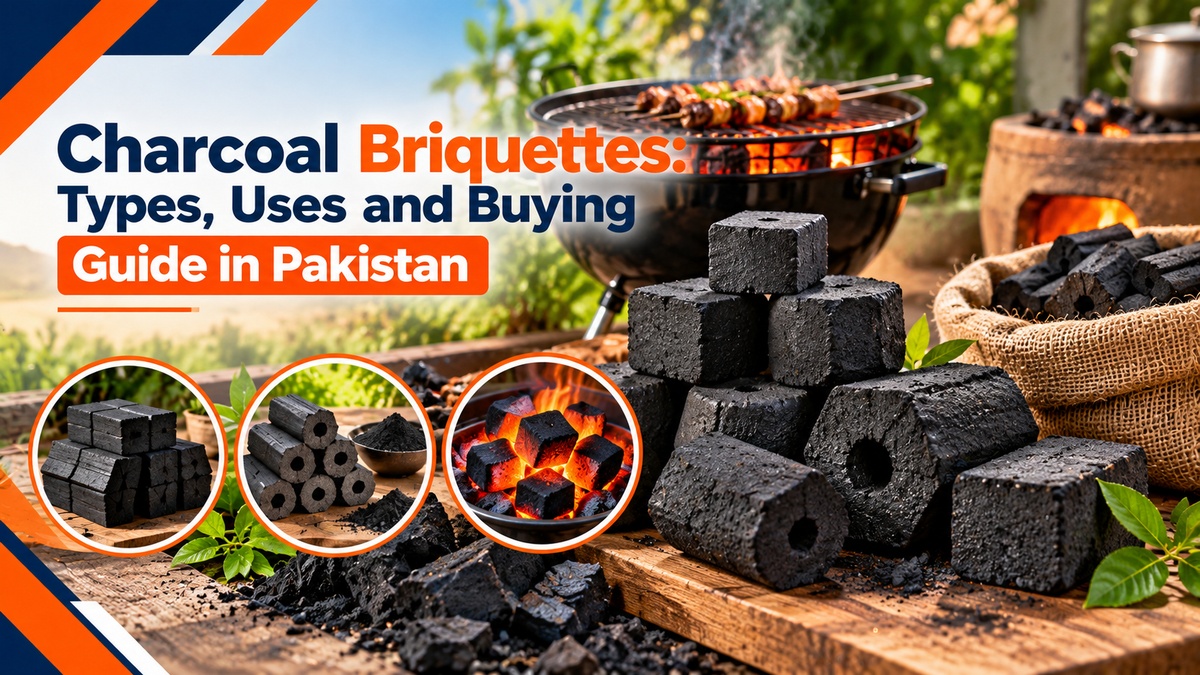
Charcoal briquettes look simple enough: compact blocks of fuel that fit neatly into a barbecue or stove. But two bags that look almost identical can behave very differently once lit.
One holds steady heat for a long cooking session; another produces excessive ash, smokes during lighting, or breaks apart in transit.
The difference usually comes down to the charcoal feedstock, the binder, moisture, and how the briquettes were made. Here is what to look for, how they compare with lump charcoal, and what buyers in Pakistan should check before ordering.
Definition
Charcoal briquettes are shaped fuel pieces made by compressing charcoal particles, usually with a binder such as starch. The charcoal is produced by heating plant material with limited oxygen, a process known as carbonisation.
Once the charcoal is crushed, mixed, pressed, and dried, it becomes a more uniform product than irregular pieces of lump charcoal.
They are commonly used for grilling, barbecues, and, in certain product grades, shisha or incense heating.
Not every briquette is suitable for every purpose. Food-contact cooking applications, for example, call for appropriate product specifications and safe additives.
How are Charcoal Briquettes Made?
1. Carbonising the raw material
Wood, coconut shells, or other suitable biomass are heated with limited oxygen to produce charcoal.
2. Crushing and screening
The charcoal is reduced to particles and screened for more consistent mixing.
3. Adding a binder
A suitable binder helps the particles hold their shape. The formulation varies by manufacturer.
4. Pressing into shape
The mixture is compacted into cubes, pillows, cylinders, or hexagonal pieces.
5. Drying and packing
Briquettes are dried to the required moisture level, cooled, and packed to limit breakage and dampness.
Feedstock alone does not tell the whole quality story. Ash content can also be affected by mineral contamination, binder formulation, and other additives.
Buyers should ask for measured specifications rather than rely on claims such as “premium” or “extra hot”.
Key Features That Matter to Buyers
Consistent size: uniform pieces are easier to count, pack, and arrange for repeatable cooking conditions.
Burn behaviour: many briquette formulations are designed for steady heat, although duration depends on airflow, size, and composition.
Ash content: lower ash generally means less residue to clear, but the actual result must be measured.
Moisture: damp fuel can be harder to ignite and less efficient to use.
Strength: durable briquettes create fewer broken pieces and fines during handling.
Additives: ask what binder and other ingredients are used, especially for cooking applications.
A 2025 Italian retail-fuel study discussed in the source draft compared 15 lump-charcoal products with eight briquette products. It reported meaningful differences in ash, fixed carbon and combustion behaviour across its sample.
That is useful evidence of product variation, not proof that every briquette burns at a particular temperature or lasts a fixed number of hours.
The precise study results and any quoted EN 1860-2:2023 limits should be checked against the original publications before being used as product-compliance claims.
Types of Charcoal Briquettes
1. Coconut-Shell
These are made from carbonised coconut shells and often sold as cubes, hexagons, or cylinders. They are widely marketed for shisha and barbecue applications.
Quality still varies: compare ash, fixed carbon, moisture, binder, and intended use rather than assuming every coconut-shell product performs the same way.
2. Wood-Based
Wood charcoal and charcoal made from suitable woody residues can be pressed into briquettes for grilling and other heating uses.
The wood source, carbonisation conditions and formulation influence smoke, ash and burn characteristics.
3. Mixed-Feedstock
Some manufacturers blend charcoal from different plant sources. A mixed product is not automatically inferior, but a supplier should be able to explain its composition and provide consistent batch specifications.
Charcoal Biquettes versus Biomass Briquettes
This distinction is easy to miss. Charcoal briquettes contain carbonised material. Non-carbonised biomass briquettes are compressed directly from materials such as sawdust, rice husk, or crop residues.
They have different combustion characteristics and are often intended for industrial heating rather than barbecue use.
For a detailed explanation of the non-carbonised option, see the guide to biomass briquettes and how they are manufactured.
Charcoal Briquettes vs Lump Charcoal
Neither fuel wins in every situation. The right choice depends on cooking style, grill design, and the actual product specification.
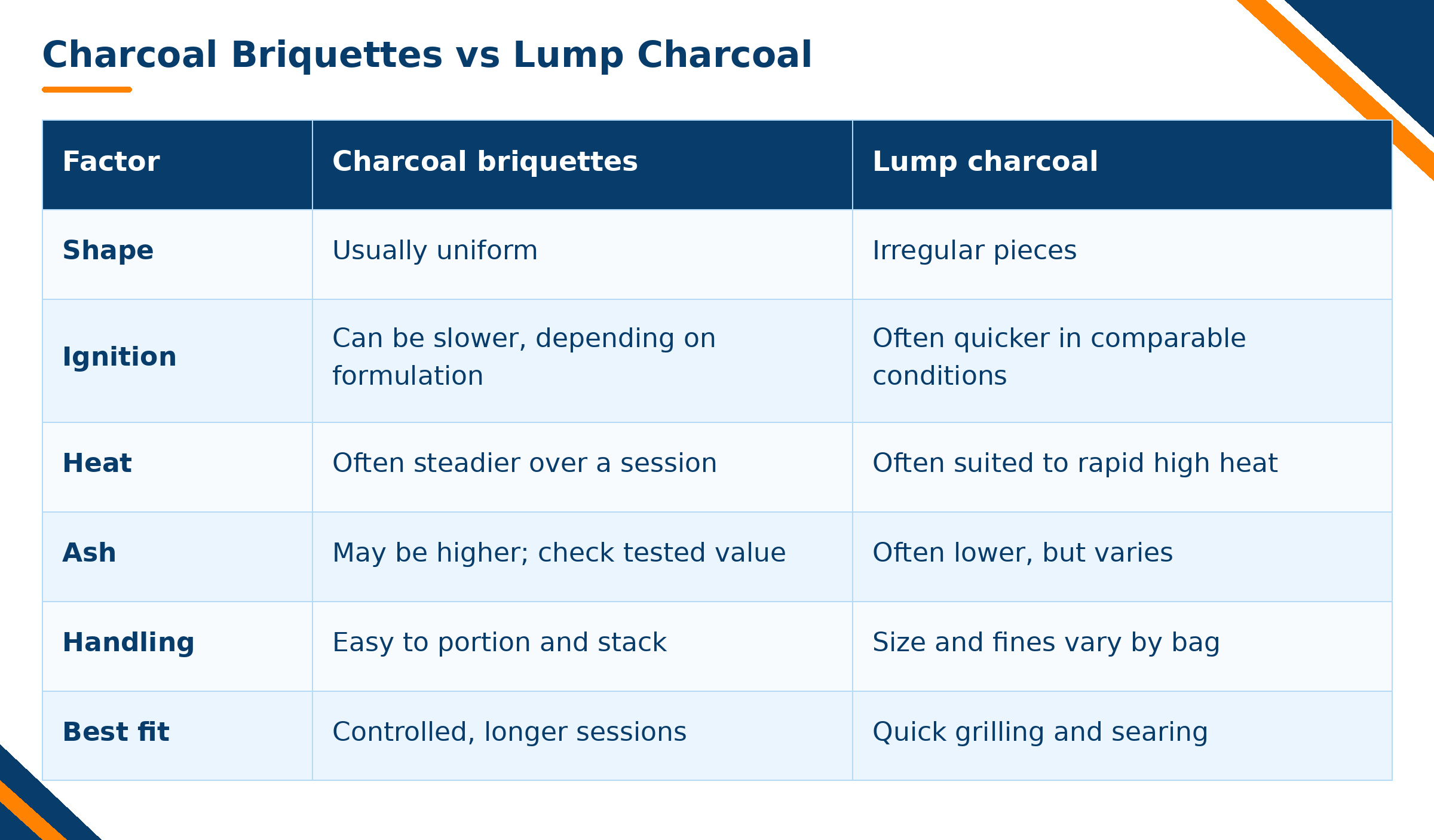
The table describes common tendencies, not guaranteed performance. A well-made briquette can outperform a poor lump-charcoal product for a particular job, and vice versa.
Common Applications
1. Barbecue and Outdoor Cooking
Uniform pieces help cooks build a predictable charcoal bed for chicken, kebabs, vegetables, and slow grilling. Choose a product specifically intended for cooking, and follow the grill manufacturer’s instructions.
2. Shisha and Hookah
Some coconut-shell briquettes are produced in consistent shapes for shisha equipment. Their suitability depends on the manufacturer’s stated purpose and quality controls; don't assume ordinary BBQ briquettes are interchangeable.
3. Incense and Bakhoor
Purpose-made charcoal tablets or briquettes can provide a heat source for incense. Use only products intended for that application and follow safety guidance.
4. Industrial heating: a different fuel decision
Factories may also buy compressed solid fuels, but these are often non-carbonised biomass briquettes rather than barbecue charcoal.
Industrial equipment must be designed or approved for the selected fuel, including its ash and emissions characteristics.
If you are comparing fuels for a factory, steam boiler explains why boiler design and fuel specifications need to be considered together.
Disadvantages and Safety Risks
Ash and cleaning: some briquettes leave more ash than lump charcoal, reducing airflow if the grill is not maintained.
Slow ignition: dense or damp pieces may take longer to light.
Inconsistent batches: fuel from different suppliers can vary in moisture, strength, and composition.
Smoke at lighting: some formulations smoke more during startup; this should not be confused with a guarantee of clean combustion.
Moisture damage: poorly stored bags may absorb dampness and become harder to use.
Important safety point: burning charcoal releases carbon monoxide, an invisible gas that can be fatal. Never burn charcoal briquettes indoors, in tents, garages, vehicles, or other enclosed spaces, even with doors or windows open.
Use appropriate outdoor equipment and keep children and combustible materials away from the fire.
Charcoal briquettes in Pakistan: Availability and Price
Buyers in Pakistan may encounter charcoal products offered for BBQ, shisha, and commercial catering, as well as biomass briquettes for industrial users.
Listings from different suppliers are not always comparable. A 1 kg bag of unspecified “koyla” is not equivalent to a tested coconut-shell briquette sold by the tonne.
Instead of relying on a single online price, request a current quote stating the fuel type, net weight, packaging, quantity, delivery location, and payment terms.
For bulk orders, ask whether the quotation is ex-warehouse, delivered, or FOB. Compare the total landed cost, not just the advertised price per kilogram.
For buyers researching related agricultural feedstocks, Agriculture Biomass. Lists materials such as rice husk and bagasse.
These listings should not be mistaken for verified charcoal-briquette stock.
Coal briquettes are another separate category: they are made from fossil coal fines, not charcoal from carbonised biomass.
Buyers comparing fossil solid fuels can browse Zarea’s coal category; product suitability and availability still need confirmation.
How to Choose the Best
For a restaurant or a regular bulk buyer, a sample bag and a short specification sheet are worth more than a long list of marketing promises.
Ask suppliers these questions before committing:
What is the charcoal made from, and is it intended for BBQ, shisha, or another use?
What are the measured fixed-carbon, ash, and moisture values, and which test methods were used?
What binders or additives are included?
How much does each piece weigh, and how consistent is the size?
Can the supplier provide a sample for a practical burn and ash test?
How is the product packed and protected from moisture during transport?
What is the delivered price for the required quantity, and are repeat batches available?
If a supplier cites compliance with EN 1860-2 or another standard, ask for a current test report identifying the exact product and applicable standard edition.
Do not assume a claim on the bag is independently certified.
Manufacturers interested in reaching commodity buyers can also review Zarea’s supplier registration for current onboarding requirements.
Frequently Asked Questions
Are charcoal briquettes better than lump charcoal?
Not in every case. Briquettes offer consistent shapes and can provide steady heat; lump charcoal is often preferred for rapid ignition and intense grilling. Quality and cooking conditions determine the better choice.
What is the difference between charcoal and biomass briquettes?
Charcoal briquettes use material that has already been carbonised. Biomass briquettes usually compress dried plant material without carbonising it first. Their intended uses and fuel properties differ.
Do charcoal briquettes produce more ash?
Many do when compared with good-quality lump charcoal, but ash depends on feedstock, processing, and additives. Request a test result rather than assuming a fixed percentage.
What should I check before buying charcoal briquettes in Pakistan?
Confirm the intended use, material, ash and moisture specifications, pack weight, sample quality, order quantity, and delivered price. For bulk orders, request documentation and test a sample first.
Wrap Up
The best charcoal briquette is the one that suits the job and performs consistently, not necessarily the one with the most impressive label. For grilling, start with cooking-grade suitability and a practical burn test.
For commercial orders, add moisture, ash, fixed-carbon data, and delivered cost to the comparison. A little checking before purchase can save a lot of disappointment when the fire is already lit.