Solid Biofuels: Types, Examples, Quality Standards and Uses
Solid biofuels explained: feedstock categories, forms, examples, quality limits, advantages and how Pakistani buyers can source them.
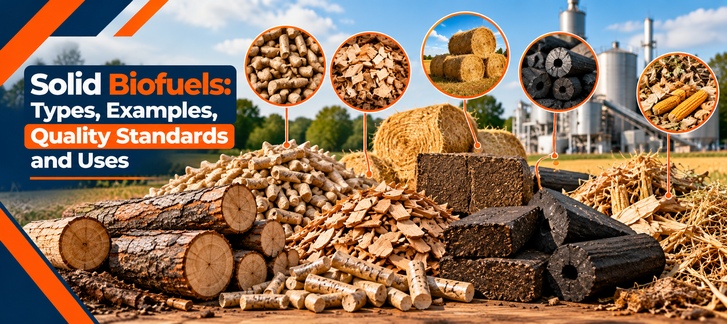
Solid biofuels are just fuels made from biomass, which means plant or other organic matter that isn’t fossil. Think wood chips, pellets, briquettes, rice husk, straw, bagasse and charcoal.
You burn them to get heat, or to generate power, and that energy is what people call solid bioenergy. Solid biofuels have been used for heating and power generation for generations.
However, not every boiler or kiln can burn every type of biomass fuel. The right choice depends on the equipment, moisture content, ash levels and operating requirements.
In this guide we go through the main feedstock types, the shapes solid biofuels come in, and how to judge their quality. We also look at where they work well and
where they don’t, what’s available in Pakistan, and what to ask a supplier before you buy.
The figures here are dated, and quality limits change from one standard to another, so always check the spec that applies to your boiler or your contract.
Quick answers
Solid biofuels means pellets, briquettes, wood chips, husk, straw and any other solid fuel made from biomass.
There are five feedstock groups: woody, herbaceous (crop residues), fruit, aquatic and waste-based.
Don’t go by price per tonne. Moisture, ash and calorific value tell you a lot more about what you’re buying.
The good part is that leftover residues become heat and power. The risk is poor quality.
What Are Solid Biofuels?
Definition: Biomass is the raw material. A solid biofuel is that material turned into a fuel, either as it is or after some processing. The New Zealand Bioenergy Association calls “solid biofuels” the technical term for all biofuel from wood or herbaceous material, and points out that people often just say wood fuel.
The European technical standard behind the term covers products from agriculture and forestry, plant waste from farming and food processing, untreated wood waste and cork waste, per the Swedish Standards Institute.
The label matters because “biofuel” on its own usually means a liquid like ethanol or biodiesel. Solid biofuels are a separate branch, with their own standards, equipment, and supply chains.
Key Categories of Feedstocks
Solid biofuel feedstocks are commonly classified by their origin. The ISO 17225 standard family covers woody, herbaceous, fruit and aquatic biomass, along with suitable blends and mixtures.
For practical sourcing, buyers may also group agricultural and industrial biomass residues according to their availability, composition, and intended use. The table below summarizes the main categories and their applications.
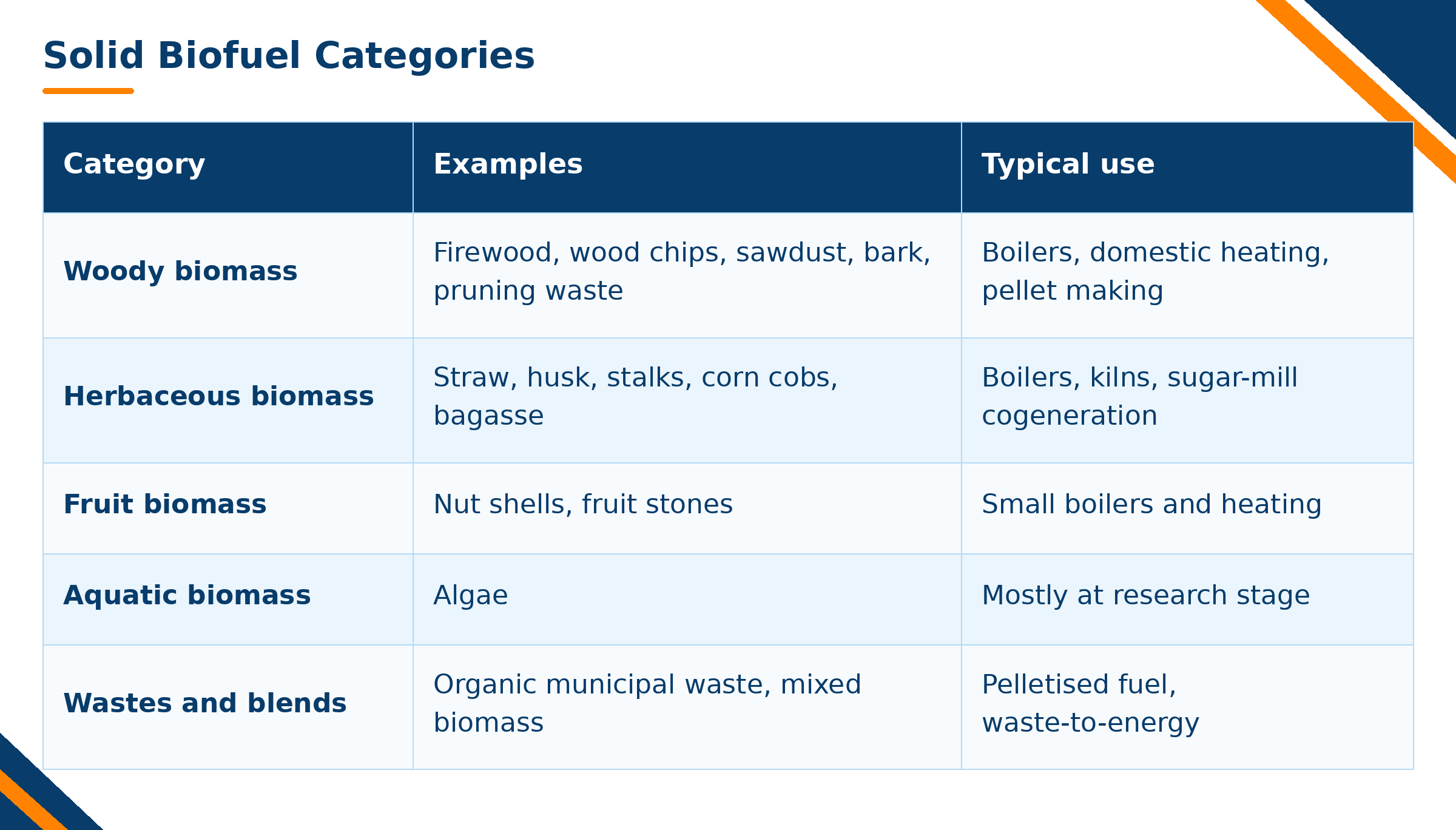
In Pakistan, the herbaceous group matters most because the country grows a lot of rice, wheat, cotton, maize, and sugarcane. Our overview of types of biomass fuel shows which industry uses which residue. Rice husk is a good example: it’s cheap to collect because it piles up at the mill.
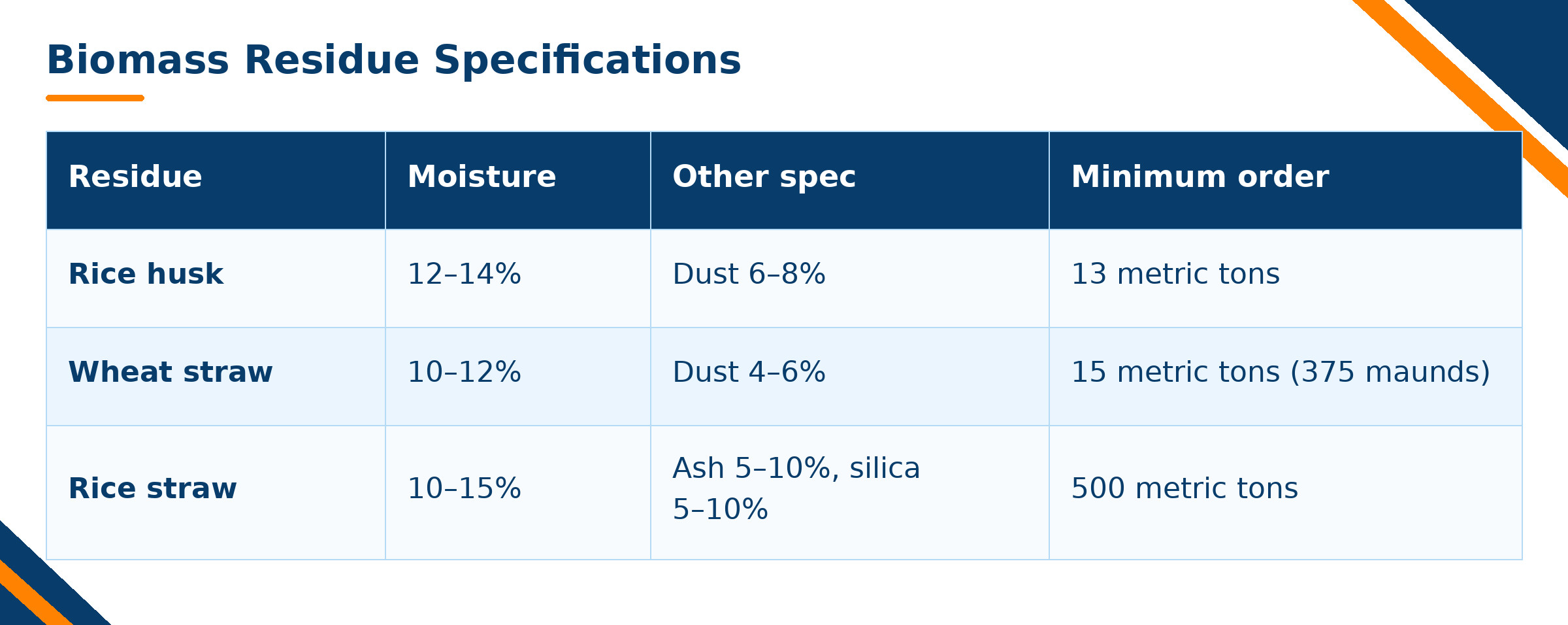
For reference, here’s what three residue listings on Zarea show. The figures come from the product pages in October 2026, so check them again before you order.
Forms of Solid Biofuels
You can burn a solid biofuel raw, or process it to make it denser, drier, and easier to handle. The more processing, the more uniform the fuel and the higher the price.
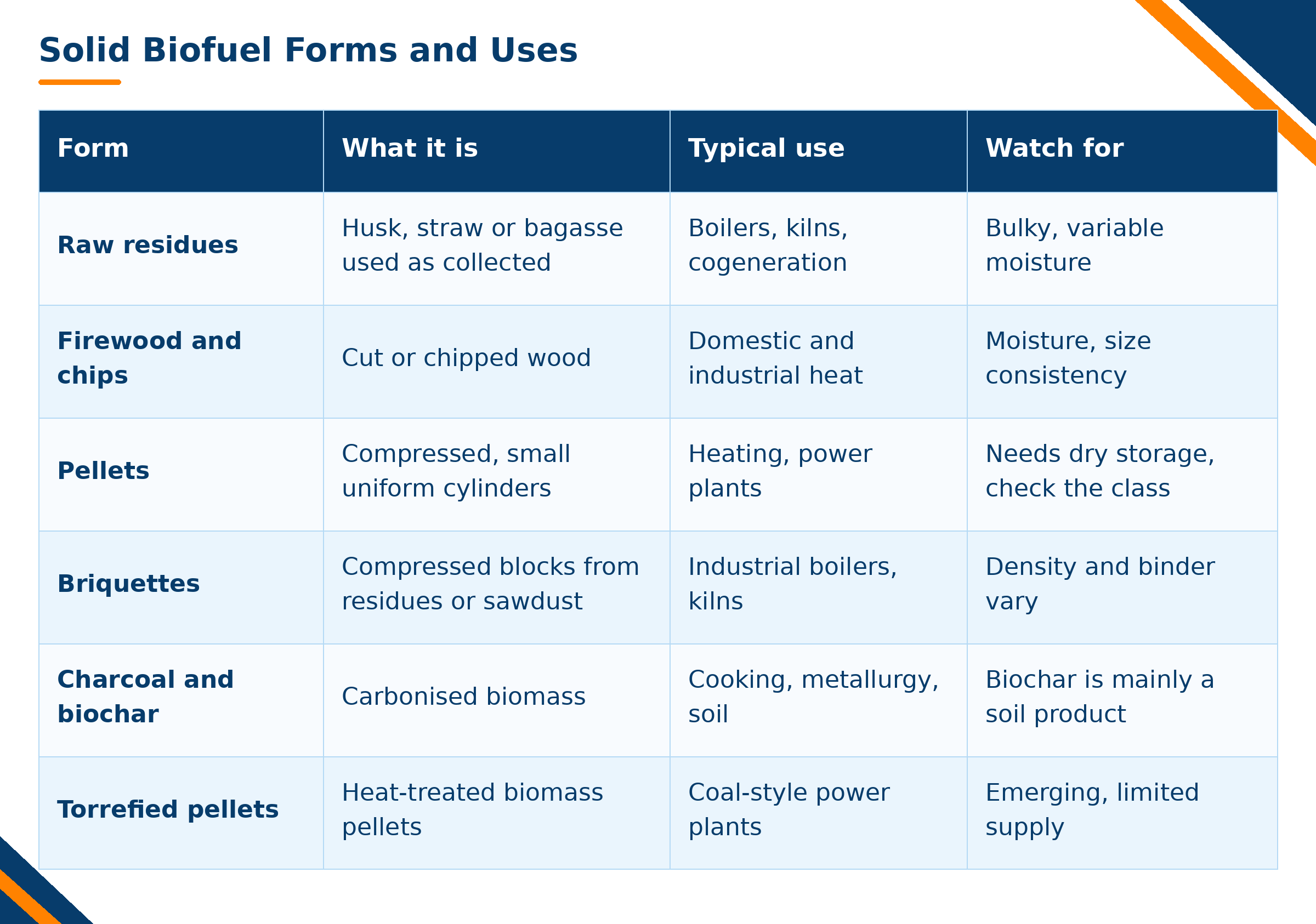
Pellets are the most tightly regulated form. In 2025, ENplus-certified wood pellet production hit a record 14.5 million tonnes. Germany made about 3.95 million of that, Austria 1.89 million, and France just over 1.08 million, according to ENplus.
Many industrial boilers run on briquettes. We cover how they’re made in our guide to biomass briquettes.
Top 9 Solid Biofuels Examples
Wood pellets, used for heating and in power plants
Wood chips and sawdust, burned in boilers or pressed into pellets
Firewood, still the main household fuel in many regions
Biomass briquettes, pressed from residues for industrial boilers and kilns
Rice husk, a mill by-product burned in boilers and kilns
Bagasse, the fibre left after crushing sugarcane, used for steam and power at sugar mills
Wheat straw, baled and used as boiler fuel, bedding and fodder. Listings like wheat straw show the moisture and dust levels you should ask about
Cotton stalks and corn cobs, low-cost field residues used as boiler fuel
Charcoal, carbonised wood for cooking and industry
How Solid Biofuels Are Made and Used
The basic process is simple. You collect the biomass, dry it, cut it to a consistent size, and sometimes press it into pellets or briquettes. Pressing packs more energy into each truckload, which cuts freight cost per unit of heat.
Most solid biofuels are burned directly in boilers, furnaces, and kilns. In bigger plants they’re co-fired with coal. A Springer engineering text says co-firing with coal has the highest commercial potential, while combustion and gasification suit medium and small units.
Sugar mills show the power route well: bagasse cogeneration supplies about 1.6% of Queensland’s electricity, according to the Queensland government. We cover the farm-to-factory side in our guide to agri waste into energy.
How to Judge Solid Biofuel Quality
Solid biofuels do not all follow the same quality limits. ENplus A1 is a certification class for premium wood pellets, while agricultural residues such as rice husk and straw can have different moisture, ash, and chemical characteristics.
Buyers should compare the applicable fuel standard with their boiler manufacturer's specifications before purchasing.
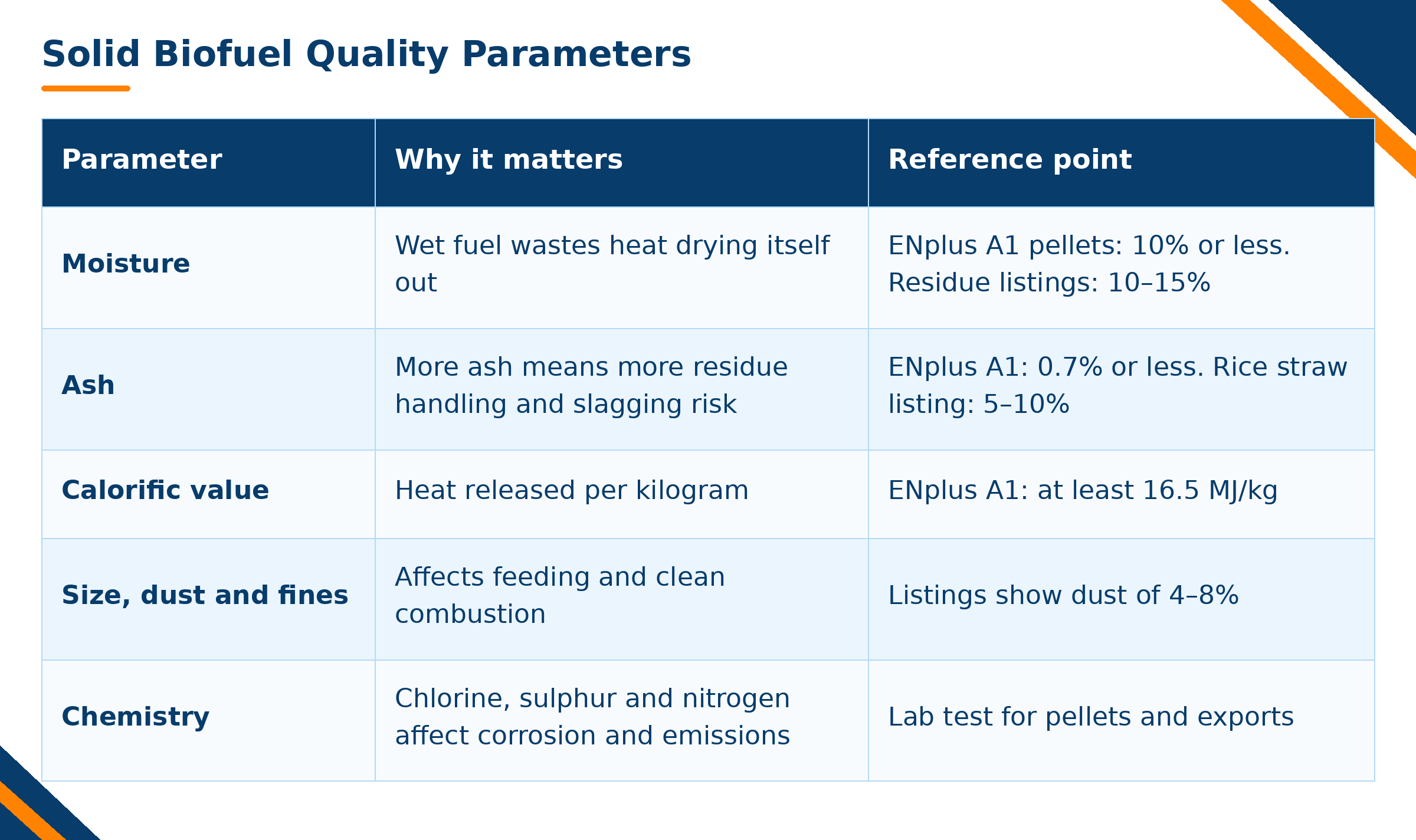
Notice the gap between pellets and raw residues. ENplus A1 is a premium residential pellet grade, so it isn’t a like-for-like comparison, but the ash difference is big.
A listing like rice straw shows 5–10% ash and silica, against 0.7% for A1 pellets. That’s why a boiler built for pellets can struggle with raw straw. Match the fuel to the equipment.
Main Advantages
They use waste. Husk, straw, and sawdust would otherwise be burned in the open or left to rot.
Supply is local, so freight is shorter, and you’re less exposed to imported fuel prices.
Potentially lower lifecycle emissions. Solid biofuels can reduce greenhouse gas emissions compared with some fossil fuels when the biomass is sourced sustainably, and processing, transport and land-use impacts are considered. The actual benefit depends on the feedstock and how it is used.
Many boilers and kilns can burn them directly or co-fire them with coal.
Farmers and mills earn money from residues that used to have no market.
You can store the fuel and burn it when you need heat, which you can’t do with wind or solar.
The advantages are real, but so are the limits. The numbers behind Pakistan’s growth are in our report on biomass in Pakistan, and the limits come next.
Limits to Know Before You Buy
Moisture and ash vary between batches and cut efficiency if you ignore them.
Loose residues are bulky for their weight, so long hauls get expensive.
Residues arrive at harvest, so storage and contracts matter.
Cheap boilers and wet fuel produce smoke and particulates.
Straw is also fodder and bedding, which pushes up its price.
Solid Bioenergy in Pakistan
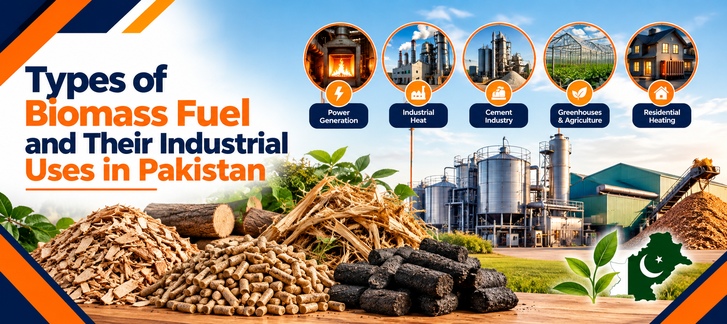
In Pakistan, solid bioenergy is mainly associated with bagasse used in sugar mills, rice husk and crop residues used in industrial boilers, and biomass briquettes and pellets used as alternative fuels.
These materials are especially relevant to industries that require continuous heat, including textile processing, food manufacturing, and cement production. Our guide to industrial raw materials explains how factories classify production inputs and energy sources.
For industrial buyers comparing fuel options, Zarea's coal, energy and petroleum categories provide additional market references. Buyers should compare the delivered cost, calorific value, ash content, and equipment compatibility before switching fuels.
How to Buy Solid Biofuels
Get these in writing before you order:
The specification: moisture, ash, size and dust, and the test method used
The price date and what it covers, since freight and loading change the delivered cost
Minimum order and delivery terms. Residue lots can start at 13 to 500 tons
A sample and a check on the supplier before you commit to a season’s supply
A fallback supplier, because residues are seasonal and one source is a risk
Buyers looking for rice husk, wheat straw, and other agricultural residues can explore the agriculture biomass category to review available supplier listings and product specifications.
Before placing an order, compare moisture content, minimum order quantities, transport costs, and delivery terms.
You can also check daily commodity prices for market reference. If you're considering rice husk as an industrial fuel, our guide to rice husk uses explains its applications, handling requirements, and potential benefits.
Frequently Asked Questions
Who is the biggest producer of biofuel?
The US, if you mean liquid biofuels. The IEA expects it to stay on top for both production and consumption through 2030, with Brazil, Europe, Indonesia and India behind it. Ethanol is where the lead is clearest.
The OECD and FAO put the US at roughly 46% of world output, and Brazil comes second. Solid biofuels are a different story, and there Germany leads on wood pellets with about 3.95 million tonnes of ENplus-certified pellets in 2025. That’s certified output only, so it doesn’t cover every pellet made.
What are 10 disadvantages of biofuels?
Most of these apply to liquid biofuels, though a couple hit solid ones too.
They compete with food. Over 90% of liquid biofuels come from food crops, so crops that could feed people end up in a fuel tank.
Land clearing and deforestation can follow, because growing fuel crops takes up land.
Monoculture farming wipes out biodiversity.
Crop-based fuels are thirsty and need a lot of fertilizer too.
Many carry less energy than fossil fuels, so you burn more to get the same result.
They cost a lot to make, and plenty of projects only work with subsidies or mandates behind them.
Supply is shaky, since feedstock swings with the weather and crop prices.
Blending limits and engine compatibility mean you can’t pour them into just anything.
Badly burned solid biofuels put particulates into the air.
Quality drops in storage as moisture, ash and degradation creep in.
Which solid biofuel is best for industrial boilers?
There is no single best solid biofuel for every industrial boiler. Biomass briquettes and pellets can offer more consistent size and handling characteristics, while rice husk, bagasse and other agricultural residues may be economical where they are locally available.
The best choice depends on fuel specifications, boiler design, delivered cost and availability.
What is the difference between biodiesel and biofuel?
Biofuel covers everything. Pellets, ethanol, biogas- they all count because they come from biomass. Biodiesel is just one of them, a liquid made from vegetable oil or animal fat that goes into a diesel engine, either straight or mixed with normal diesel.
Say “biofuel,” and you could mean any of these. Say “biodiesel,” and you mean that one.
Wrap-Up
Solid biofuels offer a practical way to turn agricultural and forestry residues into useful heat and energy. In Pakistan, rice husk, bagasse, wheat straw and biomass briquettes are important options for industries exploring alternative fuels.
However, the cheapest fuel per tonne is not always the most economical. Moisture content, ash levels, calorific value, transportation costs and boiler compatibility all affect performance.
Before purchasing, compare suppliers, request written specifications and test a sample where possible. Choosing a suitable fuel and maintaining a reliable supply can help businesses manage energy costs and avoid operational problems.