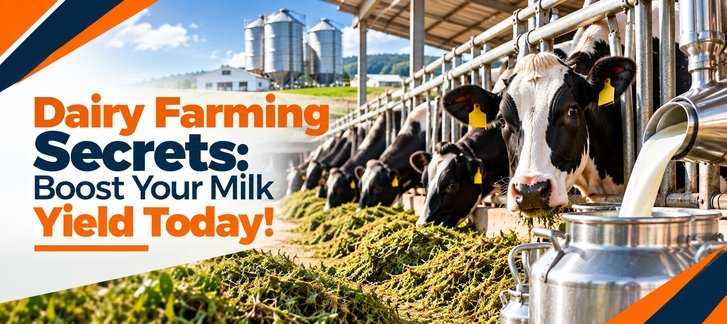
Dairy Farming Secrets: Boost Your Milk Yield Today!
Want to maximize your farm's production? Discover the ultimate dairy farming secrets to boost your milk yield and improve herd health today!
Introduction:
Global demand for high-quality dairy products is growing rapidly these days. Whether you want to achieve self-sufficiency. Or do you want to build a highly profitable commercial enterprise to grow? Therefore, you must understand the fundamentals of dairy farming and dairy agriculture fields first. Because it is very essential for your success in this business.
This comprehensive guide covers everything you need to know about optimizing your herd's health. Here we also describe scaling up production and using premium nutrition to unlock your farm's maximum milk potential.
What is Dairy Farming?
The dairy farming term is a long-term branch of Dairy Agriculture. Because it focuses on animal breeding, raising, and managing livestock specifically for milk production. While cows are the most common dairy animal globally for this business. But some animals like water buffaloes, goats and sheep also play vital roles in the regional dairy ecosystem. At first raw milk is collected from these animals. After that, raw milk is filtered, chilled, and processed into everyday staples. This includes pasteurized milk, cheese, butter, yogurt, and cream.
Why Start Dairy Farming?
Dairy agriculture offers several strategic advantages for entrepreneurs and farmers when they invest in this business.
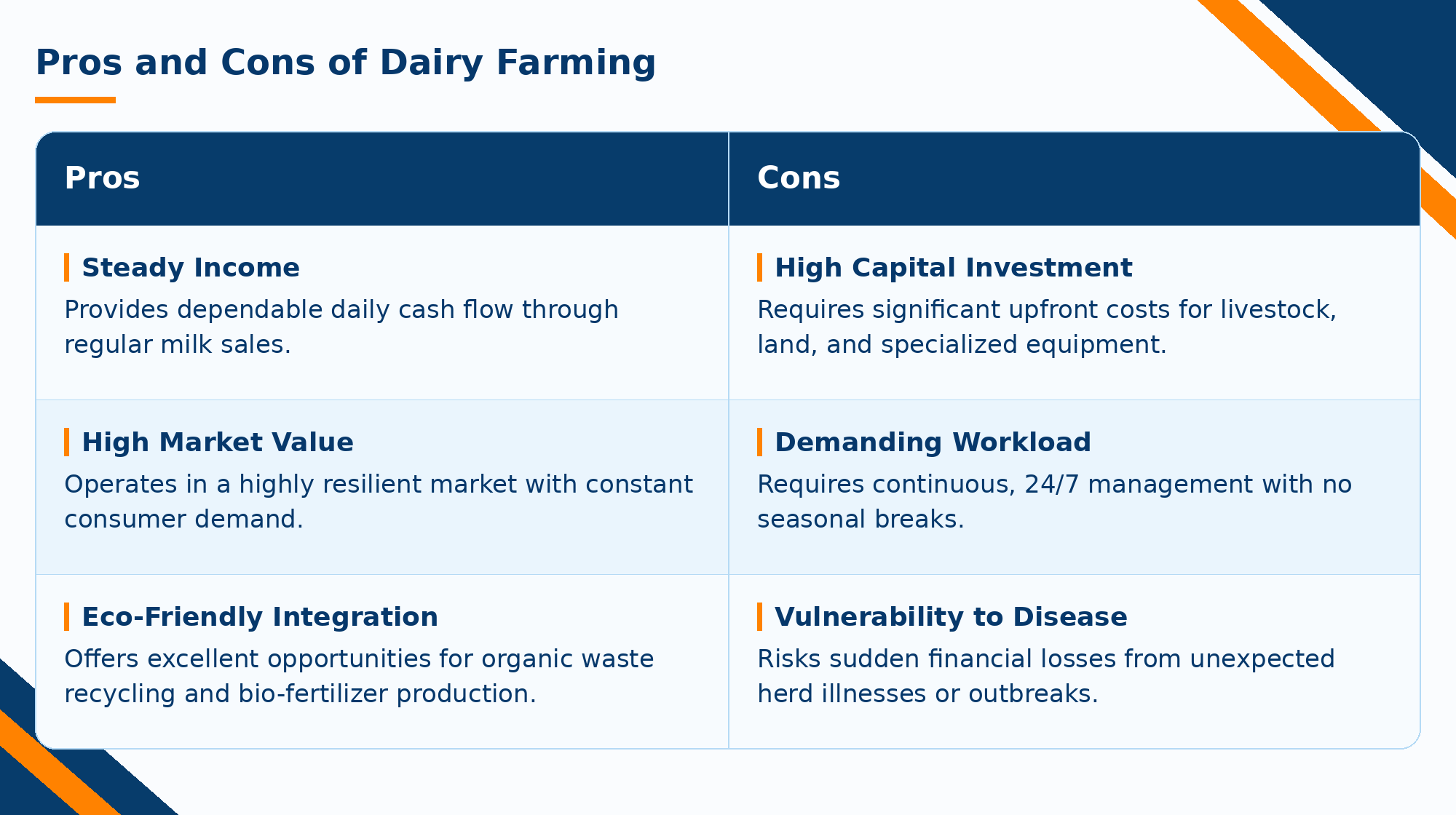
1) Consistent Daily Cash Flow: Dairy operations generate continuous daily income through morning and evening milk harvests. Unlike other seasonal crop farming. Because these farmings only generated cash during a specific season.
2) High Market Demand: Milk remains a fundamental nutritional staple globally to this day. Because milk always ensures a steady and reliable customer base.
3) Organic Asset Growth: Your herd naturally multiplies and builds long-term equity through systematic breeding programs. While these programs also expand your farm's value over time.
4) Byproduct Utilization: Manure can be repurposed as organic fertilizer for your fields. Or it can be processed into biogas and created a circular farm. Sometimes it can be processed into a sustainable farm economy as well.
Things to Know Before You Start Dairy Farming:
It is critical to understand the industry's operational realities before buying your first animal. Because success requires a realistic approach to several key factors.
1) Labor Commitment: Dairy animals require intensive and round-the-clock care every day. This includes strict daily milking schedules and feedings. While the animal also requires constant health monitoring for better health.
2) High Upfront Capital: Establishing a functional facility requires significant initial investments especially in livestock procurement. While this facility also requires climate-controlled housing and automated chilling machinery.
3) Strict Biosecurity: Sometimes diseases can spread quickly through a herd. Therefore, implementing strict quarantine protocols and maintaining routine veterinary care is very important. While it's also essential in order to protect your investment.
How to Start a Dairy Farming Business:
A commercial dairy operation requires systematic planning and execution before it can start. Follow these foundational steps to establish a sustainable business for a better tomorrow:
Step 1: Conduct Thorough Market Research: First of all analyze your regional milk demand. Then identify nearest wholesale buyers and choose livestock species. This includes Holstein-Friesian cows or high-fat water buffalo. Because the best way is to align with local consumer preferences first.
Step 2: Secure Infrastructure and Land: Design a well-ventilated housing facility that protects your livestock from extreme weather conditions. Ensure that your location has reliable access to clean water and adequate space for food storage as well.
Step 3: Implement an Efficient Waste System: Develop an eco-friendly manure management plan. Because this plan is to comply with environmental regulations and maintain strict on-farm hygiene.
Step 4: Establish a Reliable Cold Chain: Raw milk is highly perishable in all over the world. So first you must install reliable on-farm milk-chilling units immediately. Because these units prevent bacterial growth and maintain the quality of milk and related products before it transports.
Pros and Cons of Dairy Farming:
Dairy Farming Secrets: Boost Your Milk Yield Today!
Maximizing milk production requires combining consistent herd management with advanced agricultural techniques. Implement these expert practices to optimize your milk output:
1) Prioritize Cow Comfort and Climate Control
Stress drastically reduces milk production. Keep your barns well-ventilated, provide clean, dry bedding, and use misting fans during hot summer months to prevent heat stress. Comfortable, relaxed animals consistently produce higher milk volumes.
2) Transition to Total Mixed Ration (TMR)
Instead of feeding your herd random forage and grains, implement a Total Mixed Ration (TMR) system. TMR blends grains, silages, vitamins, and minerals into a single, uniform mix. This prevents selective eating and ensures every bite delivers perfectly balanced nutrition.
3) Optimize the Dry Period
Give your dairy cows a structured 60-day "dry period" (rest from milking) before calving. This rest allows the mammary tissues to regenerate and enables the animal to rebuild vital nutrient reserves, leading to a significant increase in milk yield during the next lactation cycle.
4) Leverage Advanced Agritech and Data Tracking
Use digital ear tags or collars to monitor rumination times, daily activity levels, and early signs of illness. Tracking herd metrics allows you to resolve potential health issues before they impact your overall milk production.
Fueling Your Herd: Premium Feed Products:
Nutrition is the single most critical factor influencing milk yield and fat composition. For producers looking to optimize their feeding programs, sourcing high-quality biomass and forage is essential.
Utilizing the Zarea Commodities Marketplace allows farmers to easily access high-quality agricultural biomass and consistent feed solutions online. Key feed components include:
1) Zarea Alfalfa (Alfa Alfa): This premium, protein-rich legume forage features high palatability and clean quality. It provides the essential proteins and calcium needed to sustain high milk yields and maintain optimal body condition.
2) Zarea Corn Silage: A high-energy, nutrient-rich fermented feed produced from whole corn plants. It helps prevent seasonal fodder shortages and keeps milk production stable year-round.
3) Zarea Rhodes Grass: A highly resilient tropical forage crop known for its excellent fiber content and drought tolerance. It serves as a dependable dietary base for maintaining herd digestive health.
4) Wheat Straw & Rice Straw: Excellent structural roughage options used to add necessary fiber to TMR mixes, optimizing rumen function and stabilizing milk fat percentages.
The Future of Dairy Farming:
The dairy industry is shifting rapidly toward automated, data-driven management systems. Modern operations increasingly rely on robotic milking systems, automated feed pushers, and AI-driven health monitors to lower labor costs and maximize efficiency. At the same time, the global market is placing a greater emphasis on sustainability, driving innovations in methane-reducing feed supplements and eco-friendly waste management.
The Bottom Line:
Succeeding in dairy farming requires a balance of consistent animal care, smart business management, and high-quality nutrition. By focusing on cow comfort, tracking key health data, and sourcing premium forage through platforms like Zarea, you can successfully maximize your milk yields and build a highly profitable agribusiness.