Renewable Resources: The Next Era of Green Innovation
Stay ahead with the latest trends in renewable resources. Discover how new innovations are driving the global transition to green energy.
Introduction:
The global energy landscape is undergoing a massive and unstoppable shift. Because the climate change consequences become more pressing and fossil fuel reserves dwindle. So the spotlight has firmly turned to sustainable alternatives. We are officially entering a new era of green innovation. Therefore renewable resources will entirely power the world.
But what does this shift mean for our daily lives, our economies, and the planet? Let’s dive deep into the mechanics of green energy, explore real-world renewable resources examples, and look at how cutting-edge technology is reshaping our collective future.
What Is a Renewable Resource?
A renewable resource is a natural resource type that replenishes itself naturally on a human timescale. Basically it means that it is replaced on environmental cycles faster than it is consumed. It's a natural asset that rebuild itself naturally over a relatively short period.
Because renewable resources provide sustainable inputs especially for your energy, materials, and food. As compared to other finite fossil fuels (like coal, oil, and natural gas). While these fuels take millions of years to form.
We must first answer a foundational question to understand the future of innovation. What are renewable resources? Nature's cyclical patterns are constantly topping up these resources. While they make them the ultimate foundation for a sustainable society.
Key Characteristics of Renewable Resources:
What makes a resource truly renewable? Look for these defining traits:
1) Natural Replenishment
1) Self-renewing cycles: These resources regenerate without human intervention through bi-biological or physical planetary processes.
2) Human timescale alignment: Renewable resources replenish within days, years, or decades. While fossil fuels require millions of years to be formed into a raw fuel.
2) Infinite Availability (Inexhaustibility)
1) Permanent flow: The major example of this type is a core energy stream. This includes solar radiation, moving wind currents, and gravitational tides. Human consumption cannot deplete them.
2) Continuous supply: It's the ultimate source because the power from it remains constant. Regardless of how much electricity is pulled from the network.
3) Lower Environmental Impact
1) Minimal greenhouse gases: Most renewable energy systems generate electricity with zero direct emissions during active operation. This means these resources have almost zero pollutants.
2) Reduced pollution: These resources have lower the overall environmental burden on ecosystems. Especially when you compare them to resource extraction methods like coal mining or drilling.
4) Overexploitation Vulnerability
1) Conditional sustainability: Physical resources (like freshwater, timber, and biomass) are only renewable if their extraction rate is slower than their natural recovery cycle. While their energy flows are inexhaustible in the majority of cases.
2) Mismanagement risk: Deforestation and aquifer depletion can turn a fundamentally renewable resource into a depleted or non-functional asset. Therefore minimanagement risk is always dangerous for these resources.
Types of Renewable Energy Resources:
When we look at the broad spectrum of renewable resource types, they have different characteristics. Because they generally fall into distinct categories that are based on how they harvest raw environmental power.
1) Solar Energy
Solar energy is the most abundant energy source on Earth. Where solar photovoltaic (PV) panels convert raw sunlight directly into electricity using semiconductor materials. While solar thermal systems capture heat and convert it into energy for commercial and residential use.
2) Wind Energy
Massive wind turbines generate clean electricity for us. Because they capture the moving air's kinetic energy into currents. This technology operates efficiently on both onshore and offshore mechanisms. Where the ocean winds are stronger and more consistent. Therefore most of the countries install wind plants on the sea belt.
3) Hydroelectric Power
Hydroelectricity harnesses the gravitational force of flowing or falling water into energy. Whether you talk about massive Hoover-style dams. Or you can talk about modern run-off-river installations for hydroelectric purposes. Eventually, water power provides an incredibly stable and reliable baseline for clean energy.
4) Geothermal Energy
This system taps into the intense and natural heat that is trapped deep within the Earth's crust. Geothermal power plants use underground steam reservoirs to spin their turbines and offer continuous energy. While it's an unaffected weather condition 24/7 electricity source.
Understanding Biomass Energy:
Biomass is often the most misunderstood one among the various renewable resource examples. Biomass energy is generated from organic materials. This includes wood and agricultural waste that turns into energy. Where some dedicated energy crops and even organic municipal garbage are also included in it.
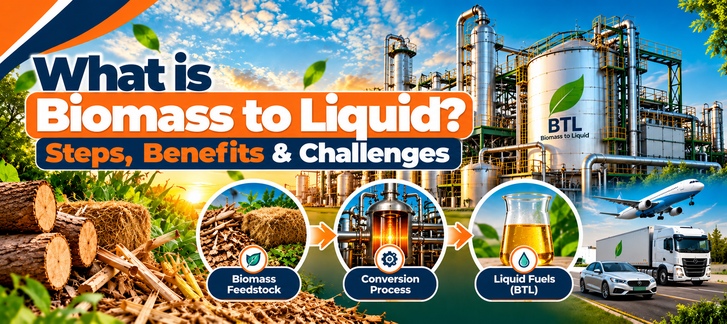
[ Organic Waste / Crops ] ➔ [ Thermochemical / Biochemical Process ] ➔ [ Biofuel, Biogas, or Heat ]
Biomass plants absorb most of carbon dioxide (CO2) as they grow. Because burning agri biomass or capturing it's methane emissions releases carbon. So both of these elements are already part of our modern atmosphere. This mechanism creates a closed carbon loop which makes it unique. Modern green innovation transforms biomass into advanced liquid biofuels for aviation needs today. While it also transforms biomass into heavy transport fuel and fills a crucial gap where electrification is difficult.
Comparing Renewable and Nonrenewable Resources:
Because it helps to see how it stacks up against traditional energy models. So this comparison truly appreciated green innovation's value.
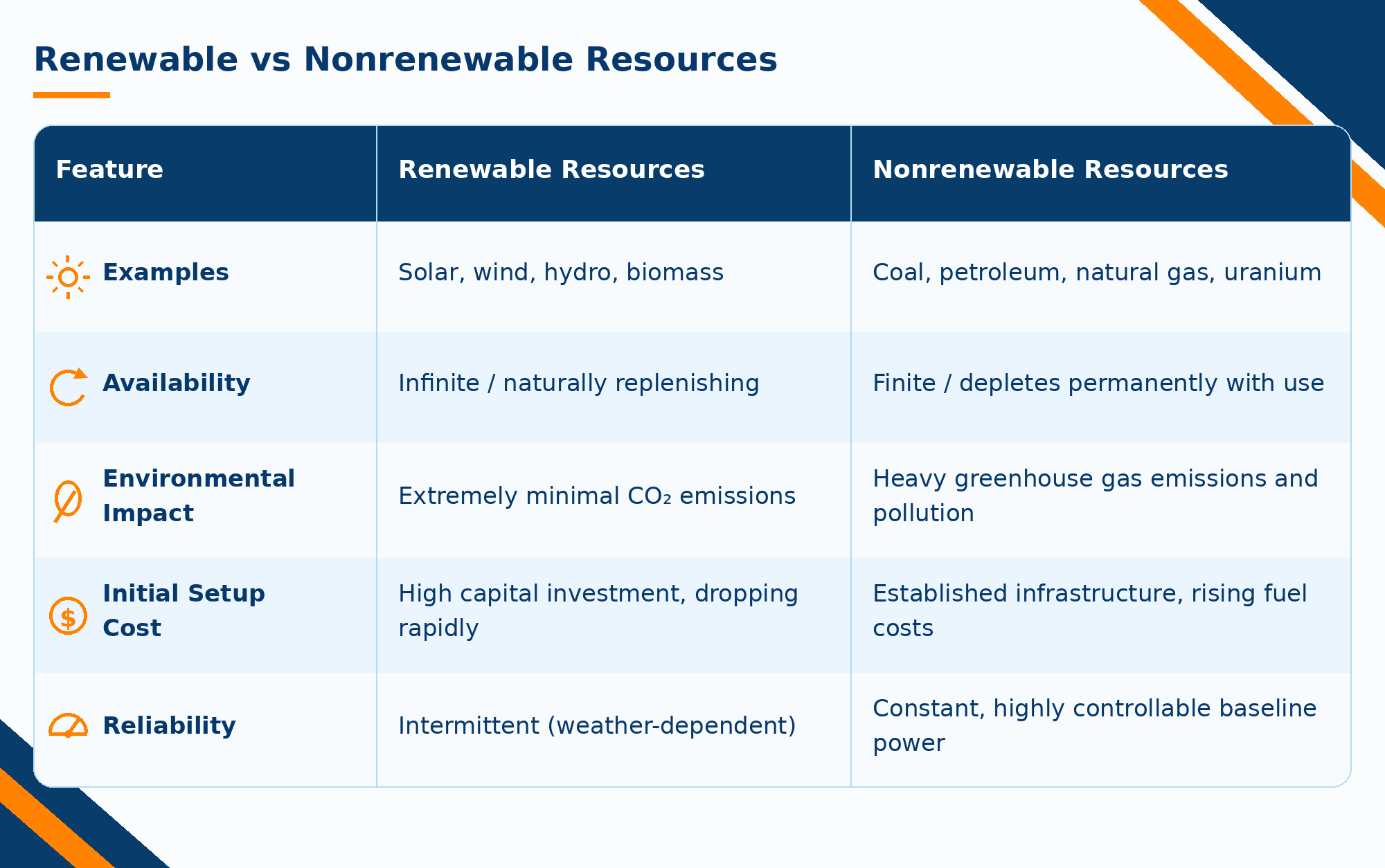
Benefits and Challenges of Renewable Resource:
Advantages
1) Sustainability: These resources do not run out permanently when managed correctly.
2) Emissions Reduction: These resources significantly lower greenhouse gas emissions compared to burning fossil fuels. This advantage is aiding our global climate goals as well.
3) Energy Independence: These resources also reduce reliance on geographically concentrated and volatile fossil fuel markets.
Challenges
1) Intermittency: Sources like wind and solar fluctuate based on weather and daylight patterns, requiring robust grid storage solutions.
2) Infrastructure Costs: Transitioning grids and manufacturing clean-tech hardware requires upfront investments and non-renewable raw materials (like mined metals).
Key Considerations for Using Renewable Resources:
Transitioning the entire globe to sustainable infrastructure isn't as simple as flipping a switch. Because policymakers and innovators must navigate several complex hurdles with the help of engineers.
1) Intermittence & Storage: The sun doesn't always shine and the wind doesn't always blow. Therefore, we need massive innovations at utility-scale to overcome these requirements. This includes lithium-ion and solid-state battery storage systems. Because these systems store power on cloudy or calmer days for you.
2) Grid Modernization: Traditional electrical grids were built for one-way power flows from centralized fossil fuel plants. While upgrading to a digital "smart grid" is an essential step to balancing millions of distributed solar roofs and wind farms.
3) Supply Chain Sustainability: Building green tech requires rare earth minerals and metals as well. Therefore, we must ensure lithium, cobalt, and copper mining meets our needs. Because ethical and environmentally friendly steps are a top priority for modern innovators.
The Future of Renewable Resources:
We stand on the precipice of remarkable breakthroughs in modern innovations and trends. Therefore, the renewable resources and future of energy is no longer just about building large wind turbines or shiny solar panels. But it is about intelligence and integration for the future of renewable energy.
Artificial intelligence (AI) and machine learning are now being deployed to predict weather patterns. While it automatically redirects the energy to where it is needed the most in real time. We are also seeing a rise in green hydrogen. Additionally we use excess solar and wind power to split the water molecules. Because they create a clean-burning fuel that can power heavy industries like steel manufacturing and shipping. As these technologies scale and make fossil fuels economically obsolete for us. Where the cost of clean energy continues to plummet.
The Bottom Line:
Renewable resources are far more than a passing environmental trend; they are the bedrock of the next industrial revolution. We understand what are renewable resources are finally. What are the actively deployable diverse renewable resource types? Whether we talk about solar power and wind power plant mechanisms. Or we could talk about advanced biomass energy systems. We can always decouple economic growth from environmental degradation. This is because the era of green innovation is officially here. Moreover these steps promise a cleaner and more resilient global village. Because it's also an infinitely powered world for generations to come.