Commodity ETF: What It Is, How It Works & Types
What a commodity ETF actually is, physically-backed vs futures-based structures, and how Pakistani investors can actually access one.
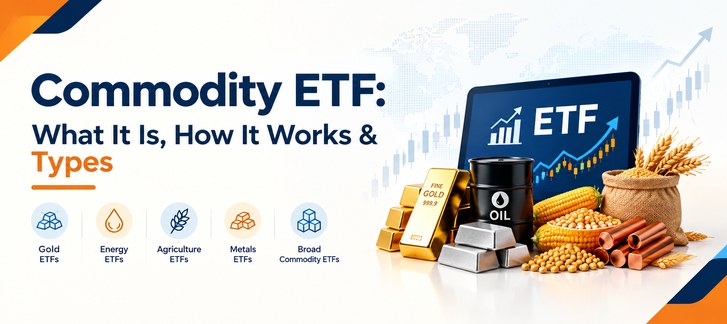
A commodity ETF lets you invest in gold, oil, or a basket of raw materials without ever touching the actual commodity. There's no bullion vault to arrange, no futures account to open, no barrel of oil sitting around somewhere.
You just buy and sell shares on the stock exchange like you would with any other stock, while the fund itself handles the messy part holding the gold bars or rolling the oil futures contracts behind the scenes.
That convenience is exactly why they've become one of the more popular ways for everyday investors to get commodity exposure. It's also why the details matter more than people expect, since not every fund works the same way underneath, and the structural differences genuinely affect what an investor actually earns over time.
Key Features and Structure of a Commodity ETF
This is the part most explainers skip past, and it's the one that actually matters most. These funds are built in one of two ways, and the difference changes how the fund performs.
Physically backed ETFs hold the actual commodity. SPDR Gold Shares (GLD), for instance, holds real gold bullion sitting in vaults, and each share represents a claim on a fraction of that gold. These are mostly limited to precious metals, since storing physical oil or wheat at scale isn't practical for a fund.
Futures-based ETFs don't hold the physical commodity at all. Instead, they hold futures contracts and have to roll them forward before each contract expires, selling the expiring contract and buying the next one out. Most oil, natural gas, and broad commodity-basket ETFs work this way, since there's no realistic way to physically store what they track.
That rolling process is where things get interesting, and where a lot of investors get caught off guard. For top traded commodities, understanding this effect is especially important.
If the market is in contango, meaning futures contracts further out cost more than the current one, rolling forward means constantly selling low and buying high, which quietly erodes returns over time even if the underlying commodity's spot price hasn't dropped at all.
It's the same mechanic that affects anyone trading commodity futures directly, just happening automatically inside the fund instead of in an investor's own account.
Major Types of Commodities Tracked by ETFs
Not every commodity ETF is chasing the same thing. Once you break it down, they really fall into five buckets.
Precious metals: still the OG of the category. GLD and SLV are the names most people already know, and unlike a lot of the others on this list, they're actually sitting on real gold and silver bars in a vault somewhere, not just futures paper.
Energy: USO and UNG cover oil and gas, but neither one is storing a single barrel anywhere. Can't really blame them; where would you even put it? So they run entirely on futures contracts instead.
Agriculture: DBA is the go-to here, and it's not betting on one crop. It's a mix — corn, soybean meal, wheat, sugar, all rolled into one fund.
Broad commodity baskets: DBC and PDBC take it a step further and mix in everything energy and petroleum, metals, and agriculture together. A decent option if you don't want to bet on one lane.
Industrial metals: mostly copper, plus a few other base metals. These move more with construction and manufacturing demand than with the drama that hits gold or oil.
Worth noting these fund categories mirror how physical commodity markets get classified too. Zarea's guide to agricultural commodities breaks down the same crop categories an agriculture ETF like DBA is actually built from.
ETFs vs. Futures vs. Owning the Physical Commodity
People often treat these three as interchangeable ways to get commodity exposure, and they're really not.
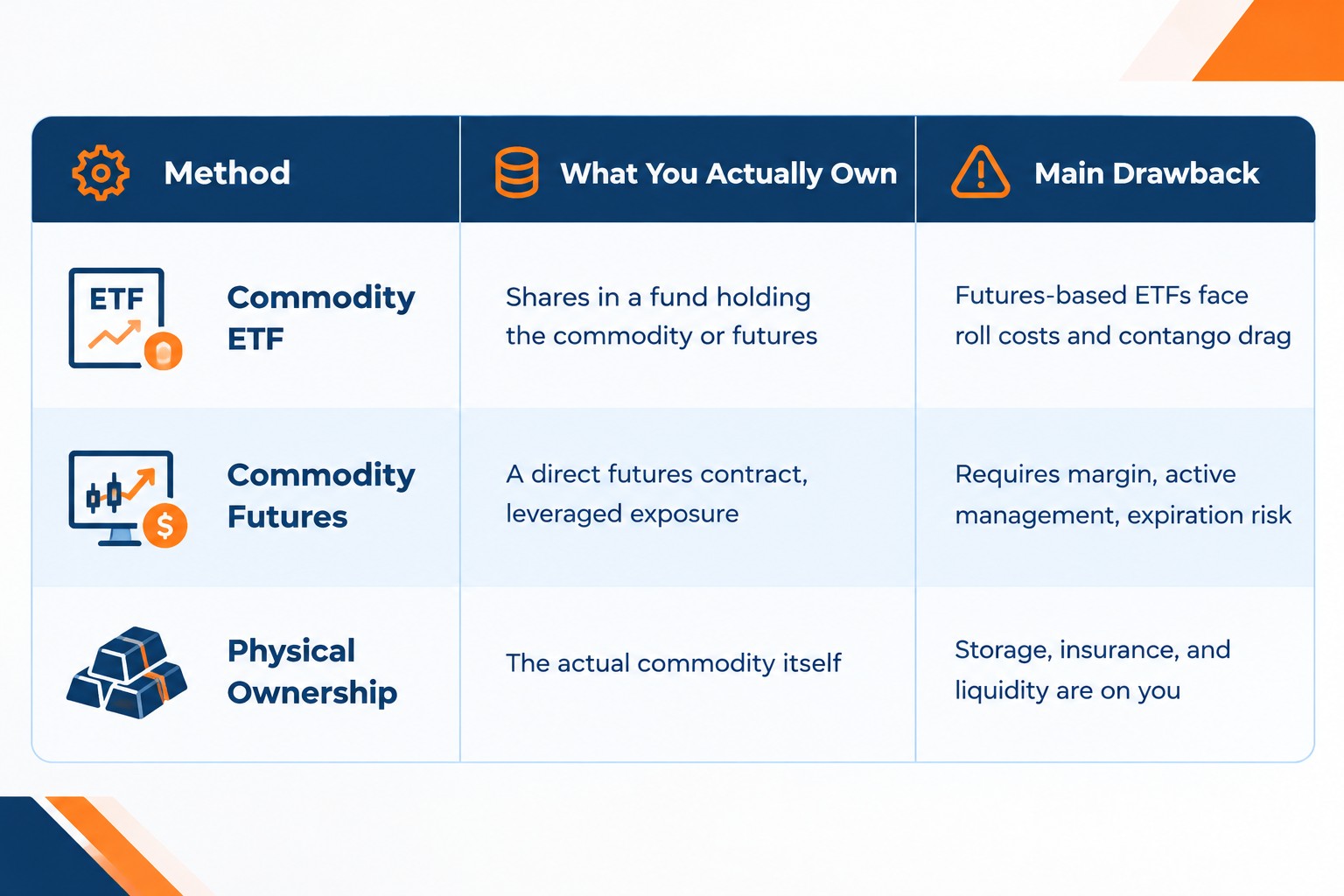
An ETF sits in the middle of that spectrum on purpose: less hassle than physical ownership, less active management than trading futures directly, at the cost of some of the fine control both of those give you.
That industrial metals category from earlier is a good example of where ETF exposure and physical markets connect directly.
Pakistan's own steel prices move on a lot of the same global demand signals that push a copper or industrial metals ETF up or down, even though nobody's trading Pakistani steel on an exchange in New York.
Benefits vs. Risks of Commodity Exchange Traded Funds
Like most financial products built for convenience, these funds trade one set of problems for another.
Benefit: easy access through a normal brokerage account, no need for a futures account, storage, or specialised knowledge of delivery contracts.
Benefit: liquidity, most major funds in this category trade heavily enough to buy or sell during market hours without much friction.
Benefit: diversification options; a single basket fund can spread exposure across dozens of commodities in one purchase.
Risk: contango can erode returns in futures-based funds over time, independent of what the actual commodity price does.
Risk: commodity prices are genuinely volatile; geopolitical events, weather, and production decisions can move prices sharply in either direction.
Risk: some of these funds are structured as limited partnerships rather than simple trusts, which can complicate tax reporting depending on where an investor is based.
How to Invest in a Commodity ETF From Pakistan
This is the part most global guides on this topic skip entirely, and it genuinely depends on residency status. Overseas Pakistanis can access PSX-listed securities, including ETFs, through a Roshan Digital Account and its Roshan Equity Investment option, opened remotely through an SBP-designated bank without needing to visit Pakistan in person.
For Pakistani residents wanting the well-known US-listed funds like GLD or USO specifically, the realistic route is opening an account with an international broker that accepts Pakistani clients, since these funds aren't listed on PSX.
That means dealing with currency conversion, checking that the broker is properly regulated wherever it's based, and understanding the tax and remittance implications before committing money, rather than assuming it works the same way as buying a share on the local exchange.
For anyone weighing an agriculture ETF against just tracking the physical market directly, Zarea's grain and pulse prices page gives the local, on-the-ground equivalent of what a fund like DBA is trying to capture from a distance.
How ETF Prices Tie Back to Physical Markets
Whether or not someone actually trades these funds, watching how they move is a decent proxy for broader commodity sentiment, since gold, oil, and agricultural ETF prices generally track the same underlying forces that move physical prices.
For anyone comparing that against what's actually happening in Pakistan's physical commodity market, Zarea's daily commodity prices track real local rates across categories like grains, metals, and energy inputs.
For a broader look at how commodities get classified and traded beyond just the ETF wrapper, this overview of commodity types covers the distinction between hard, soft, agricultural, and industrial commodities in more depth.
Frequently Asked Questions
Is there any ETF for commodities?
Plenty, actually. Gold and silver are probably the easiest entry points; GLD and SLV are about as established as it gets, but you'll also find funds for oil, natural gas, agriculture, and broad commodity baskets. What you can actually get your hands on comes down to where you're based and which exchanges you can reach.
What is the difference between an ETF and a commodity ETF?
A regular ETF is usually holding a basket of stocks or bonds; think index or sector exposure. A commodity ETF is different at the core: it holds the actual commodity, or futures tied to one, so it moves with that commodity's price instead of with earnings reports or interest rate decisions.
Are commodity ETFs worth it?
Depends on what you're using them for. As a diversifier, or a hedge when inflation's creeping up, they do the job well, and they're a lot less hands-on than trading futures yourself. But hold one long enough and, if it's futures-based, contango can quietly chip away at your returns even while the commodity itself is holding steady. Better suited to a shorter-term play than something you buy and forget about.
How to invest in commodities ETF?
Same as buying any other stock, really; open a brokerage account with access to the right exchange, fund it, and buy in. The part that actually changes is which broker you can even use. Pakistani residents are generally looking at an international broker, while overseas Pakistanis have the Roshan Digital Account as their way into PSX-listed options.
Wrap Up
At the end of the day, a commodity ETF is just a wrapper; an easier way to get exposure to gold, oil, or a basket of crops than opening a futures account or renting storage space. But the wrapper isn't just a technicality.
Whether it's physically backed or running on futures changes what happens to your money over time, and that's worth knowing before you treat any ETF as a stand-in for owning the real thing.