What is Organic Waste? How to Reduce Your Carbon Footprint
What is organic waste, and why does it matter? Learn how recycling food and yard debris helps fight climate change and dramatically reduces your carbon footprint.
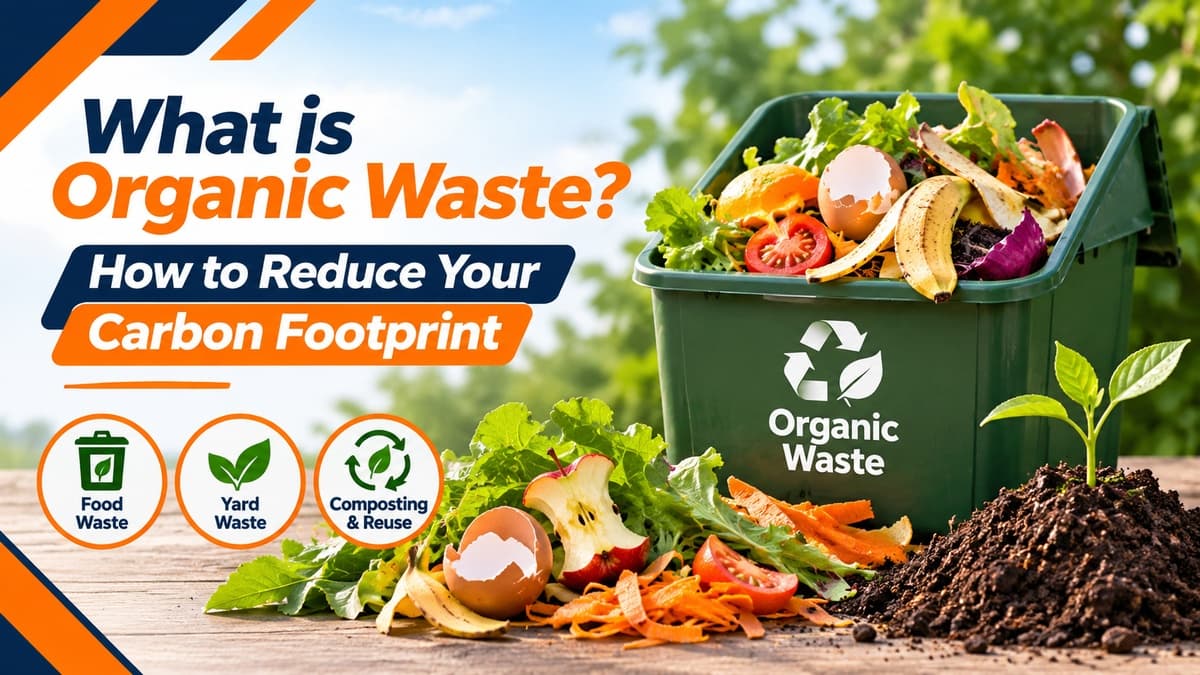
Introduction:
Imagine if your morning coffee grounds and wilted lettuce were at the bottom of your fridge. Additionally, yesterday’s lawn clippings hold the power to combat climate change. They do. Because we throw away powerful tools for environmental restoration and mistake them for useless garbage every day.
Organic material becomes an environmental hazard when it is trapped in a landfill. But it turns into black gold for our soils when managed correctly. Let's explore how rethinking your trash can dramatically shrink your carbon footprint. How the recycling process can restore local ecosystems and change the way you look at waste forever.
How to Efficiently Manage Waste- The Big Picture:
Efficient waste management is not just about hiding our trash out of sight. In fact it is about building a circular economy to solve this problem. Basically we take resources and make products from them. Then we tossed them into the earth in a linear economy. A circular economy mimics nature where nothing is wasted and everything becomes fuel for something else.
True efficiency always starts with the waste hierarchy. Reduce ➔ Reuse ➔ Recycle ➔ Rot
We must ask if it is necessary before any item ever hits a bin. Proper sorting is the golden rule in order to control the waste we do create. So we keep our dry recyclables and hazardous materials away from us. We also keep our biodegradable matter strictly separated. This act ensures that resources can actually be reclaimed instead of rotting away in a mixed landfill.
What Is Organic Waste?
Any biodegradable material that originates from plants or animals is called organic waste. Sometimes it also includes other living organisms in it. This waste is capable of breaking down naturally over time because it comes from nature. This includes microorganisms like bacteria, fungi, and earthworms which play their roles as agents.
Organic materials are naturally designed to return to the earth. Unlike plastics or metals which persist in our ecosystems for centuries. Natural waste is part of the planet's natural life cycle. However, just because something is organic does not mean it behaves safely when mixed with industrial trash.
Types of Organic Waste:
To manage your household waste effectively, it helps to understand the different categories of organic matter. Generally, these are divided into two operational groups:
1. Green Waste (Nitrogen-Rich Materials)
These are wet, fresh materials that break down quickly and supply critical nitrogen to decomposing microbes.
1) Kitchen scraps: Fruit peels, vegetable trimmings, leftovers, and eggshells.
2) Garden debris: Fresh grass clippings, green leaves, and weeds.
3) Coffee grounds & tea bags: (Ensure tea bags are plastic-free).
2. Brown Waste (Carbon-Rich Materials)
These are dry, woody materials that decompose slowly and provide structural aeration and carbon.
1) Yard waste: Dry leaves, twigs, small branches, and pine needles.
2) Paper products: Untreated cardboard, shredded newspaper, and paper towels.
3) Wood debris: Untreated wood shavings, sawdust, and straw.
What about "Inorganic Waste"?
To understand organic material, it helps to contrast it with its opposite. Inorganic waste examples include plastics, glass, aluminum cans, synthetic rubber, metals, and chemical-laden electronics. These items do not come from living organisms and cannot be broken down by biological processes.
How Does Organic Waste Affect the Environment?
It is a common misconception that throwing a banana peel into the trash is harmless because it decomposes. Where it decomposes matters immensely.
When organic waste is buried under tons of trash in a landfill, it is completely deprived of oxygen. This creates an anaerobic environment. Deprived of air, specialized bacteria break down the food scraps and produce methane gas—a greenhouse gas that is roughly 28 to 36 times more potent than carbon dioxide at trapping heat in our atmosphere. Landfills are one of the leading human-driven sources of methane globally.
Furthermore, as liquid trickles through landfill organic waste, it creates "leachate." This highly toxic stew can seep into nearby soil and contaminate local groundwater supplies.
How Is Organic Waste Managed?
On a large scale, modern municipalities and agricultural sectors handle organic materials through three primary routes:
1) Industrial Composting: Large-scale facilities use heavy machinery to shred, turn, and monitor massive piles of organic material, reaching high temperatures that safely break down meat, dairy, and bioplastics.
2) Anaerobic Digestion: Waste is placed inside sealed, oxygen-free tanks. Microbes digest the waste, capturing the escaping methane as "biogas" to generate renewable electricity or heating.
3) Landfill Diversion Programs: Cities implement separate curbside green bins to keep food scraps out of the general waste stream entirely.
How to Compost at Home: A Step-by-Step Guide:
You do not need an industrial facility to make an impact. Composting at home is one of the single most effective actions an individual can take to lower their personal carbon footprint. Here is how to get started:
Step 1: Choose Your System
1) Backyard Bin: Ideal if you have outdoor space. You can use an open pile, a plastic bin, or a rotating tumbler.
2) Worm Composting (Vermicomposting): Perfect for apartments or indoor spaces. Specialized red wiggler worms do the heavy lifting in a compact box.
Step 2: Balance the Recipe
The secret to odor-free compost is maintaining a balance of 2 parts "Browns" (Carbon) to 1 part "Greens" (Nitrogen). Layer your kitchen scraps with dry leaves or shredded paper.
Step 3: Add Water and Air
Your compost pile should feel like a wrung-out sponge. If it’s too dry, add a splash of water; if it's too wet, add more dry leaves. Turn the pile with a shovel or spin your tumbler once a week to introduce oxygen.
Organic Waste in Organic Fertilizers:
When your compost pile has fully decomposed, it transforms into a dark, crumbly matter often referred to as "black gold." Utilizing composting organic waste to create organic fertilizers that offers profound advantages over synthetic, chemical alternatives.
1) Slow-Release Nutrients: Unlike chemical fertilizers that flush through the soil quickly, organic compost releases nitrogen, phosphorus, and potassium gradually as plants need them.
2) Soil Structure Transformation: It improves the texture of sandy or clay soils, allowing them to hold moisture and support beneficial soil microbes.
3) Carbon Sequestration: Adding compost to your garden locks carbon safely into the earth, preventing it from escaping into the atmosphere as a greenhouse gas.
The Future of Organic Waste:
The future of resource management relies heavily on technological and behavioral evolution. We are stepping into an era where artificial intelligence optimizes sorting facilities, and synthetic biology utilizes specialized insect larvae—like the Black Soldier Fly—to consume organic matter at lightning speed, converting it into high-protein animal feed.
As global policies tighten around landfill bans, treating organic materials as a renewable asset rather than a disposal problem will become standard practice for cities worldwide.
The Bottom Line:
Every time you choose to compost rather than toss a food scrap into the trash, you actively pull carbon out of the atmosphere and breathe life back into the dirt beneath your feet. Managing organic waste is not a sacrifice; it is an opportunity. By adopting simple backyard or indoor composting habits, you turn a global environmental problem into a local, sustainable solution. Your carbon footprint shrinks, your soil thrives, and the planet takes a collective breath of fresh air.
Frequently Asked Questions (FAQ)
What are some common inorganic waste examples?
Inorganic waste includes any material that does not originate from living organisms and cannot be broken down naturally by microbes. Common examples include plastics, aluminum cans, glass bottles, metals, synthetic rubbers, and electronic components. Unlike organic waste, these items persist in landfills for hundreds or thousands of years.
Why does organic waste in landfills increase your carbon footprint?
When organic waste is buried in a landfill, it is cut off from oxygen. This triggers anaerobic decomposition, which produces methane gas. Methane is a greenhouse gas that is roughly 28 to 36 times more powerful than carbon dioxide at trapping heat in the atmosphere, significantly driving up your carbon footprint.
What is the best way to start composting organic waste at home?
The easiest way to start is by collecting kitchen scraps (greens) in a small countertop bin. Mix them with double the amount of dry yard waste or shredded paper (browns) in an outdoor compost tumbler or backyard bin. Keep the mixture damp like a wrung-out sponge, and turn it weekly to add oxygen.
Can you compost meat, dairy, and oily foods at home?
It is generally recommended to avoid meat, dairy, bones, and oils in standard home backyard piles. Because home compost piles rarely reach the sustained high temperatures of industrial facilities, these items can attract pests, create foul odors, and slow down the decomposition process.
How does using organic fertilizer help the environment?
Using compost as an organic fertilizer improves soil structure, allows the earth to retain more water, and feeds beneficial microbes. It also naturally sequsees (locks) carbon into the soil, keeping it out of the atmosphere while eliminating the need for fossil-fuel-intensive chemical fertilizers.