Why Crop Rotation Matters: Maximize Your Harvest Easily
Boost your garden's yield naturally! Explore how simple crop rotation cycles protect your soil, defeat pests, and maximize your harvest easily.
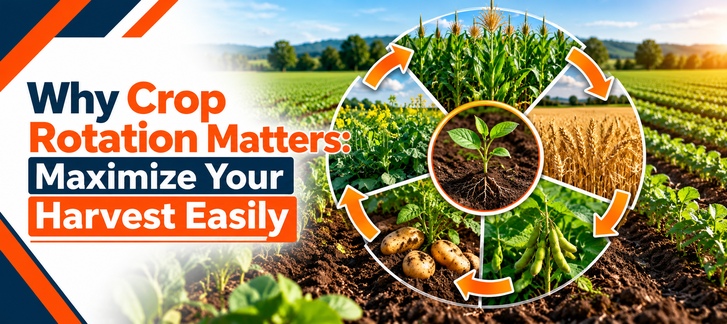
Introduction:
Imagine eating the exact same meal, in the exact same chair, every single day for years. Eventually, you would deplete the kitchen of those specific ingredients, the space would get wear-and-tear, and honestly, you would get pretty tired of it.
Your garden beds feel the exact same way when you plant the same vegetable in the same spot year after year.
This repetitive habit is called monoculture in the world of organic farming and gardening. Is this an antidote? Yes! it's a time-tested and nature-backed strategy is called as crop rotation. Understanding what crop rotation is your ultimate ticket to success if you want to unlock healthier soil. Because it's naturally defeat frustrating pests and it also enjoy a massive harvest without relying on heavy synthetic chemicals.
The best part? You don’t need a degree in agricultural science to make it work. Here is how you can easily implement this game-changing practice in your own backyard.
What is Crop Rotation?
Crop rotation is the simple practice of growing a series of different types of crop. This means you have to grow these major crops in the same area across sequential seasons. you should move them to a new zone. Instead of planting your prized tomatoes in the exact same corner of your garden every spring. Therefore, this practice allows a completely different plant family to take its place.
Think of it as a tactical musical chair game for your plants. Shifting crop locations can optimize the underground ecosystem of your farm. Different plants have different root structures. Therefore they require varying nutrients and attract completely different crowds of insects. The system of rotating crops keeps crop yield and the entire system in a state of healthy balance.
Why Crop Rotation Matters: The Core Benefits:
If you let nature do the heavy lifting, gardening becomes significantly easier. Here is exactly why changing up your planting map matters so much for your harvest:
1) Rotation of The Crops Replenishes Soil Nutrients Naturally
Plants are a bit like dinner guests at your home. Because some are heavy eaters. While other guests leave the table virtually untouched.
• Heavy Feeders: Crops like tomatoes, maize crop, and broccoli aggressively suck nitrogen from the soil. While they also consume other vital nutrients in heavy amounts from the earth.
• The Givers: On the other side, legumes (like peas and beans) are magical "nitrogen-fixers." These types of crops actually pull nitrogen from the air and store it in the soil.
Without having to dump bags of synthetic fertilizer into your garden. You can naturally recharge the soil's fertility batteries if you have followed a heavy-feeding crop with nitrogen-fixing legumes.
2) This Technique Breaks the Pest and Disease Cycle
Have you ever noticed how a specific pest problem seems to get worse with each passing year? Because soil-borne diseases (like tomato wilt) and localized pests (like the potato beetle) love consistency. You are essentially building them a permanent buffet. When you plant their favorite foods in the exact same spot every season. These diseases overwinter in the soil and wake up in the spring. Therefore, they find they have their breakfast waiting right above them.
You pulled the rug out of under them when you practiced crop rotation. When those specialized pests emerge in the spring and effectively break their life cycle and starve them out. Only when they see that their host plant has gone.
3) It Optimizes Soil Structure
Different plants explore different layers of the earth. While carrots and parsnips drill deep down into the ground. Then they break up the compacted clay and open up channels for air and water in the soil. On the other hand, shallow-rooted leafy greens keep the surface soil intact. Alternating these root architectures can prevent your soil from becoming a hard and lifeless block of dirt. While they also ensure that water drains beautifully.
The 4-Year Crop Rotation Guide for Beginners:
The easiest way to get started is with a classic 4-year crop rotation plan. You can simply divide your crops into the four main botanical groups to do this. Because this table is based on what they need and what they give back to the dirt.
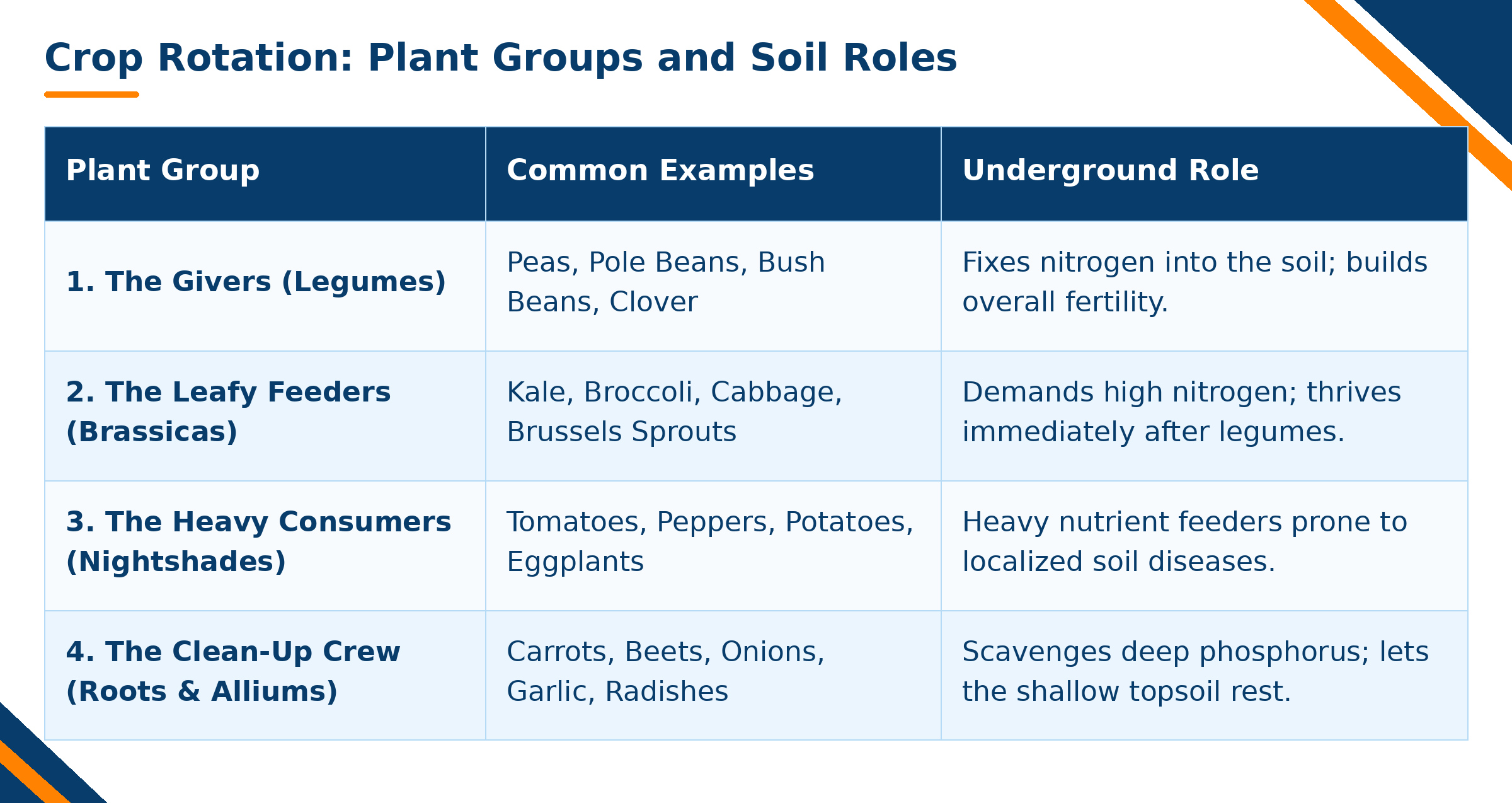
How to Map the 4-Year Rotation:
First you have to divide your garden space into four distinct beds or quadrants to execute this plan. Move each plant group one step forward in the sequence every spring.
1) Year 1: First you have to bed 1 and grow legumes. Then you have to bed 2 to grow brassicas. Later in Bed 3 you grow Nightshades and finally in Bed 4 grow Roots.
2) Year 2: Move everything forward by one bed. Bed 1 now gets the Brassicas to eat up the nitrogen left behind by last year's legumes. Bed 4 gets the Nightshades, and so on.
When four years have passed. Then the time for a plant family to return to its original starting bed. This is plenty of time for old soil pathogens to completely die off and for the nutrient profile to fully reset.
Simple Real-World Tips for Success:
Starting a rotation schedule might feel like a puzzle at first. But this schedule keeps these basic principles in mind and ensures seamless integration for you.
1) Keep a Simple Garden Journal: Never rely on memory alone! Because you have to draw a quick sketch of your garden layout every spring. So first, you have to write down exactly what goes where. This way you don't accidentally double-plant a family two years in a row.
2) Incorporate Cover Crops: Plant a "green manure" cover crop like crimson clover during the off-season or winter months. Or plant winter rye in beds that have just finished hosting heavy feeders. This practice keeps weeds from taking over and injects massive amounts of organic matter back into the earth.
3) Don't Overcomplicate Small Spaces: Don't panic if you only have two raised beds. You can still do a simple 2-year rotation. Just alternate between heavy-feeding nightshades and nitrogen-fixing legumes. Because this practice gives your soil a fundamental break.
The Bottom Line: Work With Nature But Not Against It:
At its heart, what is crop rotation? It is simply mimicking how nature works in the wild. In a natural forest or meadow, a single plant species never grows in a perfect, continuous monopoly. Nature thrives on diversity, movement, and balance.
By taking the time to map out a simple rotation schedule, you stop fighting against pests and depleted soil. Instead, you step back and let natural biological cycles do the hard work for you. Your soil will stay vibrant, your pest problems will drop significantly, and you will easily maximize your harvest season after season. Happy planting!
Quick Frequently Asked Questions (FAQ)
What happens if I don't rotate my crops?
Over time, your soil will run out of specific nutrients, causing your plants to look stunted. Additionally, soil-borne pests and fungal diseases will build up in that specific area, leading to lower yields and weaker plants.
Can I practice crop rotation in raised beds?
Absolutely! If you have multiple raised beds, treat each bed as a separate zone in your rotation map. If you only have one large bed, mentally divide it into sections and rotate your plant families across those sections.
Do onions and garlic need to be rotated?
Yes, onions and garlic belong to the Allium family. They should be rotated alongside root vegetables to prevent specific fungal issues like white rot from settling into your garden soil.