Poultry Feed: Types, Nutrition, Price and How to Choose
Understand poultry feed types, broiler and layer nutrition, ingredients and Pakistan price references. Practical advice for choosing feed and buying in bulk.
Ask two poultry farmers what they spend the most on, and feed is likely to come up quickly. A flock eats every day, whether market prices are favourable or not.
But buying the cheapest bag is not always a saving. Young chicks need a different ration from birds nearing market weight, and neither should be fed the same mix as hens laying eggs. Getting that distinction right matters more than the claims on the front of a feed bag.
This article looks at the ingredients behind poultry feed, the rations used at different stages, and the details worth checking before you place an order. We have included breeder-guide nutrition figures and a dated Pakistan price comparison.
Neither should be mistaken for a universal feed formula or a live market quotation.
Quick Answers
Basic Ingredients: Maize and other energy sources, protein meals, minerals, vitamins and carefully measured additives.
Feed Stages: Meat birds usually move from starter to grower to finisher; laying birds need a separate feeding programme.
Starter Nutrition: The Ross 308 reference diet for young broilers lists around 23% crude protein during days 0–10.
Price Reference: A published September 2026 benchmark was Rs 7,110 for a 50 kg bag of broiler feed. Local quotes may be different.
Why it Matters: Feed is a major part of poultry production costs, so a small difference in feed use can change the farm’s margin.
What is Poultry Feed Made of?
A feed mill is doing more than grinding grain and putting it in a bag. The ration has to provide enough energy for the bird to function and grow, enough usable protein to build tissue, and the minerals and vitamins needed to stay healthy. A change in one ingredient can affect the balance of the whole mix.
Energy: Comes mainly from maize, which is the backbone of most poultry feed. Published layer recipes use roughly 60 to 65% maize. It's also the one major ingredient Pakistan grows enough of: PACRA's March 2025 sector study says the country is self-sufficient in maize and that about 70% of the national crop goes into poultry feed. You can compare current maize prices. When I checked, the price was a dated listing price that should be checked again before purchase.
Protein: Comes mostly from soybean meal, with canola meal, sunflower meal, and fish meal as supporting players. The FAO puts soybean meal at 44 to 50% crude protein, and the one on Zarea lists a lab-tested 46.65% protein with 8.52% moisture. Here's the catch for Pakistan. PACRA notes that the country meets its demand by importing soybean seed and crushing it locally, so the protein side of your feed bill follows import costs and the exchange rate. The soybean meal page shows the full spec sheet. It's sold in bulk, with a minimum order of 150 metric tonnes, so it's aimed at feed mills rather than individual farms.
Fibre and Cheaper Energy: Come from by-products such as wheat bran and rice polish. Rice polish, sometimes called nakku, is the outer layer taken off rice grain during polishing, and mills use it as a low-cost energy and protein filler. The rice polish for feed buyers. If you'd like a plain-English explainer on the related ingredient, read our guide to rice bran.
Minerals are easy to overlook because they make up such a small part of the ration. Yet calcium and phosphorus are essential for bones and, in laying hens, eggshells.
Limestone and dicalcium phosphate are common sources. Vitamins, salt, and trace minerals are added in smaller amounts. More is not necessarily better; the proportions need to be right.
Types of Poultry Feed: Starter, Grower, Finisher, and Layer
The labels can be confusing. “Broiler” describes a bird raised for meat, while “starter” and “grower” describe feeding stages. A broiler typically receives starter, grower, and finisher feed in sequence.
A future laying hen follows a different plan, usually including pullet grower or developer feed before the layer ration begins.
Starter Feed: This is the first ration for chicks. Its job is to support early growth with suitable protein, amino acids, and minerals in a form young birds can eat.
Grower feed: Once birds are established, the ration changes to suit their next stage of growth. The exact changeover depends on the breed and management programme.
Finisher Feed: Meat birds receive this later in the growing cycle. It is formulated around the weight and age at which the flock is expected to be sold.
Layer Feed: Hens producing eggs need a ration with substantially more calcium than a typical broiler feed. The mineral balance supports shell formation as well as the hen’s health.
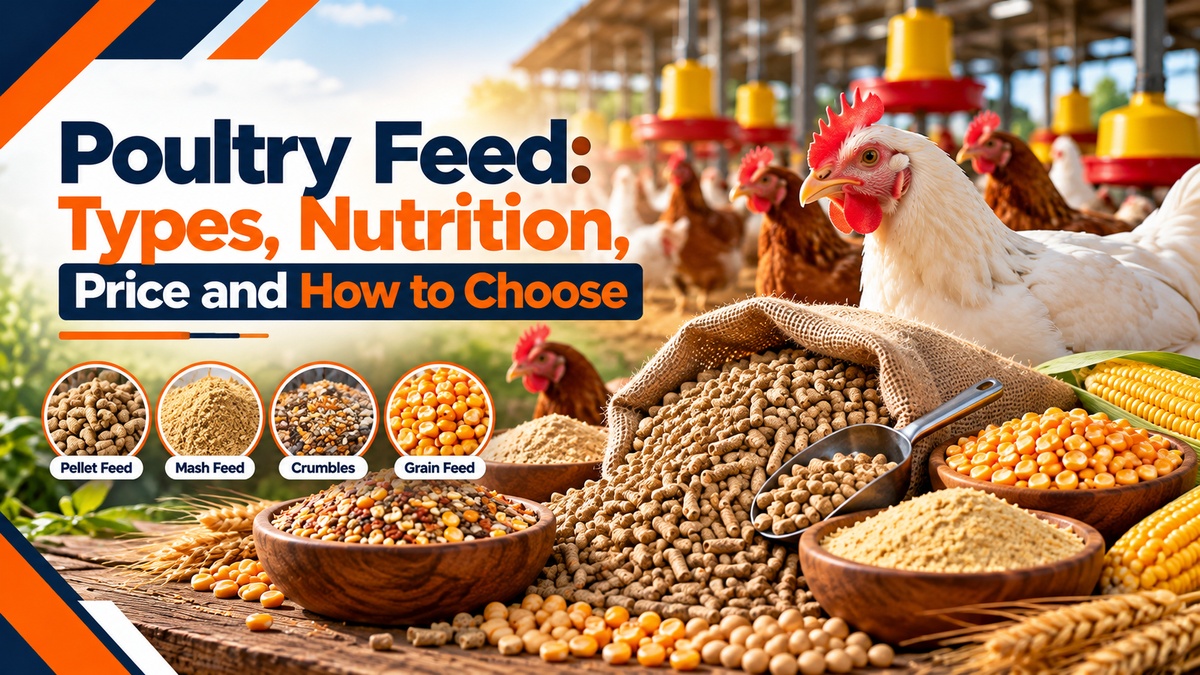
There is another distinction on the bag: mash, crumble, or pellet. These words describe the form of the feed, not the bird it is intended for. Mash is loose and ground, crumbles are broken pellets, and pellets are compact pieces.
The right texture can help birds eat consistently, but it does not make up for a poor formulation.
Chicken Starter Feed: What Young Chicks Need
The first ten days deserve close attention. Chicks are learning to eat and drink, and poor access to feed or water can show up in uneven growth later.
For reference, the Ross 308 guide sets out a starter diet for broilers, followed by grower and finisher specifications. These are targets for a particular production programme, not a homemade mixing recipe.
Look at the table, and you will see crude protein decline from starter to finisher while dietary energy rises. That is normal for the reference programme. It does not mean the quality of protein becomes unimportant.
Two feeds can show the same crude-protein percentage and still differ in the amino acids the birds can actually use.
For layer chicks, the same logic applies. Lohmann's management guide recommends a starter and grower, then a developer low in calcium, and a pre-lay feed with roughly 2.0 to 2.5% calcium for about ten days before laying starts.
Switching too early or too late hurts the flock, so go by body weight rather than the calendar.
Broiler Feed vs. Layer Feed
If there is one figure worth checking when comparing broiler and layer feed, it is calcium. A hen forming eggshells has a much higher calcium requirement than a growing broiler.
The example laying diet cited here contains roughly 4% calcium; the broiler specifications in the table are below 1%. Those figures belong to different birds and should not be swapped between them.
Feeding a broiler ration to laying hens for long periods can leave them short of calcium. Feeding a high-calcium layer ration to young meat birds creates a different imbalance.
Farms keeping both types of birds should store and label the feeds separately, especially when staff are handling several bags at once.
Which Feed is Best For Poultry?
Start with the birds, not the brand. Their age, breed, and purpose tell you which ration to look for. After that, freshness, the mill’s nutrient analysis and actual flock performance are more useful than a “premium quality” claim printed in large letters.
Match The Feed to the Flock: Check the feeding programme before switching from starter to grower or finisher. A lower-priced ration is not a bargain if it is wrong for the birds.
Read the Specifications: Look for crude protein, energy, calcium, phosphorus and moisture, along with any medication or additive information. Ask the supplier for a specification sheet when the bag is unclear.
Use Your Senses When Checking a Delivery: Damp bags, caking, a musty smell, or signs of pests are reasons to stop and investigate. Do not feed material suspected of mould contamination.
Check Medication & Withdrawal Instructions: Some feeds contain medicines or other regulated additives. Follow the product label, veterinary advice, and applicable withdrawal periods before birds are marketed.
Watch the Result, Not Just the Bag Price: Record how much feed the flock uses and how much weight it gains. A cheap feed can work out expensive if more kilograms are needed to produce the same result.
Large farms that mix their own rations need reliable ingredient testing and professional formulation. For smaller growers, buying a complete feed from a mill that will share its analysis is often the more practical route.
What is Organic Chicken Feed?
“Natural” and “organic” do not mean the same thing. Organic feed is a certification claim: the ingredients and production process must meet the rules of a recognised standard.
If a seller uses that description, ask which standard applies, who certified it, and whether the certificate covers the product being sold.
In Pakistan, this is a niche market. The USDA's Foreign Agricultural Service notes that Pakistan's poultry sector depends on imported genetically engineered soybeans for its protein meal, which is the main ingredient organic feed can't use.
Certified organic soybean meal exists, but it has to be sourced separately and isn't what local mills normally run. If someone offers you organic chicken feed, ask for the certificate, the issuing body, and the batch number.
Backyard keepers sometimes add maize, greens or safe household scraps to the birds’ diet. Small amounts may be fine, but they should not push a complete ration out of the feeder. A grain-heavy diet can be short of amino acids and minerals, and spoiled scraps are never worth the risk.
Poultry Feed Price in Pakistan: September 2026 Reference
Feed has a direct effect on the cost of producing chicken or eggs. Industry estimates often put it at a substantial share of total farm costs. That is different from the share of raw materials in a feed mill’s own expenses, so the two figures should not be compared as though they measure the same thing.
For a point of reference, PoultryDaur published a national broiler-feed benchmark of Rs 7,110 per 50 kg bag on 22 September 2026. The table below reproduces the city figures from that dated report.
These are not quotations from a particular mill, and the amount you pay may change with the feed phase, brand, freight, and date of purchase.
At the reported national rate, two 50 kg bags would have cost Rs 14,220. The city figures in that September snapshot didn't match, which is why comparing delivered quotations is more useful than relying on a single national number.
Old feed-price lists tend to stay online. When you see a price, check the date, the bag weight, and whether it refers to starter, grower, finisher, or layer feed. A number without those details is difficult to use for farm budgeting.
Three things move the price. The first is imported soybean meal and the exchange rate it's bought at. The second is the local maize harvest, which comes twice a year.
The third is policy, such as rulings on genetically modified imports. To check where ingredient prices are heading, watch Zarea's daily price page.
For layer farms, do the calculation using a layer-feed quotation rather than the broiler price above. As a simple planning example, 1,000 hens eating 115 grams each per day would use about 3,450 kg in a 30-day month.
Multiply that quantity by your actual price per kilogram, then adjust for the flock’s real intake and wastage.
Buying Poultry Feed Ingredients in Bulk
If you run a feed mill or a large integrated farm, you'll buy ingredients, not bags. Agriculture Biomass category lists feed ingredients from suppliers, including the soybean meal and rice polish mentioned above.
When you ask for a quote, get the specification in writing: crude protein, moisture, fibre, and for soybean meal, urease activity. Ask for the delivered price, since freight can change the ranking of two quotes.
If you need help with imports, the import and export service on Zarea handles quote requests. And if you produce feed ingredients and want buyers, the become a supplier page explains how to list.
Storing Poultry Feed and Managing Litter
A good ration can be spoiled in storage. Put bags on pallets rather than directly on the floor, leave some space from damp walls, and keep the store dry and shaded. Use older stock first. If a bag is wet, caked, or smells wrong, investigate before it reaches the feeders.
The bedding in your shed matters too. Dry litter keeps birds healthy and cuts feed waste, and a lot of Pakistani farms use wood shavings or rice husk for it. You can find rice husk. Used litter can be composted, or sold on as fertilizer or biomass fuel.
FAQs
What Was the Reported Price of a 50 kg Bag of Poultry Feed in Pakistan?
A September 2026 market report gave a national broiler-feed benchmark of Rs 7,110 per 50 kg bag. That is a historical figure, not today’s price. Ask a local dealer or mill for a current quote that identifies the feed type.
How Much Does 100 kg of Poultry Feed Cost?
Using the September 2026 benchmark, 100 kg of broiler feed would have cost Rs 14,220. For an actual purchase, confirm the formulation, bag size, freight, and current rate with the supplier.
What Are the Main Types of Poultry Feed?
Broilers are generally fed starter, grower, and finisher diets. Pullets and laying hens follow a different sequence that leads to a calcium-rich layer ration. Mash, crumbles, and pellets are forms of feed rather than separate nutritional stages.
Wrap-up
There is no shortcut to choosing feed well. Buy the ration your birds need, ask what is in it, and keep it dry after delivery. If you buy ingredients in bulk, compare the same specification and the same delivered price from more than one supplier.
A little record-keeping on feed use and flock performance will tell you more than the claims on any bag.