Brown Rice in Pakistan: Benefits, Protein and How to Cook It
Explore brown rice benefits, protein, price in Pakistan and easy cooking steps. Compare it with white rice and learn what to check before buying.
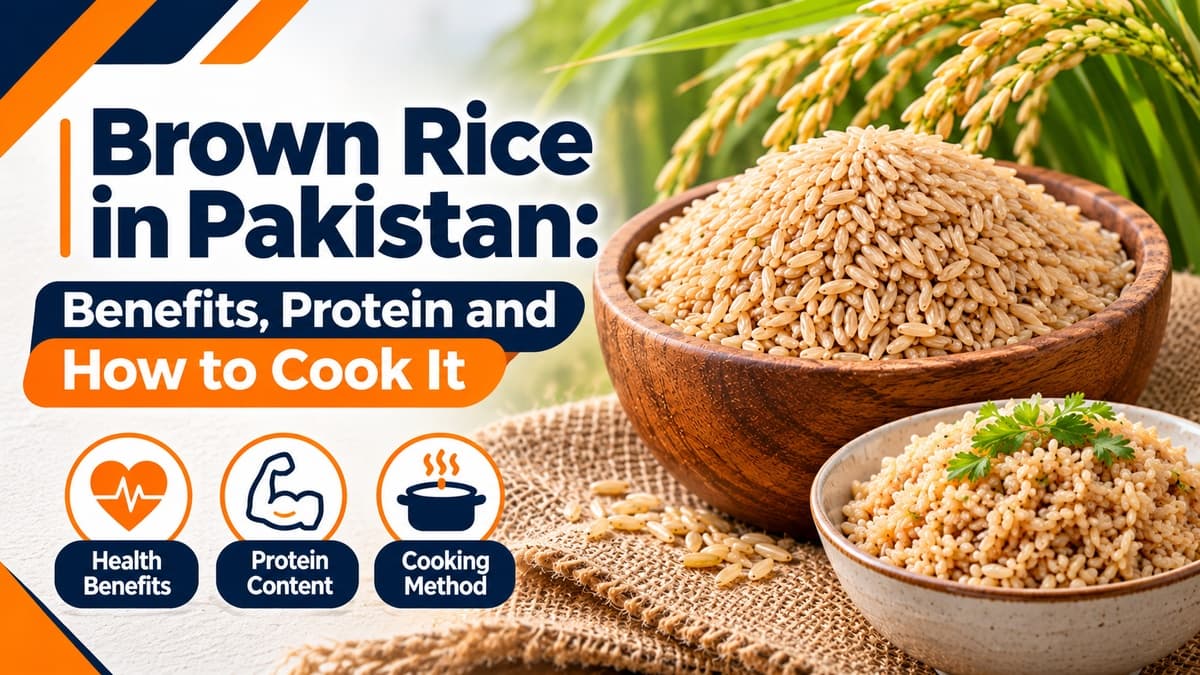
Brown rice retains the bran and germ removed when rice is polished into white rice. These layers give the grain more fibre and several minerals, along with a nuttier flavour and firmer texture. In Pakistan, shoppers often see it labelled as brown basmati or unpolished rice.
This guide explains how milling changes the grain, what a serving provides nutritionally, which factors affect local prices, and how to cook it without leaving the centre hard. It also covers practical checks for households and bulk buyers.
Quick Answers:
1) Brown rice is whole-grain rice with its bran and germ intact; it is not a separate rice crop.
2) One cooked cup generally supplies about 5 g of protein and around 3.5 g of fibre; values vary by variety and preparation.
3) The whole grain usually needs more cooking time than polished white rice and benefits from resting after cooking.
4) Prices in Pakistan vary by variety, grade, pack size, seller and city; check a dated quote rather than relying on a fixed national rate.
5) For bulk buying, confirm grain variety, broken percentage, moisture, packaging and delivery terms.
What Is Brown Rice?
Brown rice is produced by removing the inedible husk from paddy while leaving the bran and germ on the edible grain. White rice is milled further to remove these layers. Brown basmati is one example: the colour describes the milling stage, not a separate seed variety.
The distinction becomes clearer when you look at the rice milling process: husking, whitening, and polishing change both the grain and the byproducts produced.
Sella rice is different. It is parboiled before milling, so its colour and texture don't prove the bran remains. Paddy, also called munji, still has its outer husk.
Brown Rice Benefits: What Changes Nutritionally?
Compared with unenriched white rice, the whole-grain version generally provides more dietary fibre, magnesium and certain B vitamins because its bran and germ remain.
That can support a varied diet, but it is not a treatment for a medical condition or a shortcut to eating fewer calories.
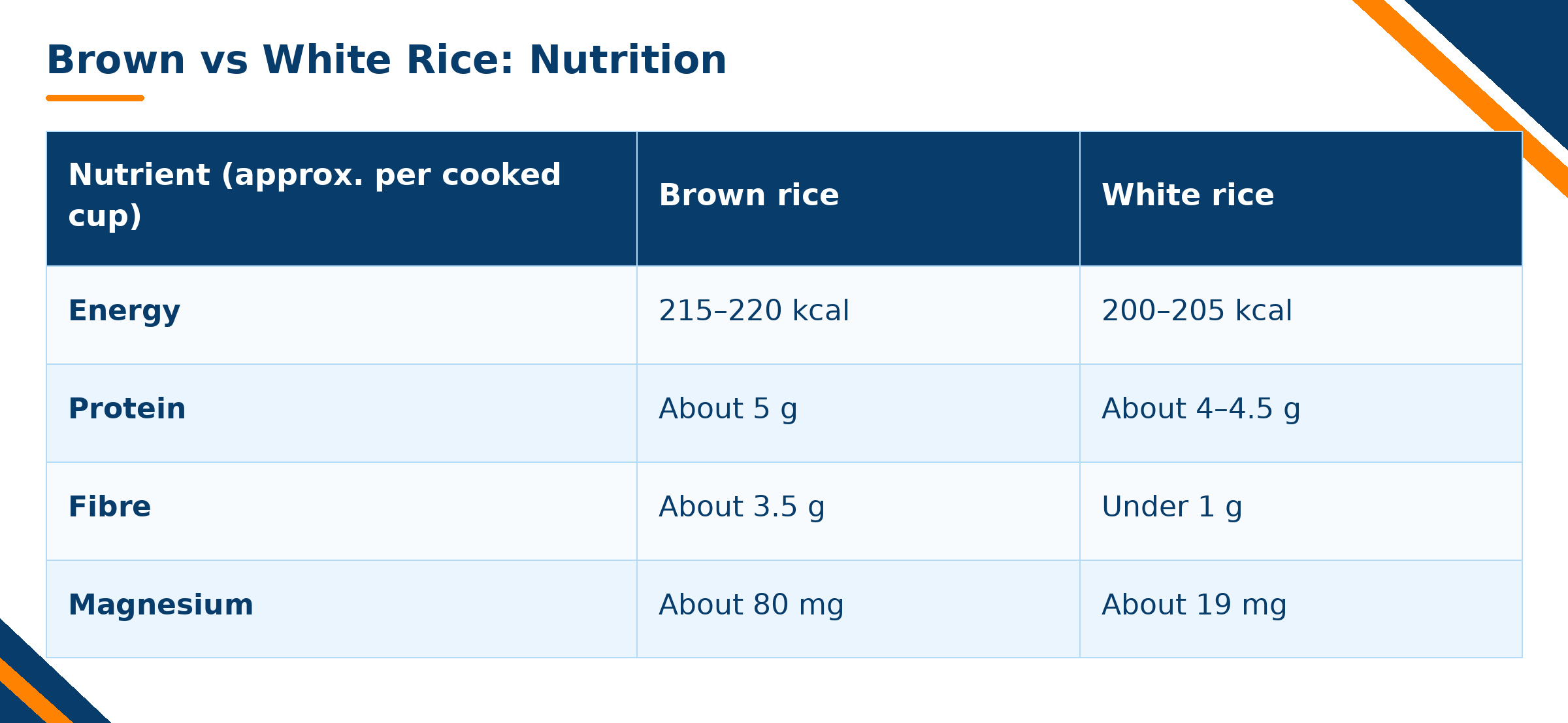
Nutrition values are approximate comparisons for cooked long-grain rice. Actual amounts vary with variety, serving weight, enrichment and preparation. For reference data, consult USDA FoodData Central.
The extra fibre may help with fullness. Blood-glucose response, however, depends on portion size, rice variety, preparation and the rest of the meal. People managing diabetes should consider the whole meal rather than assuming brown rice is automatically low in carbohydrates.
For a wider discussion of grain selection for kitchens and procurement teams, read choosing healthy grains for businesses.
How Much Protein Is in Brown Rice?
A cooked cup provides roughly 5 g of protein. That is only slightly more than the amount in white rice, so it is not a high-protein food. Serve it with dal, chickpeas, beans, eggs, or yoghurt for a more balanced meal.
Brown Rice vs White Rice: Which Should You Choose?
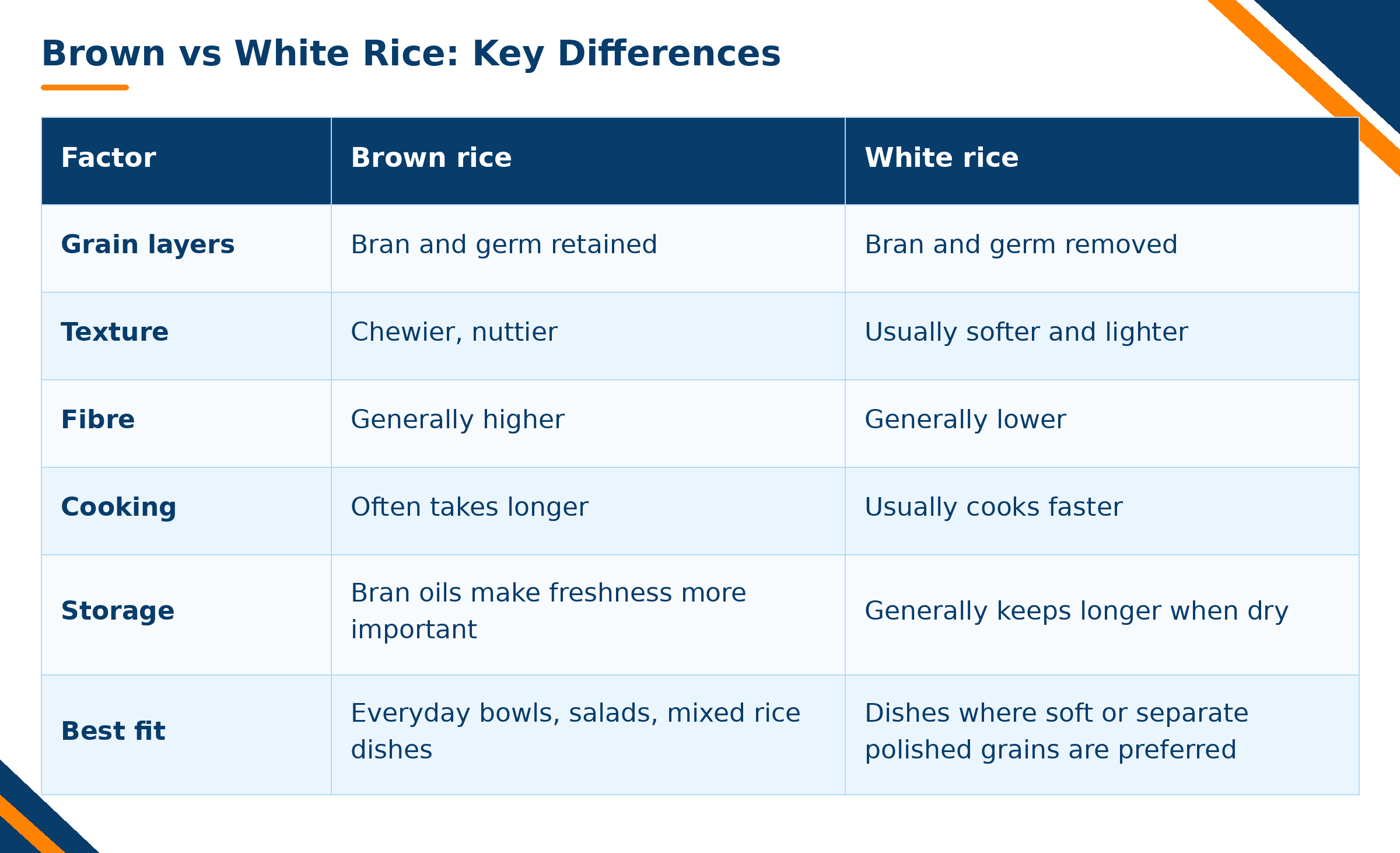
Neither type is automatically the better choice for every dish. Brown basmati can work in pulao or everyday meals, while polished basmati is often preferred for traditional biryani texture.
Rice variety also matters: compare the top export-quality rice varieties before treating every basmati grain as interchangeable.
Brown Rice Price in Pakistan: What Determines the Cost?
There is no single reliable nationwide retail price. Rates vary with variety, processing, quality grade, package size, brand, and location. Ask for a current, dated quotation before buying; a general per-kilogram estimate is not a guaranteed market rate.
For market context rather than a retail quote, see Pakistan's rice sector. Sector figures describe the industry; they do not establish today’s brown rice shelf price.
What to Check Before Buying Brown Rice in Bulk
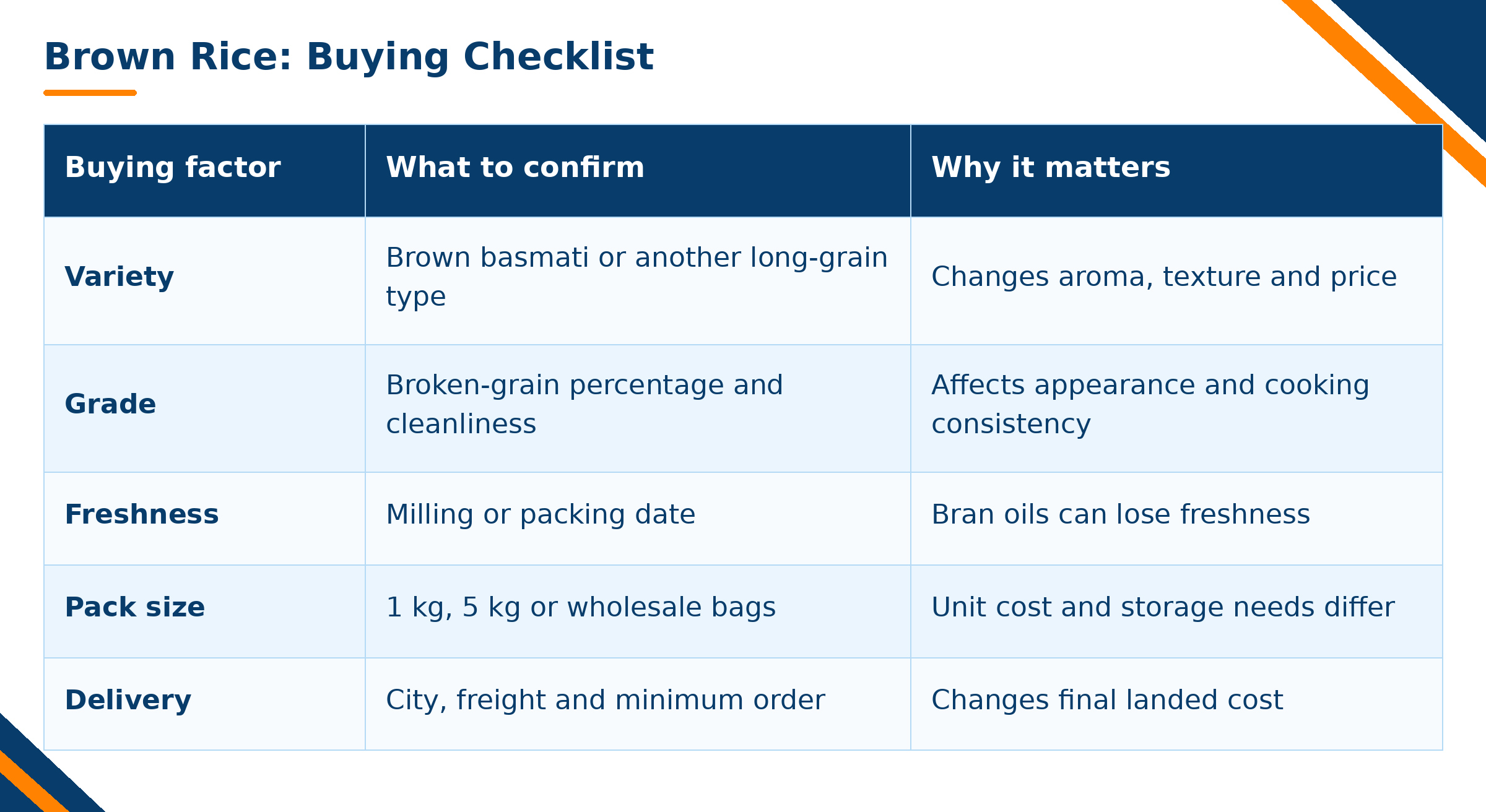
For restaurants, caterers and retailers, buying against a specification is more useful than choosing by brand alone. Ask the seller for the variety, broken-grain percentage, moisture level, packing date, bag weight, and available quantity. For a first order, request a sample and test the cooked yield and texture.
Unpolished grains need more careful storage than highly polished rice because the retained bran contains oils. Buy quantities you can use while fresh, especially during hot weather.
It also helps to understand how rice begins in the field. Our guide to rice paddies explains the growing stage before milling and grading.
How to Cook Brown Rice Without Hard Grains
The bran layer slows water absorption, so the grains need more time to soften. Cooking time varies between brown basmati and other long-grain varieties.
1) Rinse the Rice: Wash 1 cup under cool water to remove loose starch and debris.
2) Soak if Preferred: Leave the grains in water for 30–60 minutes, then drain. Soaking may help them cook more evenly.
3) Measure the Water: Start with about 2 cups of fresh water for 1 cup of unsoaked brown basmati. Adjust for the variety, soaking, and package instructions.
4) Simmer Gently: Bring to a boil, cover, and reduce the heat. Check brown basmati after 25–35 minutes; other varieties may need 40–45 minutes.
5) Check for Tenderness: If the centre is still firm, add a little hot water and continue cooking.
6) Rest and Fluff: Switch off the heat, leave covered for 10 minutes, then fluff gently with a fork.
For pulao, cook aromatics first, add the rice, and use stock in place of water. If using a rice cooker, follow its brown-rice setting and the manufacturer’s water guidance.
How to Store Brown Rice Safely
Keep uncooked grains in a sealed container in a cool, dry place. In hot or humid weather, refrigeration or freezing can help preserve quality. Follow the pack’s best-before guidance and discard stock that smells rancid or shows moisture or pests.
Cooked rice should be cooled promptly, refrigerated, and reheated thoroughly. Avoid leaving cooked rice at room temperature for extended periods because harmful bacteria can grow even if the rice looks normal.
Brown Rice, Rice Bran and Rice Polish: What Is the Difference?
The whole edible grain retains its bran. Rice bran is the nutrient-containing outer layer removed during further milling. Rice polish is a milling byproduct, not another name for the rice sold for cooking.
To understand the ingredient itself, see what rice bran is.
For a separate example of a milling byproduct sold commercially, see the rice polish. It should not be confused with food-grade brown rice.
Frequently Asked Questions About Brown Rice
Is brown rice good for everyday meals?
Yes. It can fit into everyday meals and offers more fibre, magnesium and certain B vitamins than comparable white rice. Portion size still matters because it supplies carbohydrates and calories. Pair it with vegetables and dal, beans, eggs or another protein source for a more balanced plate.
Can I cook brown basmati without soaking it?
Yes. Soaking is optional, although unsoaked grains often need more time to soften and sometimes a little extra water. If you have time, a 30–60-minute soak can improve consistency. Follow the pack instructions and test the centre of the grain before serving.
Why does brown rice sometimes smell oily or stale?
The bran contains natural oils that can turn rancid after prolonged exposure to heat, air or moisture. A stale, oily or musty smell may be a warning sign. Store the grain airtight in a cool place, refrigerate it during very hot weather if practical, and discard stock with an unpleasant odour.
What should bulk buyers ask a rice supplier?
Ask for the variety, grain grade, broken-grain percentage, moisture content, packing date, and available quantity. Confirm bag weight, minimum order, freight, delivery timing and payment terms. For a first large order, request a sample and test its cooked texture and yield.
Wrap-Up
For households, the choice comes down to flavour, texture, nutrition and cooking time. Buy fresh stock, prepare it according to the variety and serve it as part of a balanced meal.
For restaurants and retailers, compare grain specifications, freshness and delivered cost rather than relying on a headline price.