Wood Pellets: Uses, Benefits & How They Are Made
Explore wood pellet prices in Pakistan, ENplus A1 specifications, heating uses, supplier availability and practical tips for choosing quality pellets.
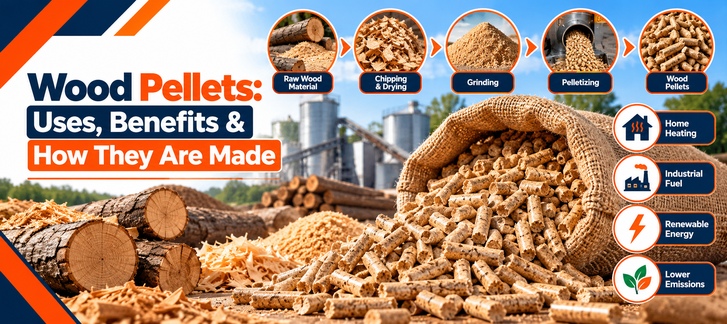
Wood pellets are small, hard cylinders of compressed sawdust, wood shavings or wood chips, usually 6 mm across, that you burn for heat. People also call them wood fuel pellets.
They’re dry and dense, so they burn evenly and pack a lot of energy into a bag, and that’s why they’re used in home pellet stoves, in commercial boilers, and in power plants.
This guide covers the specifications that separate a good bag from a poor one, what wood fuel pellets are used for, what they cost in Pakistan and how many bags a winter takes. It also covers where to find them. The prices come from listings with dates where we could find them, so check today’s rate before you order.
Quick answers
For heating, look for pellets that are 6 mm thick, hold under 10% moisture, and don’t leave much ash or dust behind.
ENplus A1 is the top European grade. It caps ash at 0.7% and needs at least 16.5 MJ/kg of heat.
Listings we found in Pakistan run from roughly Rs 50 to Rs 200 per kg, depending on pack size and who’s selling.
Wood fuel pellets are designed mainly for pellet stoves, pellet boilers, and compatible industrial combustion systems. Traditional wood-burning stoves are generally designed for logs, so always check the appliance manufacturer's instructions before using pellets.
What Are Wood Pellets?
Definition: Wood pellets are made by drying sawdust or wood waste, grinding it fine, and pressing it through a die. The heat and pressure soften the wood’s natural lignin, which glues the pellet together as it cools.
Good pellets use no glue. Standards ask producers to declare any additive.
Fuel pellets belong to the wider family of solid biofuels, which also includes biomass briquettes, wood chips, rice husk and other plant-based fuels. Our guide to types of biomass fuel explains how these materials differ and where they are commonly used.
Key Specifications
ISO 17225-2 sets the quality standard, and the ENplus certification scheme is built on it. ENplus sorts pellets into three classes. A1 is the premium class for homes and small stoves. A2 and B allow more ash and suit larger boilers.
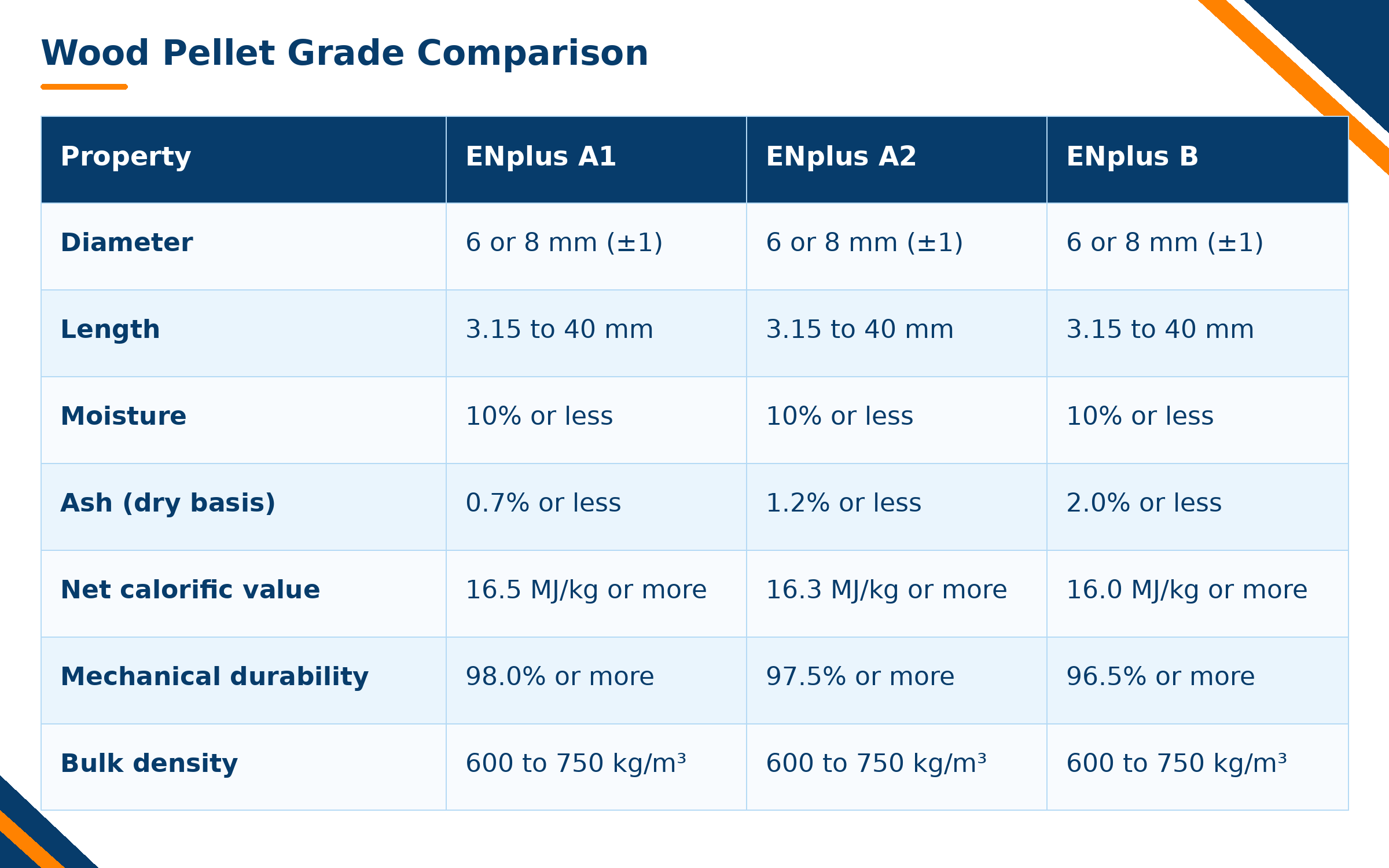
The A1 limits are published in the DIN CERTCO scheme, and Natural Resources Canada explains the three grades in its wood fuel pellet bulletin. Real batches usually beat the minimum.
Test reports from two ENplus A1 producers, published in 2026, show net calorific values of 17.6 to 17.8 MJ/kg, moisture of 5.6 to 6.4% and durability of 98.7 to 99.1% (one and two).
A quick conversion: 16.5 MJ/kg is about 4.6 kWh of heat per kilogram, before your stove’s efficiency takes its share. That number is what you pay for, so it’s the one to compare between suppliers.
How to Read a Bag
Look for the ENplus class and a producer ID on the bag, the net weight, and the moisture and ash figures. Then check the pellets themselves. They should be
smooth, slightly shiny, snap cleanly, and leave very little dust at the bottom of the bag. A bag full of powder means poor durability and a messy burn.
Common Uses
Most wood pellets go into one of four uses, and the quality you need changes with each.
Wood Pellets for Heating
Outside the industry, heating is where most pellets get used. A pellet stove has a hopper, an auger that pushes pellets into the fire pot, and a fan. Set the heat level once, and it more or less looks after itself. Hotels, offices, and guest houses run pellet boilers on the same idea.
Wood Stove Pellets: An Important Difference
People search for “wood stove pellets”, but a traditional wood stove has no hopper or auger. It’s built for logs. Pellets are made for pellet stoves and boilers, so check your appliance manual before you buy a bag.
Industrial use
Larger plants use pellets to replace part of their coal. ENplus-certified pellet production passed 14.5 million tonnes in 2025, a record, according to ENplus. If you run a boiler or kiln, compare pellets with what you burn now, starting with the coal category and the energy and petroleum category.
For factories, pellet fuel is an energy input rather than a material that becomes part of the finished product. Our guide to industrial raw materials explains how manufacturers distinguish production materials from the fuels and supplies used to keep operations running.
Availability in Pakistan
Wood pellets are available in Pakistan, but supply is thin, and the market is small. A few local producers make them from sawdust and wood waste. Innovative BioEnergy lists wood-based fuel in 15, 25, and 50 kg bags, and Geyser.pk sells a 5 kg retail packet.
Pakistan also imports pellets. Italy supplied about 80% of imports by value, according to a market report from IndexBox. Some Pakistani traders make pellets from sawdust blended with rice husk or wheat husk, so ask what’s actually in the bag.
Here is what we found listed. These are asking prices, not completed sales, and several listings are not dated.
The listed prices vary considerably between suppliers and pack sizes. Differences may reflect packaging, pellet quality, order quantity, location, and delivery terms.
These are historical asking prices rather than verified October 2026 market averages, so buyers should request fresh quotations before comparing costs.
Overseas FOB quotations should not be compared directly with local delivered prices because shipping, customs charges and inland transport can significantly affect the final cost.
FOB prices don’t include shipping, duty, or inland transport, so don’t compare them directly with a delivered local price. The wider picture of how the sector is growing is in our report on biomass in Pakistan.
Wood is not the only pellet feedstock. You can press crop residues too, and rice husk is a common raw material in Pakistan.
How Many Bags of Wood Pellets Does a House Need?
There’s no single number, because it depends on the stove, the weather, and how many hours you run it. Most pellet stoves burn between 1 and 5 pounds an hour (roughly 0.5 to 2.3 kg), so a 40-pound (18 kg) bag lasts anywhere from 8 to 40 hours, according to Forge and Flame.
In the United States, the Pellet Fuels Institute says a household using pellets as its main heat typically needs 2 to 3 tons a year, which is 100 to 150 of those bags (summarised by EngineerFix). That’s a cold-climate figure, so Pakistani winters will usually need less.
Here is a worked example you can adapt. Say your stove burns 1 kg an hour and you run it 8 hours a day for 90 winter days. That’s 720 kg for the season.
The number of bags changes with pack size, and buying whole bags may leave some fuel unused at the end of the season. In this example, a household needs 720 kg, but purchasing 25 kg or 50 kg bags requires buying slightly more.
Actual heating costs depend on pellet consumption, appliance efficiency, and the supplier's price.
Which Wood Pellets Burn the Hottest?
Both hardwood and softwood pellets can provide good heating performance. The wood species alone does not determine which pellet is best. Moisture content, net calorific value, ash percentage, and pellet quality also affect the result.
For a useful comparison, ask suppliers for the net calorific value in MJ/kg and check whether the figures use the same testing basis. Higher energy content can be beneficial, but low ash, good mechanical durability, and compatibility with your stove or boiler are equally important.
ENplus A1 sets minimum quality requirements for certified wood-based fuel. Buyers should compare actual laboratory results rather than assuming that one wood species always burns hotter.
Advantages and Limits
Pellets are uniform, so a stove can feed them automatically and burn them evenly.
They’re dry and dense, which means more heat per bag than loose firewood and easier storage.
They use sawdust and wood waste that would otherwise be thrown away.
They need a pellet stove or boiler, which many homes don’t have.
They absorb water, so a wet bag is a ruined bag. Store them dry.
Supply in Pakistan is limited, and quality varies, so ask for a lab report.
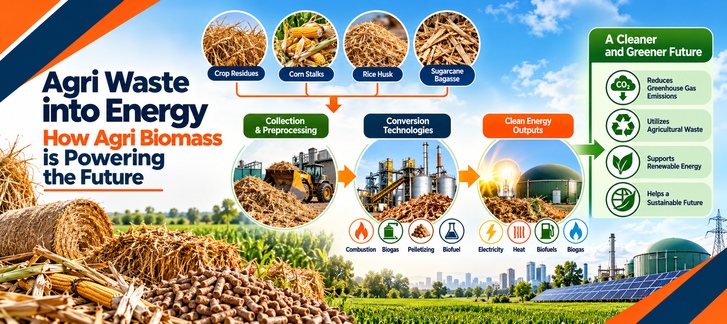
For industrial boilers and kilns, biomass briquettes may be another option, depending on the equipment and fuel specifications. Our guide to agri waste into energy explains how agricultural residues are collected and converted into usable fuels.
How to Verify Wood Pellet Quality in Pakistan
Before ordering wood pellets, ask the supplier whether the product is made entirely from wood or blended with agricultural residues. The distinction matters because different feedstocks can produce different ash levels and combustion characteristics.
For larger orders, request a recent laboratory report showing moisture, ash content, net calorific value and mechanical durability. If the supplier claims ENplus certification, verify the certificate and producer identification through the official ENplus database.
Check the pellets for excessive dust, damaged packaging and signs of moisture exposure. For industrial purchases, test a sample in compatible equipment before committing to a full shipment.
Finally, compare the delivered price rather than relying only on the advertised price per kilogram. Freight, loading, storage and minimum order quantities can change the real cost.
How to Buy Wood Pellets
Whether you buy 5 kg or 5 tonnes, ask these before you pay:
Which class are they, A1, A2, or B, and is there an ENplus ID you can check on the scheme’s website?
What do the lab results say for moisture, ash, and calorific value?
What’s in them? Pure wood, or sawdust blended with husk or other residues?
What is the price per kilogram, delivered, and what date is the quote for?
Can you weigh a bag and open one to check for dust?
Zarea’s agriculture biomass category is built around crop residues such as husk and straw, so for wood pellets themselves you’ll want to ask suppliers directly. Commodity prices move too, so check Zarea’s daily price page before you negotiate for any bulk fuel.
Frequently Asked Questions
What is the use of wood pellets?
These pellets are mainly used as fuel. Homes and small businesses burn them in pellet stoves and boilers for heat. Factories and power plants burn them in boilers, often alongside coal. They’re also used for cooking and smoking food, as animal bedding, and as cat litter.
What is the price of a 1 ton of wood pellets?
It depends on who you buy from. Innovative BioEnergy lists pellets at Rs 50 a kg, which works out to about Rs 50,000 a tonne (page last updated around August 2025). Buy 5 kg packets from Geyser.pk at Rs 200 a kg and the same tonne would cost Rs 200,000 (around October 2025).
Overseas sellers list ENplus A1 pellets at roughly USD 80 to 120 a tonne FOB, but that’s before shipping, duty and trucking. Ask for a fresh, delivered quote.
How many bags of wood pellets to heat a house?
The short answer is that it depends, because every stove and every winter is different. Your stove’s manual will tell you how much it burns, and for most pellet stoves that’s somewhere between half a kilo and two and a half kilos an hour.
Multiply that by the hours you actually run it, and you’ll know your daily kilos. A standard 18 kg (40 lb) bag then lasts anywhere from 8 hours to well over a day and a half.
American households that rely on pellets for all their heat go through 2 to 3 tons a winter, which is 100 to 150 of those bags, but their winters are much colder than most of Pakistan’s, so expect to use less.
Which wood pellets burn the hottest?
Species won’t settle this one. Retailers can’t agree on whether softwood or hardwood burns hotter, so we’d leave that argument alone and look at the lab result instead.
ENplus A1 pellets have to give off at least 16.5 MJ for every kilo, and the batches we looked at tested at about 17.6 to 17.8. Pick the one with the highest figure and the lowest moisture and ash, and keep it dry once you’ve got it home.
Wrap-Up
If you take one thing from this guide, read the spec before you look at the price. A 6 mm pellet under 10% moisture, with low ash and not much dust, will treat your stove far better than a cheap, crumbly one.
It only makes sense if you already have a stove or boiler built to burn it. In Pakistan, supply is thin, and the listings we found ran from Rs 50 to Rs 200 a kilo depending on the bag size, so work out the cost per kilo before you agree to anything and ask the seller for a lab report.
And if all you need is heat for a boiler, husk or other crop residues might be easier to find nearby.