Rice Flour: Types, Grades, Uses and Bulk Buying Options
Learn about rice flour types, uses, nutrition and prices in Pakistan, how to make it at home and what to check when buying rice for flour production.
Rice flour is simply rice ground into a powder. It gives fried fish and vegetable batters a crisp coating, thickens milk puddings, and works well in many gluten-free recipes.
The type of rice matters, though: flour made from sticky rice behaves quite differently from flour made from ordinary white rice.
For a home cook, the choice often comes down to texture and pack size.
A bakery or snack manufacturer has more to consider, including grain quality, milling yield, and the cost of each kilogram of finished flour.
Rice Flour at a Glance
1) Made from: White, brown, or glutinous rice.
2) Gluten: Naturally absent, although shared milling equipment can introduce wheat.
3) Uses: Fried coatings, puddings, noodles, and gluten-free baking.
4) Retail Price Examples: Rs 220 to 700 per kg in the listings below.
5) Preparation: Grind clean, dry, food-grade rice and sift to the desired fineness.
What is Rice Flour?
Unlike refined wheat flour, ground rice contains no gluten naturally. Its texture depends on the grain, the amount of bran retained, and how finely it is milled.
Rice is one of the major crops of Pakistan, grown for domestic consumption as well as export.
Rice starch is not the same ingredient: it is extracted from the grain, whereas flour retains other grain components.
The choice of raw grain also matters; our guide to rice varieties explains the differences between common varieties.
Main Types of Rice Flour
For most recipes, the choice is between the three types below.
Sticky rice has very little amylose, a starch component, which helps explain its chewy texture after cooking.
Coarse flour is useful in some puddings, while roasted and parboiled varieties have their own cooking properties.
Flour made from brown rice retains the bran and germ, giving it a nuttier taste.
How Is Rice Flour Made?
The process starts well before grinding. Our guide for rice paddies explains the stages from planting to harvest.
After harvesting and drying, the grain is milled. Flour producers either grind clean, dry rice and sieve it, or soak and wet-grind it before controlled drying.
Food-grade broken grains separated during the rice milling can be a practical, lower-cost input.
Bran, rice polish, and rice husk are separate milling fractions, not substitutes for edible flour.
Rice belongs to the agricultural group among the different types of commodities; milling turns the grain into an ingredient for food manufacturing.
How to Make Rice Flour at Home
1) Choose clean, dry, food-grade white, brown, or glutinous rice according to the recipe.
2) Inspect the rice and remove foreign material. Use dry rice for dry grinding; if rinsed, dry it completely before milling.
3) Grind small batches using a clean, dry grain mill or suitable grinder. Follow the equipment instructions.
4) Sift. Pass it through a fine sieve and grind whatever is left in the sieve again.
5) Store it. Keep it in a clean, airtight jar in a cool, dry place.
One kilogram of clean, dry rice should give close to a kilogram of flour, allowing for small handling and sieving losses.
Measuring by weight is more reliable than measuring by cups.
If you are preparing food for someone with coeliac disease, avoid grinders shared with wheat.
Cleaning alone cannot guarantee that traces of gluten have been removed. Choose certified gluten-free ingredients and dedicated equipment.
Common Uses of Rice Flour
A fine grind is useful when you want a smooth sauce or a light coating. A coarser grind may suit a pudding better.
Here are some everyday and commercial applications.
A) Crispy Coatings: Add it to batters for fried vegetables, fish, and chicken to help achieve a crisp texture.
B) Thickening: Mix it with cold liquid before adding it to hot sauces, gravies, or milk puddings to reduce lumps.
C) Gluten-free Baking: Use it in suitable recipes for cookies, cakes, and flatbreads, with gluten-free ingredients and equipment.
D) Noodles and Dumplings: Ordinary and sticky rice varieties are used in different noodle, steamed cake, and dumpling recipes.
E) Cereals and Porridges: Use them in cooked cereal recipes. Infant foods need suitable formulations and food safety controls.
F) Chewy Desserts: Choose glutinous flour for recipes that need a sticky, elastic texture.
G) Commercial Food Production: Snack factories and bakeries use it in coatings, extruded snacks, and gluten-free mixes.
Do not expect it to behave like wheat flour in yeast bread.
Without gluten, the dough needs a different recipe, often with added starches and binders.
Mixing it with wheat does not make the result gluten-free.
Rice Flour Nutrition per 100 g
White and brown varieties provide roughly the same calories.
The main nutritional difference is the rice bran and germ retained in whole-grain flour, which contribute extra fibre and fat.
The figures below are representative dry-flour values from USDA FoodData Central.
Being gluten-free does not make this ingredient low in calories or carbohydrates.
If you manage blood sugar, consider portion size and the rest of the meal.
Vary the grains you eat, especially in meals for young children, to limit repeated exposure to inorganic arsenic from rice.
For coeliac disease, look for reliable gluten-free labelling.
Rice Flour Price in Pakistan
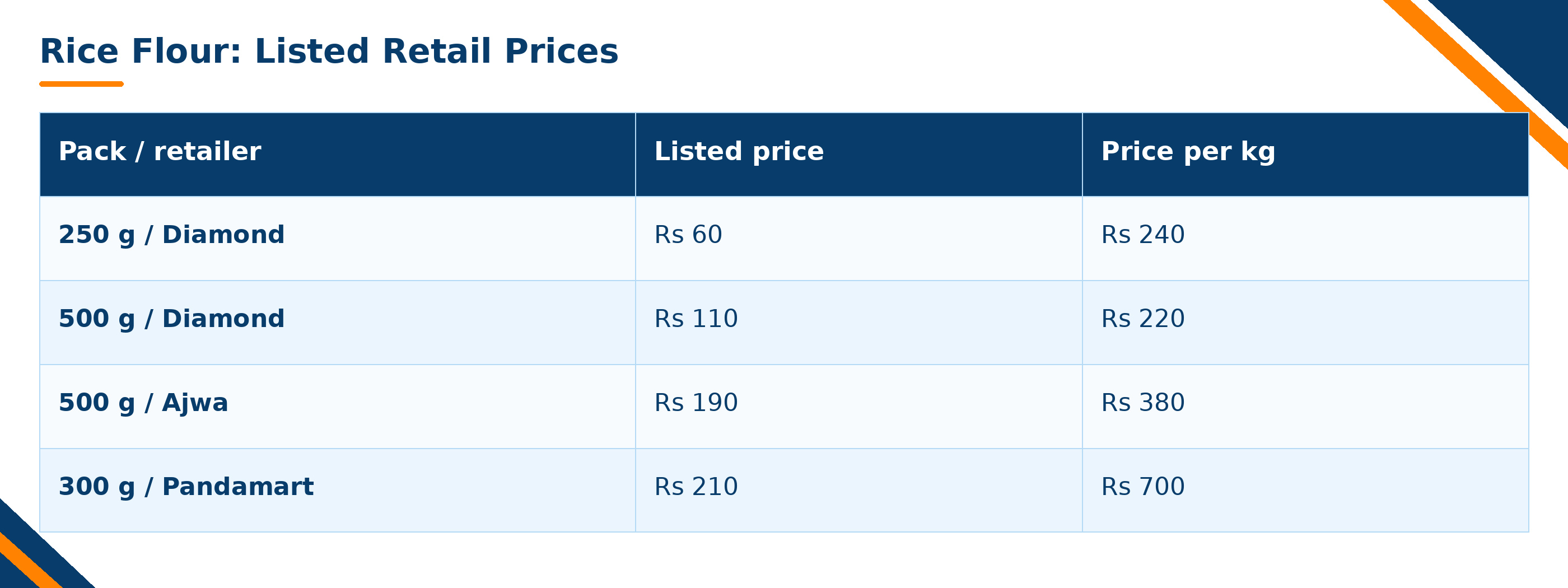
Pack size makes a noticeable difference to the price per kilogram.
These retail examples are from Diamond Super Market, Ajwa Super Mart and Pandamart, recorded in the previous price review dated 27 November 2026.
Delivery is excluded; the figures are not a national average.
For a bakery, the price of the grain is only the starting point.
Cleaning, electricity, labour, milling losses, packaging and freight all affect the final cost.
Like other food commodities, rice is subject to seasonal supply and changing market conditions.
Suppose a mill buys food-grade rice at Rs 100 per kg and recovers 95% as flour.
The grain cost works out to about Rs 105 per kg of finished product, before processing and packing.
This is a costing example, not a live supplier quote.
Where to Buy Rice Flour in Pakistan
Supermarkets and specialist grocery shops sell small packs. Food ingredient suppliers are a better starting point for larger orders.
Before paying, check the following:
1) Ingredients: It should say rice and nothing else.
2) Type: White, brown, or glutinous, because they aren’t interchangeable.
3) Fineness: Fine powder for batters and baking, a coarser grind for puddings.
4) Packaging and Date: Look for a sealed pack and a clear best-before date. Whole-grain flour can go stale sooner.
5) Gluten-free Labelling: If required for coeliac disease, choose a product with a reliable gluten-free claim and appropriate cross-contact controls.
6) Price per kilogram: Compare the delivered cost of packs of different sizes.
Businesses that mill their own flour can compare grain listings on Zarea, including Regular Kernel Basmati Rice.
Aromatic rice may suit products where fragrance matters, but food-grade broken or non-basmati rice is worth pricing for everyday production.
Ask for a sample before ordering in bulk. Check moisture, foreign matter, food-grade status, and grind consistency.
An agricultural marketplace can help you compare supplier quantities and delivery terms.
For wider sourcing, browse the grains and pulses.
Buyers planning regular orders may also find the overview of Pakistan’s rice sector useful for understanding production and trade.
Grain listings are not offers of finished flour.
How to Store Rice Flour
Keep the container sealed and away from heat and moisture.
Whole-grain flour contains natural oils and can develop a stale smell sooner.
Follow the storage instructions on the pack, and discard any flour with mould, pests, or an unusual odour.
Frequently Asked Questions
Is Rice Flour the Same as Refined Wheat Flour?
No. Refined wheat flour contains gluten, while ground rice is naturally gluten-free. They behave differently in doughs and batters.
What is Rice Flour Good For?
It works particularly well in fried coatings, milk puddings, sauces, and noodles. Sticky rice varieties are better suited to chewy desserts.
How Can I Make Rice Flour?
Grind clean, completely dry rice in a suitable grinder, sift it, and regrind any coarse particles. Store the flour in a clean, airtight container.
Is Rice Flour Just Powdered Rice?
Yes. The grain variety and milling method determine its texture and cooking properties. Commercial mills can also produce a more consistent grind than a household grinder.
Wrap Up
Rice flour is a useful ingredient in both everyday cooking and commercial food production.
White flour works well for crispy coatings, noodles, and baking, while brown rice flour offers more dietary fibre and a slightly nutty flavour.
The glutinous variety is better suited to sticky desserts and dumplings.
When buying, consider the flour type, texture, freshness, and intended use rather than price alone.
For bakeries and food processing businesses in Pakistan, sourcing quality food-grade rice, testing milling performance, and comparing production costs can help maintain consistent product quality and control expenses.